AD Agencies
India’s top advertisers set to power ₹1.15 trillion marketing spend in 2026

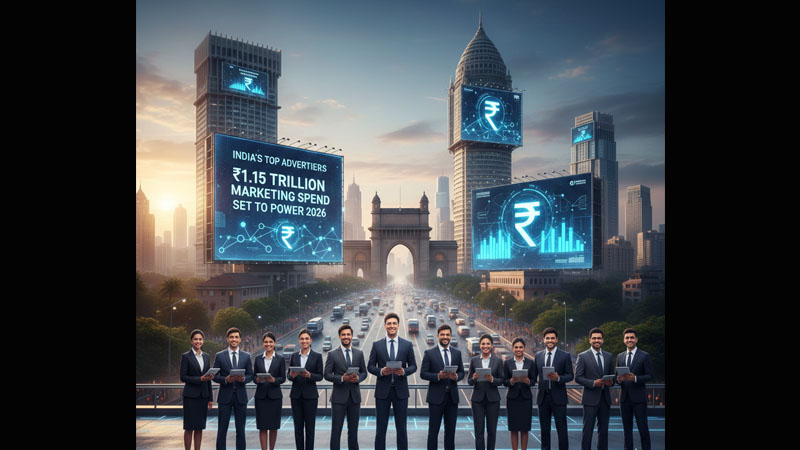
MUMBAI: India’s advertising and marketing industry is heading towards another watershed moment, with total ad expenditure projected to cross ₹1.15 trillion in 2026, underscoring the country’s position as one of the fastest-growing major advertising markets globally.
According to AdEx projections tracking spends across 2024 and estimated growth through 2025, digital marketing is expected to account for more than half of total advertising expenditure in 2026. The shift reflects a structural realignment of brand budgets away from traditional mass media towards digital-first platforms, connected television (CTV), OTT services and digital video on out-of-home (OOH) screens.
Spending concentration is also becoming sharper. The top 50 marketers are likely to contribute nearly 35 per cent of total ad spends, reinforcing the growing influence of a relatively small group of large advertisers in shaping media economics.
India’s overall advertising market continues to defy global caution. With year-on-year growth exceeding 10 per cent, 2025 marked the first year the country crossed the ₹1 trillion threshold in advertising expenditure, at a time when several mature markets are grappling with stagnation.
Among advertisers, Reliance Industries Limited is expected to further consolidate its position, potentially overtaking two of India’s largest advertisers to emerge just behind Hindustan Unilever in total spend. The company’s aggressive expansion across retail, digital services and consumer brands has translated into sustained marketing investments.
FMCG remains the backbone
Fast-moving consumer goods (FMCG) will remain the most resilient and dominant advertising category, showing little appetite for meaningful cutbacks. Market leaders such as Unilever, Procter & Gamble, Reckitt, Mondelēz International, ITC, Nestlé, Colgate-Palmolive, Godrej Consumer Products, Amul, Coca-Cola, PepsiCo and L’Oréal are expected to maintain robust spend levels, driven by intense competition, price sensitivity and the need for continuous brand salience.
Auto and mobility regain momentum
The automobile sector is poised for renewed advertising momentum, supported by the launch of more than 25 new cars and two-wheelers over the year. Maruti Suzuki, Hyundai, Honda and Hero MotoCorp are expected to be among the most aggressive spenders, as manufacturers navigate electrification, premiumisation and shifting consumer preferences.
Digital, e-commerce and quick commerce rise
Digital platforms, technology firms and e-commerce players now feature prominently among India’s top advertisers. Amazon, Google and Flipkart continue to anchor this segment, while quick-commerce players such as Swiggy, Zomato and Zepto have firmly entered the top 50 advertisers, reflecting the escalating battle for urban consumers and delivery dominance.
Fintech fills the gap left by gaming
Fintech firms have emerged as a fast-growing advertising cohort, partially replacing gaming companies, which saw a sharp pullback in 2025 amid regulatory and profitability pressures. Groww, NPCI and Angel One are among the most visible spenders, as financial platforms compete for trust, scale and everyday relevance.
Home-grown giants and steady spenders
Several home-grown Indian enterprises continue to command consistent advertising presence. LIC, Asian Paints, UltraTech Cement and Havells remain key contributors, underlining the enduring importance of domestic champions in India’s advertising ecosystem.
Meanwhile, categories driven primarily by reach rather than brand equity, such as pan masala, are expected to continue spending unabated, ensuring their place among the country’s top advertisers.
While the top 100 marketers will command the bulk of attention and resources, industry executives note that the next 100 advertisers, often mid-sized, fast-scaling firms, may offer equally meaningful opportunities in a market defined by breadth as much as scale.
As global advertisers tread cautiously, India’s advertising economy continues to expand with confidence, fuelled by consumption growth, digital adoption and a uniquely competitive marketplace.