News Headline
Global Paris Olympics viewership rose 25 per cent: IOC-backed research

MUMBAI: Guess which was amongst the top most watched televised sports event in 2024?
The most engaging?
The one which saw eye-popping growth on many parameters?
If you are going to mention football and the Premier League, you would be far from the truth.
If you are going to say cricket and the IPL, you will have got it wrong.
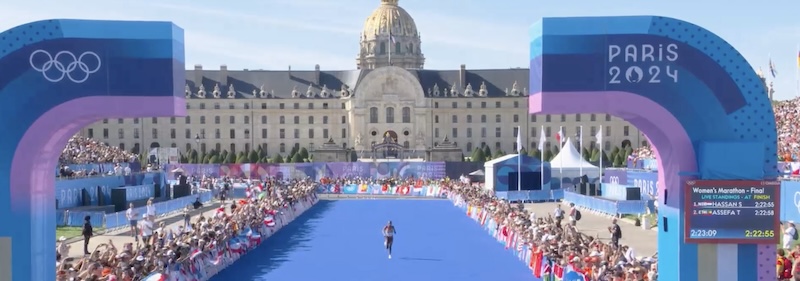
At least that’s what new research conducted on behalf of the International Olympic Committee (IOC) by independent researchers would have us believe. It says that a record 84 per cent of the potential global audience followed the Olympic Games Paris 2024, translating into an audience of five billion people.
This means that more than half of the world’s population followed the inspirational achievements of the Olympic athletes and the magic of the Olympic Games, underlining the massive success of the games in Paris.
Digital platforms drove an unprecedented level of attention revealed the research. There were an estimated 412 billion engagements from 270 million posts on social media platforms. This represents a 290 per cent increase compared to the previous edition of the games.
Media rights-holders (MRHs) delivered record results, driven in large part by this increased visibility on digital channels. Globally, there were 13 times more social media engagements on MRH handles than for the previous games’ edition. Some 70 per cent of the global audience watched on both television and digital platforms.
There was a 25 per cent increase in the amount of coverage watched, with 28.7 billion hours of footage viewed around the world on MRH platforms. This meant every viewer watched on average nine hours of coverage, a 20 per cent increase on the previous games. In the home market of France, 95 per cent of the potential audience watched an average of 24 hours of coverage of the Olympic Games.
The IOC’s own digital platforms and social handles generated 16.7 billion engagements, a 174 per cent increase on the previous edition of the games. Olympic athletes, national Olympic committees, international federations and organising committees all benefitted from the huge social media engagement, growing their digital presence and adding a combined 85 million followers to their main social media handles. There was a 200 per cent increase in internet searches related to Olympic sports and the Olympic Games compared to the previous edition of the Olympic Games.
The report outlining these figures was presented to the IOC’s executive board at a meeting held last week in Lausanne.
IOC president Thomas Bach said: “Paris 2024 demonstrated the unprecedented global appeal of the Olympic Games. Audiences are following and interacting with the Olympic Games like never before. The independent surveys also demonstrate that people believe that the Olympic Movement’s mission to unite the world in peaceful competition is more important than ever in a divided world; and that the Olympic values truly resonate with younger generations. These were Olympic Games of a new era.”
In consumer insight studies, 78 per cent of those surveyed said they believed the Olympic Games are more important than ever in a divided world. Three out of four people also believe that the IOC was successful in “bringing the world together in peaceful competition” and in “building a better world through sport.”
According to an independent brand tracker study conducted in September 2024, the relevance of the Olympic Games with Gen Z is now higher than with the general population, including outperforming other demographic groups in the metrics of “engagement with the Olympics,” “brand affinity” and “brand relevance”. This was driven in particular by the “inspiring stories of the athletes,” the “buzz on social media” and “improved accessibility to content.”
Seven out of 10 people deemed Paris 2024 a “success” and thought the games would leave a positive legacy.
The experience of the Paris 2024 spectators surveyed was rated as “excellent” or “good” by 85 per cent for the ticketed events, 95 per cent for the free events, and 98 per cent for the Marathon Pour Tous. “Atmosphere,” “visual appearance” and “security” were cited as key drivers across all events.
Some 95 per cent of athletes surveyed rated their overall experience positively, with 89 per cent rating “becoming an Olympian” and 91 per cent citing “competing at the biggest multi-sport event on earth” as fundamental motivations for participating at the Olympic Games Paris 2024.
(The brand tracker, broadcast research, and consumer and athlete surveys were conducted by Nielsen, Ipsos and Publicis Sport & Entertainment. Across all consumer studies a total of more than 55,000 people in 18 countries were surveyed, with all respondents aged between 13 and 65. Potential global audience with access to follow the Olympic Games and over the age of 4 years old.)