Special Report
“With IPL you have the power of 10”

It’s the festival of lights. And for many the festival of noise courtesy exploding fireworks. In the hope of reducing the number of those belonging to the latter tribe, we, at indiantelevision.com, decided to put a display of firecracker articles for visitors this Diwali. We have had many top journalists reporting, analysing, over the many years of indiantelevision.com’s existence. The articles we are presenting are representative of some of the best writing on the business of cable and satellite television and media for which we have gained renown. Read on to get a flavour and taste of indiantelevision.com over the years from some of its finest writers. And have a happy and safe Diwali!
Written By Thomas Abraham

Posted on 28 April 2008
The Indian Premier League (IPL) has got off to a solid start. The ratings have been positive and crowds have thronged the stadiums. For Sony the IPL marks their return to cricket. Set India CEO Kunal Dasgupta offers Thomas Abraham and Ashwin Pinto his views on what he expects IPL to do for the game, telecast channel Max, as well as the importance of sustaining the brand. Excerpts:
As a broadcaster what do you expect?
T20 is a made for television format. When India played a T20 match against Australia at the Wankhede stadium, ratings touched 20. I am looking for a rating of 4 or 5, which is possible, given that ICL, which has retired players, got 2.5. This is a good base for us to take off from.
The format will mean that besides country against country, one will also view it as being team versus team. This is what exists in other sports like soccer, hockey, and baseball.
IPL is being pushed as being the ultimate in reality television. In that case how do you get that competitive environment?
The prize money (Rs 48 million goes to the winner) will ensure this. This is much more than you get for playing for the country and so the players will go all out. The matches will be hard fought. Here all the teams are evenly balanced and so you do not know the result. It will be unpredictable and matches will go down the wire. All teams have a good mix of batsmen, bowlers and youth.
What are you hoping for in the first year as the telecast partner?
Ideally I would want the IPL to be a successful brand that has a long term play. After June, I will continue to do promotions to keep the team brands alive. This was one of the conditions on which we bid.
We will do shows around the IPL. You could see teams (franchises) practicing and discussing strategies for the next season.
‘The trick for us is not getting ratings for the first season. The challenge is to sustain the excitement after that’
But wouldn’t an ideal situation be for a franchise to build a brand without the big names who might be on national duty?
This might happen. Apart from April-May, you cannot have another period where all the stars are available. What will happen is that once the league is built the new players who are playing will become the core. You can then have matches in different parts of the world to popularise the game there using these new players.
The trick for us is not getting ratings for the first season. This will happen as a matter of course because of the way the IPL has been hyped. The challenge is to sustain the excitement after that and it is here where we will have to take a leaf out of the book of the EPL. Teams have marketed themselves and have thus become iconic brands.
So Mallya for instance, will use the Royal Challenger brand name to go out there and create opportunities for exhibition matches. They can do charity work in Bangalore and build a fan base. Each franchise will have its own website where clips will be available. They can create merchandise.
Sony will pitch in through magazine shows. Otherwise it will just be a flash in the pan. As we come closer to the next season you will see transfers and there will be speculation.
New heroes will be born. It is possible that the likes of current heroes like Glenn McGrath, Kumble, and Saurav will not play beyond two seasons. Once that happens, then the brand will live outside the big names.
One of the aims is to broaden the viewer base is to get in more children, women, But for that you have to create marketing that speaks to those demographics. What is Sony planning?
One of the major attractions will be the presence of big Bollywood stars. Akshay Kumar will perform for Delhi. SRK will perform for Kolkata You will see proper Bollywood entertainment.
We have even tweaked the timings of some of the matches to accommodate our entertainment specials. One match was supposed to start at 4 pm but we have pushed it back to 5:30 pm. We will even have stand up comedy for Extraaa Innings. On air we have gone in for fresh faces. We did not want Mandira (Bedi) for this. She is more suited for ODI cricket. I want 20-year-olds in T20. We also did not want Kapil Dev, Gavaskar. We wanted anchors who represent today’s kids. With the ICC World Cup we broke the mould and brought in females. Now we are breaking the mould back
What is the distribution upside from IPL?
This is a question mark. We are supposed to have a dip but we will retain the same level. There is no minimum guarantee now. Had Ten Sports still been present it would have been difficult to determine the value of IPL. Our team is happy as they are closing deals for the year and it is one of the distribution cornerstones.
At $ 59 million in Year 1 and an average of $ 61 million over five years, IPL was literally sold at floor price. Wasn’t that a great deal?
It was. Most of the payout ($ 612 million) is from the next five years. ESPN’s bid was $150 million for the first five years. They had put in conditions that the top players should be there. We did not put in any conditions.
Anyway, the way it has turned out, all the top players are taking part.





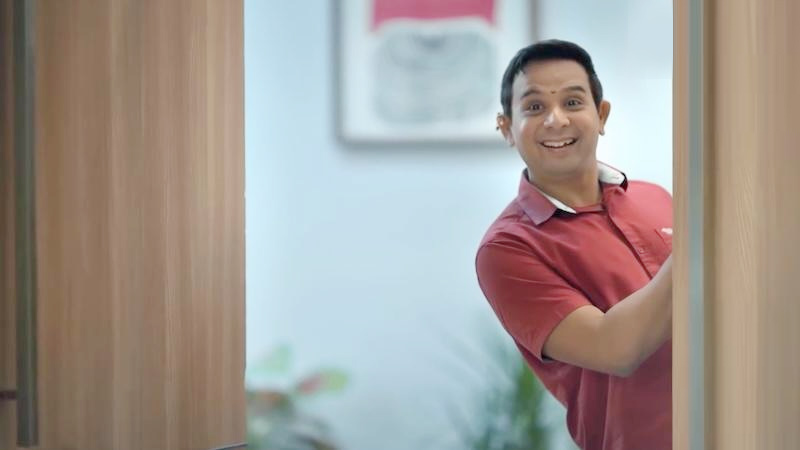
MUMBAI: Some friendships are made in heaven; others are coded in Mumbai. Hamara Vinayak, the first-ever digital original from Siddharth Kumar Tewary’s Swastik Stories, turns the divine into the delightful, serving up a story that’s equal parts start-up hustle and spiritual hustle.
Some tech start-ups chase unicorns. This one already has a god on board. Hamara Vinayak takes the leap from temple bells to notification pings and it does so with heart, humour and a healthy dose of the divine.
At its core, the show asks a simple but audacious question: what if God wasn’t up there, but right beside you, maybe even debugging your life over a cup of chai?
The show’s tagline, “God isn’t distant… He’s your closest friend” perfectly captures its quirky soul. Across its first two episodes, screened exclusively for media in Mumbai, the series proves that enlightenment can come with a good punchline.
The series follows a group of ambitious young entrepreneurs running a Mumbai-based tech start-up that lets people around the world book exclusive virtual poojas at India’s most revered shrines. But as their app grows, so do their ethical grey zones. Into this chaos walks Vinayak, played with soulful serenity and sly wit by the charming Namit Das, a young man whose calm smile hides something celestial.

He’s got the peaceful look of a saint but the wit of someone who could out-think your favourite stand-up comic. Around him spins a crew of dream-driven youngsters – Luv Vispute, Arnav Bhasin, Vaidehi Nair and Saloni Daini who run a Mumbai-based tech start-up offering devotees across the world the chance to book “exclusive” poojas at India’s most sacred shrines. It’s a business plan that blends belief and broadband – and, as the story unfolds, also tests the moral compass of its ambitious founders.
“The first time I read the script, I found the character very pretty,” Namit joked at the post-screening interaction. “It’s a beautiful thought that God isn’t distant, he’s your closest friend. And playing Vinayak, you feel that calm but also his cleverness. He’s the friend who makes you think.”
The reactions to the series ranged from smiles to sighs of wonder. Viewers were charmed by the show’s sincerity and sparkle, a quality that stems from its creator’s belief that faith can be funny without being frivolous.
Among the cast, Luv Vispute shines brightest, his comic timing adding sparkle to the show’s more reflective beats. But what keeps Hamara Vinayak engaging is the easy rhythm of its writing – one moment touching, the next teasing, always gently reminding us that spirituality doesn’t have to be solemn.
Luv spoke fondly of his long association with Swastik. “Since my first show was with Swastik, this feels like home,” he said. “Every project with them is positive, feel-good, and this one just had such a different vibe. I truly feel blessed.”
Saloni Daini, who brings infectious warmth to her role, added that she signed up the moment she heard the show was about “Bappa.”
“We shot during the Ganpati festival,” she recalled. “The energy on set was incredible festive, faithful, and full of laughter. It’s such a relatable story for our generation: chaos, friendship, love, kindness, and faith all mixed together.”

Vaidehi Nair and Arnav Bhasin complete the ensemble, each representing different shades of ambition and morality in the start-up’s journey. Their camaraderie is easy and believable, a testament to how much the cast connected off-screen as well.
This clever fusion of mythology and modernity plays to India’s two enduring loves, entertainment and faith. Mythology has long been the comfort zone of Indian storytellers, from the televised epics of the 1980s to the glossy remakes that still command prime-time TRPs. For decades, gods have been our most bankable heroes. But Hamara Vinayak tweaks the formula not by preaching, but by laughing with its characters, and sometimes, at their confusion about where divinity ends and data begins.
Creator Siddharth Kumar Tewary, long hailed as Indian television’s myth-maker for shows like Mahabharat, Radha Krishn and Porus, explained the show’s intent with characteristic clarity, “This is our first story where we are talking directly to the audience, not through a platform,” he said. “We wanted to connect young people with our culture to say that God isn’t someone you only worship; He’s your friend, walking beside you, even when you take the wrong path. The story may be simple, but the thought is big.”
That blend of philosophy and playfulness runs through the show. “We had to keep asking ourselves why we’re doing this,” Tewary added. “It’s tricky to make something positive and spiritual for the OTT audience, they’ve changed, they want nuance, not sermons. But when the purpose is clear, everything else aligns.”
For the creator of some of Indian TV’s most lavish spectacles, Hamara Vinayak marks a refreshing tonal shift. Here, Tewary trades celestial kingdoms for co-working spaces and cosmic battles for office banter. Yet his signature remains: an eye for allegory, a love for faith-infused storytelling, and an understanding that belief is most powerful when it feels personal.
Hamara Vinayak, after all, feels less like a sermon and more like a conversation over chai about what success means, what faith costs, and why even the gods might be rooting for a start-up’s Series A round.
As Namit Das reflected during the Q&A, “Life gives us many magical, divine moments we just forget to notice them. Sometimes even through a phone screen, you see something that redirects you. That’s a Vinayak moment.”
The series also mirrors a larger cultural pivot. As audiences migrate from television to OTT, myth-inspired tales are finding new form and flexibility online. The digital screen lets creators like Tewary reinvent the genre, giving ancient ideas a modern interface, without losing the emotional charge that’s made mythology India’s storytelling backbone for decades.
In a country where faith trends faster than any hashtag, Hamara Vinayak feels both familiar and refreshingly new, a comedy that’s blessed with heart, humour and just enough philosophy to keep the binge holy.
For a country where mythology remains the oldest streaming service, Tewary’s move from TV to OTT feels both natural and necessary. Indian storytellers have always turned to gods for drama, guidance and TRPs from Ramayan and Mahabharat on Doordarshan to glossy mytho-dramas on prime time. But digital platforms allow creators to remix reverence with realism, and in Hamara Vinayak, faith gets an interface upgrade.
The result is a show that feels like a warm chat with destiny, part comedy, part contemplation. And in an age of cynicism, that’s no small miracle.
As Tewary put it, smiling at his cast, “The message had to be positive. We just wanted to remind people that even in chaos, God hasn’t unfriended you.”
With 5 episodes planned, Hamara Vinayak promises to keep walking that fine line between laughter and light. It’s mythology with memes, devotion with dialogue, and a digital-age reminder that even the cloud has a silver lining or perhaps, a divine one.
If the first two episodes are any sign, the show doesn’t just bridge heaven and earth, it gives both a Wi-Fi connection.







