News Broadcasting
Tsunami news tide fully extended channels


FR Lobo (name changed) of Lucknow these days is grateful to an organisation that had little relevance in his upper middle class home replete with technical gizmos — All India Radio (AIR).
It’s the state broadcaster’s radio service that carried a message from tsunami-hit Port Blair from his son and daughter-in-law to him several miles away that they are well and had survived the tidal tragedy that hit the eastern and southern coasts of India and many other south east Asian countries. This, at a time when Port Blair, isolated from the rest of the country in the aftermath of sea fury that destroyed most communication centers in this small place. Lobo conveyed his gratitude to AIR officials.
TV and radio channels responded to the tsunami disaster with a news operation described as one of the biggest in the history of peacetime India, though such coverage is tinged with an element of sadness at the mammoth loss of human lives and property.

 Coupled with local bureaux, TV Today Network, controlling Aaj Tak and Headlines Today, had about 25 people covering the tsunami-hit areas, which some journalist described as a “trek down a path of mind-boggling destruction and administrative apathy aplenty.”
 NDTV, too, had about 25 correspondents fanning out in various tsunami hit areas in India, mostly concentrated to South India and further in the Indian Ocean where India controls a gaggle of islands with fragile communications systems.
 Star News on the other hand had about 15 correspondents spread across the disaster struck areas. Star News CEO Uday Shankar points out, “It does not matter how many people we sent out to cover the disaster. Our core focus was to dwell on the situation after the tsunami struck and zero in on individual cases of those who survived.”
Dwelling on how the Indian media turns everything into an “event”, Shankar said that Star News’ main concern was to focus on creating sensitivity across the country and to undertake the right relief measures to help those who were affected by the disaster.
 |
| NDTV captures the reunion of a father and son |
According to NDTV managing editor Rajdeep Sardesai, “Coupled with the news gatherers, we also had about 15 OB vans out there facilitating in telecast. It was an event that really tested the patience of not only the victims, but also the skills of the professionals.”
Concurs Zee Telefilms news director and head of Zee News Laxmi Goel, “The magnitude of the tragic incident compelled us to pull out the stops and, I think, coverage of tsunami is one of the biggest events that has been undertaken by us, if general elections are not taken into account.”
 |
|
Nagappattinam after the tsunami
|
TV crews that visited the tsunami-hit areas had one common refrain; that the geographical reach of the disaster, coupled with lack of road access to some of the worst-hit areas, made it one of the most challenging assignments to be undertaken. A good example of this is provided by the situation in Car Nicobar island, which according to a senior Indian Navy official, hardly has a couple of kilometers that could be covered by foot patrol because of the dense jungle and swampy conditions created by the invading water.
Referring to some of the problems that Star News’ correspondent faced while covering the tsunami disaster, Shankar says, “One of the biggest problems was in getting the pictures as the culture of flyaway news gathering (fast reporting from distant news locations) in our country is not that great. Also the lack of credible, transparent and focused sources of information regarding the exact nature of the disaster was not forthcoming for quite some time.”
Points out a print medium journalist who also doubled up as a correspondent for one of the TV news channels, “After the tragedy had struck, media suddenly converged on the affected areas as if money was not a problem in coverage.”
Though TV bosses are a bit reluctant to speak on the financials, the colour of money can be gauged from the fact that Aaj Tak, the country’s No. 1 Hindi news channel, spent between Rs 1.5 – Rs 2 million over a period of 10 days on the coverage on sending people from Delhi, getting the local persons to provide assistance and having some basic infrastructure in place for live telecast.
 |
|
The Andaman Island after the tsunami
|
Broadcast industry sources estimate that TV news channels, that includes foreign networks, must have spent over Rs 20 million in their India coverage. As some of the areas hit by the sea waves attracted many US, UK and European nationals and their involvement was there, BBC, CNN and other foreign television networks too had rolled out extensive coverage. But excelling in some wonderful reports was the BBC, which exploited local knowledge of India and local people to the hilt.
However, at a time when most Indian TV news channels did provide extensive coverage of the affected areas, not many had sent out people to other South East Asian countries for coverage.
“We had one of our former colleagues in a South East Asian country and she fed us with coverage of countries like Thailand and Philippines,” Sardesai pointed out. Zee News’ Goel explained that since the coverage in India needed most hands, Zee could not afford to send anybody outside India.
Shankar, on the other hand, says, “We are primarily an India Hindi news channels and so our primary commitment was towards the people of India. Moreover, we have access to Fox and Sky Networks coverage, so we didn’t need to send our people to other South East Asian countries.” It is of course an entirely different matter that Fox’s coverage of the disaster was not a patch on what the likes of CNN and BBC put together.
And when it came to what and what not to show on screen, learning from past experience, most channels, including regional ones, shied away from depicting bodies or mutilation out of a sense of responsibility towards viewers.
An apt summation came from Sardesai, “If we compare the Latur earthquake’s (early 1990s when there were less than six news channels) coverage and that of the tsunami, the difference itself shows a tale of progression of Indian television. Considering that the coverage of the general elections were spread over three months, what was done in this case marks one of the biggest and most concentrated efforts ever attempted by the (Indian) electronic media.”






News Broadcasting
CNN-News18 to host Fury in the Gulf conclave on West Asia crisis
Three-hour summit to unpack geopolitical fallout and impact on India
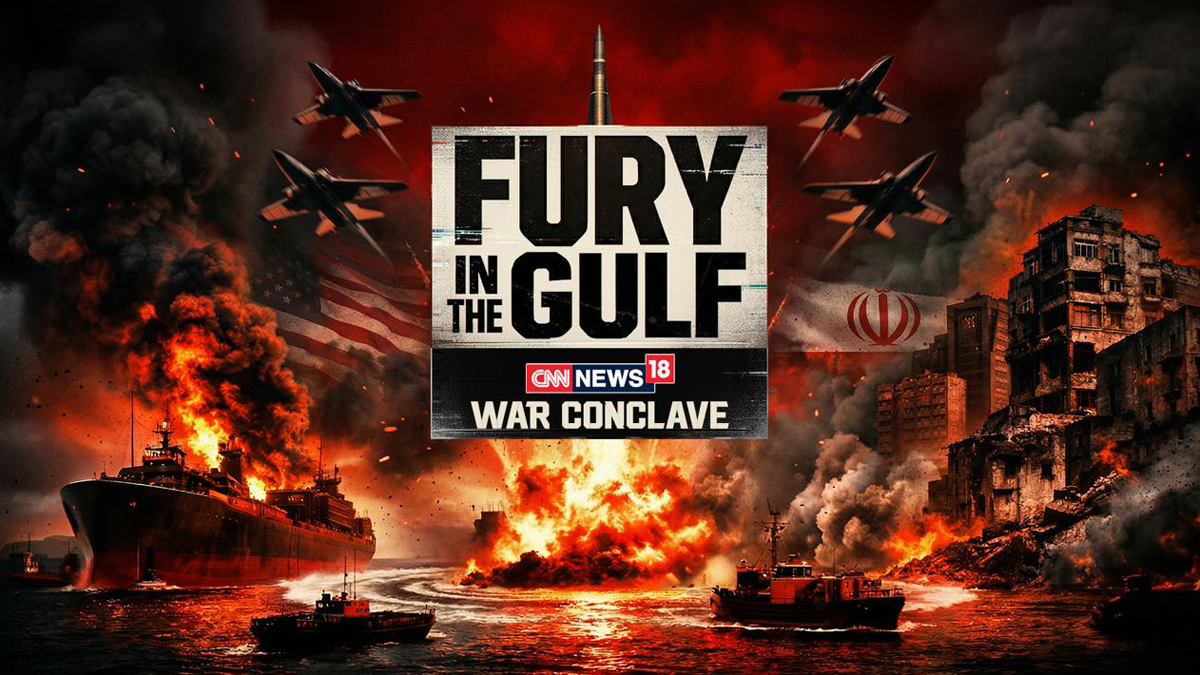
MUMBAI: CNN-News18 is set to host a special three-hour broadcast, Fury in the Gulf – War Conclave, on April 7, aiming to decode the escalating West Asia crisis and its far-reaching implications for India.
Scheduled from 4:00 PM to 7:00 PM, the conclave comes at a time when tensions between Iran and the United States are reshaping global geopolitics and triggering economic uncertainty. With India’s deep energy ties, trade links and large diaspora in the Gulf, the developments carry significant domestic relevance.
Built around the theme ‘Conflict, Consequences, and The Future,’ the programme will feature six curated sessions combining one-on-one interviews and panel discussions. The focus is to cut through the clutter and offer viewers a clearer understanding of the fast-evolving situation.
Key sessions include ‘Diplomacy in Times of War’ featuring Shashi Tharoor, and ‘World After the Iran Conflict’ with voices such as Ram Madhav, Reuven Azar, representatives from the European Union and the Iranian Deputy Envoy. Another session titled ‘Another Dunkirk?’ will bring together K. J. S. Dhillon and Jitin Prasada among others.
CNN-News18 editorial affairs director Rahul Shivshankar said, “In times of war, clarity becomes the most powerful tool. Fury in the Gulf – War Conclave brings together credible voices to address the questions and confusion that arise amid an overwhelming influx of information.”
He added that the initiative is aimed at delivering “facts, perspective, and insight” at a time when misinformation can easily cloud public understanding.
Echoing the sentiment, CNN-News18 CEO– English and business news Smriti Mehra said the conflict marks a defining global moment, with consequences that extend well beyond the region. She noted that the conclave seeks to present the crisis with “depth, nuance and responsibility” so audiences can better grasp its real-world impact.
As geopolitical tensions continue to dominate headlines, the conclave positions itself as an attempt to bring order to the noise, offering viewers a structured, insight-led look at a complex and rapidly shifting global situation.






