Reality
The Reality Advantage: why reality entertainment is becoming an advertiser’s attention play
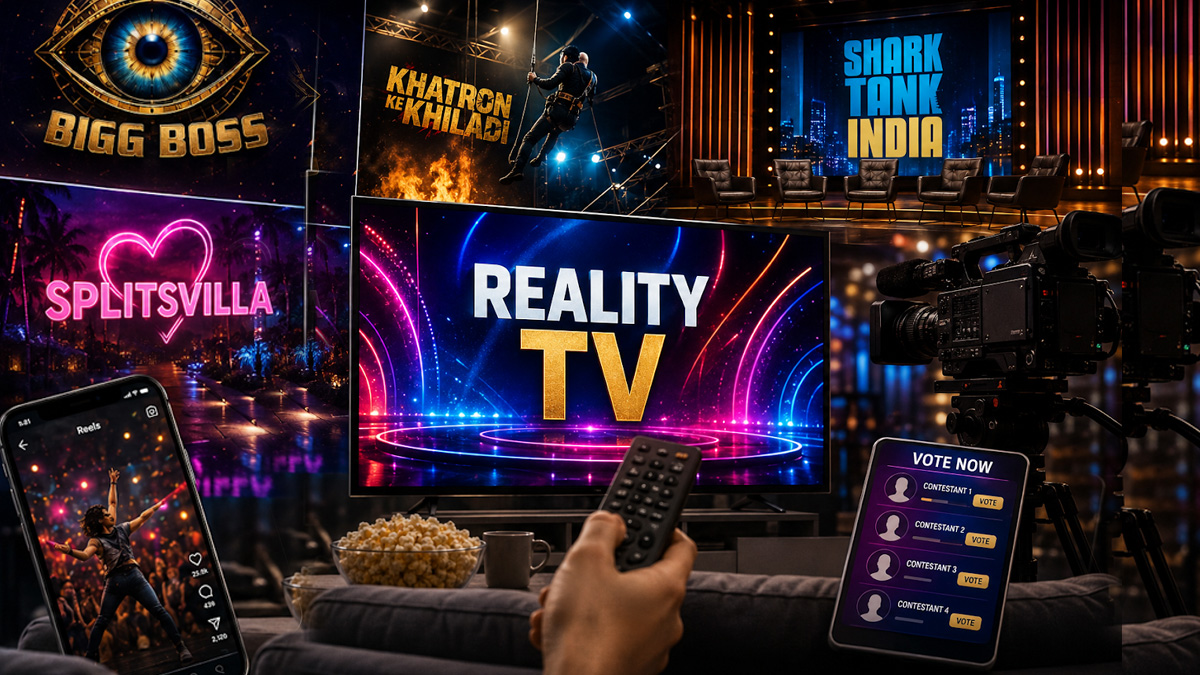
From Bigg Boss and Shark Tank India to Khatron Ke Khiladi, Splitsvilla and new-age OTT formats, reality is evolving from programming inventory into an attention ecosystem where television and streaming can work together to tap fandom, participation, social conversation and commerce.


MUMBAI: India’s media and entertainment landscape is undergoing a fundamental shift.
Audiences are no longer consuming entertainment through a single screen or in a single way. A viewer can watch a reality show on television, switch to a streaming platform for additional content, vote for a contestant, follow clips on social media and continue consuming content around the show long after an episode ends.
For advertisers, that fragmentation has made one thing increasingly difficult: capturing and holding attention.
The broader advertising market reflects the change. India’s media and entertainment sector grew 9% to ₹2.78 lakh crore in 2025, according to the FICCI-EY report. Digital advertising grew 26% to ₹94,700 crore, accounting for nearly two-thirds of India’s total advertising revenues.
Yet the story is not simply about television losing out to digital. It is about how video itself is changing, becoming more fragmented, measurable, interactive and commerce-linked.
And within this environment, one category continues to demonstrate a particularly strong ability to generate attention: reality entertainment.
From long-running television franchises such as Bigg Boss, Khatron Ke Khiladi, Splitsvilla and Shark Tank India to newer streaming experiments such as Alliance, Lock Upp and The Traitors, the Indian reality landscape has expanded across formats, languages, platforms and audience segments.
For advertisers, that changes the proposition.
A reality show is no longer merely a property around which a brand buys advertising inventory. Increasingly, it can become an engagement ecosystem in which the brand participates in an entertainment experience audiences are already invested in, whether that experience begins on television or streaming.
That is the premise of The Reality Advantage, a new series by Indiantelevision.com examining why reality entertainment continues to matter to advertisers, and how broadcasters, streaming platforms, brands and creators are redefining its commercial value.
India’s reality boom is no longer one format
The most telling sign of reality entertainment’s evolution may be the sheer variety of formats now competing for audience attention, across both television and streaming.

There is the captive-reality model, led by Bigg Boss and Lock Upp. There are strategy-led formats such as Alliance and The Traitors. There are stunt and adventure properties such as Fear Factor: Khatron Ke Khiladi. There are talent competitions such as India’s Best Dancer. There are youth and relationship franchises such as Splitsvilla. And there are hybrids such as Laughter Chefs, which combine celebrity personalities, cooking, competition and comedy.
Then there is Shark Tank India, which has carved out a distinct space at the intersection of entertainment, entrepreneurship and product discovery.
Each format creates a different relationship between the audience and the content.
And that gives advertisers something increasingly valuable: different environments in which to build relevance.
Television continues to bring scale, familiarity and habitual viewing to many of these properties, while streaming can extend the experience, add interactivity and create space for newer formats. The opportunity lies in understanding what each platform contributes rather than treating one as a replacement for the other.
Bigg Boss: when a television show becomes an ecosystem
At the mass end of the spectrum sits Bigg Boss.
The franchise has expanded from a Hindi television property into a multilingual entertainment ecosystem spanning Hindi, Tamil, Telugu, Kannada, Malayalam and Bangla.
JioStar says the six-language Bigg Boss franchise recorded 500 million-plus reach and 438 billion-plus viewing minutes in 2025, with engagement growing 47% year-on-year. More than 625 brands across 46 categories leveraged the franchise, including 49 first-time advertisers.
But reach is only part of the story.
According to JioStar, audiences cast more than 9.32 billion votes and generated 43 million live chats on JioHotstar. Nearly three in four viewers engaged with the show beyond passive consumption. The franchise also generated more than 1.7 billion social engagements and 30 million user-generated memes in 2025.
Those numbers demonstrate why reality can be commercially different from conventional programming.
The viewer isn’t simply exposed to the content.
The viewer participates in it.
The important point, however, is that this participation does not make television less relevant. Television remains the engine around which a mass audience can gather, while connected digital experiences allow that audience to continue interacting beyond the scheduled episode.
Voting, live chats, contestant fandom, social discussions and memes extend the life of the programme beyond the television broadcast. For a brand, that means the opportunity does not necessarily end when its spot or integration ends.
JioStar also says its reported brand studies around Bigg Boss in 2025 showed average uplifts of 1.33x in awareness, 1.26x in consideration and 1.25x in purchase intent. These are JioStar-reported results and should therefore be viewed in that context rather than as independent industry benchmarks.
The commercial proposition is consequently moving beyond simple exposure.
It is about frequency, participation and association, with television providing scale and continuity, and digital extensions adding further layers of engagement.
For brands, the value of this ecosystem is also reflected in the way integrations are being designed.
Rizwan Sajan, founder & chairman, Danube Group, Dubai, UAE, says, “Partnering with Bigg Boss Hindi S19 has been a strategic milestone for us at Danube Properties. The show’s national scale created the ideal environment to build both visibility and credibility.
As a co-powered by partner, we focused on integrations that felt both natural and impactful. The in-show task marked a step up in how we chose to portray the brand, bringing our proposition to life within the narrative in a more immersive and engaging manner. The results have been compelling, with strong recall and brand attribution among viewers. Bigg Boss continues to be a powerful cultural platform, enabling us to connect with a diverse, global audience while driving meaningful and long-term brand impact.”
From sponsorship to integration
This also reflects a broader change in the way brands enter entertainment.
Traditional television advertising has largely revolved around commercial spots, sponsorship tags and visibility around a programme.
Reality provides a much broader integration canvas.
Brands can become part of tasks, rewards, contestant experiences, host-led segments, digital extensions and interactive features.
The distinction is important.
A conventional commercial interrupts the entertainment experience.
A well-designed reality integration attempts to become part of the entertainment experience.
That can be particularly valuable in an environment where consumers are surrounded by advertising across screens and can scroll, skip or switch away from conventional messages.
But that does not make the television spot obsolete. Instead, reality allows brands to build a layered presence, from conventional television visibility and sponsorship to integrations within the programme and digital extensions around it.
The strongest integrations therefore aren’t necessarily the ones with the biggest logos.
They are the ones where the brand has a reason to exist within the world of the show.
Mamaearth’s association with Bigg Boss Hindi S19 is another example of how the platform can provide brands with opportunities to build visibility through integrated storytelling.
Syed Sibtain Imam, Head of Media, Honasa Consumer Ltd. (Mamaearth), says, “Bigg Boss Hindi S19 offered Mamaearth a compelling platform to connect with audiences across Hindi-speaking markets at scale. As a Special Partner, the association enabled multiple brands within our portfolio to engage through authentic storytelling, driving stronger visibility, deeper consumer engagement, and lasting brand recall. The partnership perfectly blended scale, cultural relevance, and immersive integration, creating meaningful impact across the portfolio overall.”
The reality landscape is diversifying
The current Indian reality market demonstrates how broad that opportunity has become.
Fear Factor: Khatron Ke Khiladi 15: selling action and aspiration
Khatron Ke Khiladi represents one of the most established forms of reality entertainment: the stunt competition.
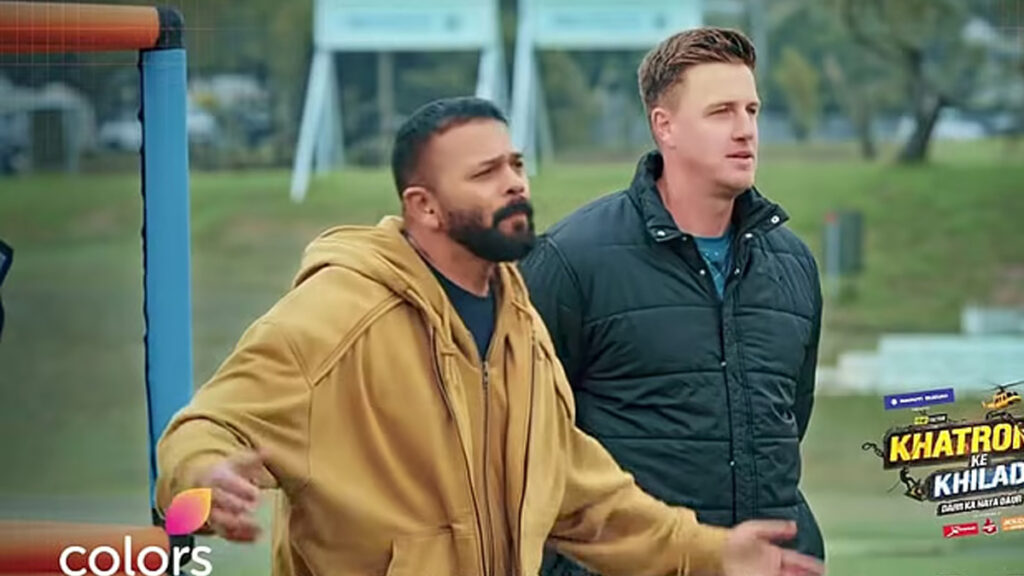
Season 15, hosted by Rohit Shetty and filmed in Cape Town, puts contestants through physical and mental challenges under the show’s “Darr Ka Naya Daur” positioning. Here, the commercial proposition is different from Bigg Boss.
The show is built around action, adrenaline, celebrity personalities, resilience and performance.
That creates natural territory for categories such as automotive, technology, fitness, consumer electronics, beverages and personal care.
The format demonstrates an important reality-advertising principle: the audience mindset created by the content matters.
A viewer watching a high-adrenaline stunt is in a different emotional environment from someone watching a cooking competition or a relationship show.
For brands, that context can be as important as reach.
And the enduring value of a television-led franchise such as Khatron Ke Khiladi is precisely that it can create a shared viewing moment at scale, while its surrounding digital ecosystem can extend that moment into clips, conversations and social participation.
India’s Best Dancer: talent as an attention engine
Talent reality remains another major pillar.
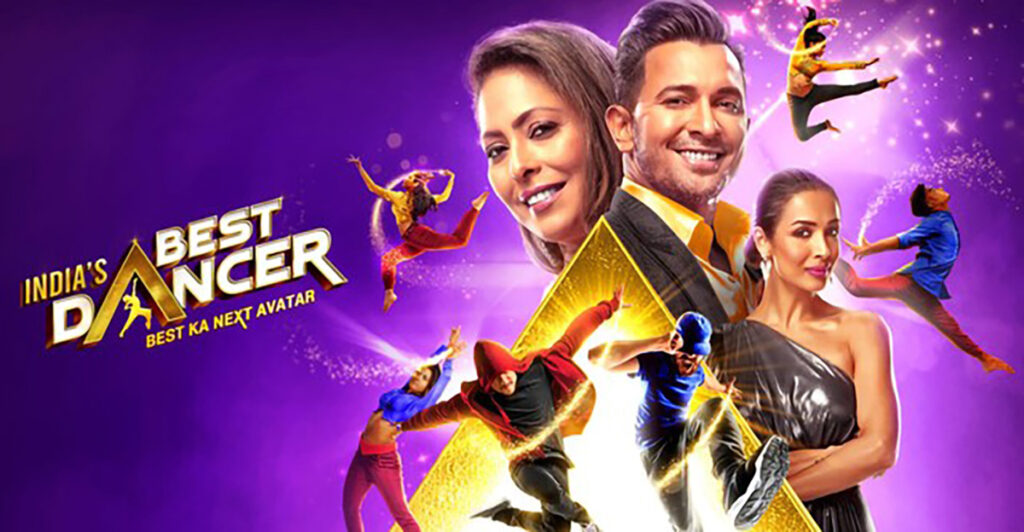
India’s Best Dancer Season 5 has returned on Sony Entertainment Television and Sony LIV, with Karisma Kapoor joining the show and dance remaining at the centre of the format. Sony LIV categorises the property as a Hindi reality/dance series for 2026.
Unlike captive formats, the emotional hook here is not primarily conflict or strategy.
It is talent, aspiration and performance.
That creates a different brand environment, one where advertisers can associate themselves with achievement, youth, music, culture and personal transformation.
The larger lesson is that “reality” is not a single audience proposition.
It is a collection of different emotional environments, and television remains a powerful home for many of them, even as streaming gives those properties additional ways to reach audiences.
Splitsvilla: when fandom meets commerce
MTV Splitsvilla X6 demonstrates how reality can intersect with youth culture, creators, fashion and commerce.
The season crossed 260 million watch-time hours on JioHotstar, according to JioStar. The franchise has increasingly positioned itself around relationships, personalities, fashion and youth conversation.
But its commercial evolution is perhaps more interesting than its reach.
The latest season introduced a “Shop The Look” integration with NEWME, enabling viewers to purchase contestants’ outfits directly through JioHotstar. Exact-match products were connected to the looks worn by contestants, bringing content discovery and product discovery closer together.
The journey effectively becomes:
content → contestant → fandom → product discovery → commerce
That is very different from traditional sponsorship.
The viewer does not simply see the brand.
The entertainment itself becomes the trigger for discovery.
And the platform can potentially facilitate the next step.
Yet the franchise’s ability to build youth fandom is not solely a streaming phenomenon. Television-led reality has long created personalities and cultural conversations that spill into other platforms. Streaming and commerce are extending that behaviour rather than creating it from scratch.
Shark Tank India: when the product is already part of the story
If Splitsvilla demonstrates the connection between entertainment and fashion commerce, Shark Tank India represents perhaps the most obvious intersection of entertainment and business.
The premise itself revolves around entrepreneurs, products, pitches, investments and consumers.
Brands therefore enter an environment where commercial conversations are already part of the editorial narrative.
Season 5 provides an especially useful case study.

An independent Ormax Media study of Lahori Zeera’s sponsorship and in-show integration on Shark Tank India S5 covered 600 respondents, 300 viewers and 300 non-viewers, and measured awareness, consideration, intent, sponsor recognition and message association.
The research found statistically significant lifts across the brand funnel among viewers.
57% of viewers correctly identified Lahori Zeera as the sponsor when shown a de-branded image of the integration, putting the result in the top 30% of Ormax’s sponsorship benchmarks.
Even more strikingly, 66% of viewers associated the “Apna Desi Thanda” message with Lahori Zeera, compared with 39% of non-viewers. The integration recorded an Ormax Mpact Score of 94, putting it in the top bracket achieved by only 9% of the projects in Ormax’s database.
This is where the measurement conversation becomes important.
The question is no longer simply:
How many people saw the brand?
It becomes:
What did the brand association achieve?
And importantly, the case also shows why television remains commercially relevant: a reality format can integrate a brand into the programme itself, rather than relying solely on what happens around the content on digital platforms.
Lock Upp, Alliance and The Traitors: streaming is rewriting part of the reality playbook
Streaming platforms are also pushing reality beyond television’s traditional formats.
Lock Upp represents the evolution of captive reality into a digital-first environment. Netflix’s 2026 slate includes the franchise among its unscripted offerings, positioning the format around personalities locked away in a new-age prison and forced to confront challenges, conflict and redemption.

Alliance, meanwhile, pushed the genre towards strategy.
The Prime Video format brought celebrities into a game built around alliances, challenges and shifting team dynamics, demonstrating how daily streaming can turn a strategic reality format into a habitual viewing proposition.
And The Traitors represents another direction: high-concept psychological reality.
Its appeal comes not from simply watching contestants live together, but from trying to understand deception, trust and strategy.
This is significant for advertisers because streaming does not necessarily have to replicate television’s mass-market proposition.
It can instead offer distinctive audiences, high engagement and format innovation.
But the rise of these formats should be read as an expansion of the reality category, not a verdict on television. Television continues to dominate in mass-reach franchises and established viewing habits, while streaming is opening new territory for experimentation.
Laughter Chefs: the power of the hybrid
Then there are formats that deliberately blur genre boundaries.
Laughter Chefs combines celebrity entertainment, cooking, competition and comedy.

That hybrid nature is commercially useful because the environment itself creates multiple natural brand categories.
Food brands.
FMCG.
Kitchen appliances.
Grocery.
Delivery platforms.
Consumer durables.
The important point is not that every one of these categories must advertise on the show.
It is that the format creates multiple contextual entry points for advertisers.
That is one of reality entertainment’s biggest strengths.
And again, the value lies in the format rather than simply the platform. Whether audiences encounter such a property through television, streaming or both, the emotional environment created by the show is what gives brands a reason to participate.
The creator economy is changing the value of contestants
There is another layer to the reality business: the contestant itself has become a media asset.
A reality contestant can enter a show with an existing social following, build greater visibility through the season and leave with a community that exists independently of the programme.
That creates a bridge between television, streaming and the creator economy.
The contestant can become:
• a social media personality;
• a brand ambassador;
• a creator;
• a source of user-generated content;
• a participant in post-show campaigns.
This means the value of a reality partnership does not necessarily end with the season finale.
The programme can create talent assets that brands can continue to work with.
That is particularly important for youth-oriented formats such as Splitsvilla, where the relationship between contestants, creators and audiences is already part of the entertainment proposition.
The second-screen effect
The rise of social media has also changed what it means to “watch” reality.
A viewer may be watching an episode on television while simultaneously following reactions on Instagram, YouTube, X or other platforms.
A dramatic moment becomes a clip.
A contestant’s statement becomes a meme.
A disagreement becomes a debate.
A fashion look becomes a product recommendation.
A contestant becomes a creator.
Bigg Boss provides a particularly clear demonstration of this second-screen effect, with JioStar reporting 1.7 billion social engagements and 30 million user-generated memes in 2025.
This gives brands another opportunity.
The programme creates the original moment.
The audience creates the amplification.
The brand can potentially participate in both.
The important shift, therefore, is not from the television screen to the smartphone. It is from a single-screen viewing model to a connected viewing ecosystem in which television can create the moment and digital platforms can help it travel.
Reality is increasingly regional
The Indian reality market is also becoming more multilingual.
Bigg Boss now spans six languages, Hindi, Tamil, Telugu, Kannada, Malayalam and Bangla.
JioStar says the franchise reaches more than 200 million viewers across Hindi-speaking markets and more than 300 million viewers in southern India, while eight in 10 television viewers in the South engage with the show.
That matters because the commercial opportunity is not simply national scale.
It is the combination of scale and cultural specificity.
A familiar franchise can be adapted to individual language markets while retaining its broader identity.
For brands with regional distribution or market-specific objectives, that creates an environment where entertainment can deliver both familiarity and local relevance.
Television’s role is particularly significant here because regional broadcasting allows established reality franchises to build habitual, culturally rooted audiences at scale, while streaming can provide additional access and engagement around them.
Why reality fits the new advertising economy
The growth of reality entertainment is happening alongside a broader change in advertising economics.
Digital advertising reached ₹94,700 crore in 2025, growing 26% and accounting for nearly two-thirds of total advertising revenues, according to FICCI-EY. The report also notes that advertisers are shifting towards formats that are performance-led, measurable and commerce-linked.
That is exactly where reality is increasingly heading.
But television continues to bring a set of commercial strengths that remain difficult to ignore: scale, frequency, appointment viewing, established franchises and mass cultural relevance.
The format can offer:
Reach: large audiences around established franchises.
Frequency: recurring episodes and habitual viewing.
Participation: voting, chats, polls and interactive features.
Fandom: emotional investment in contestants and formats.
Social amplification: memes, clips, conversations and UGC.
Talent: contestants and hosts who can extend campaigns beyond the programme.
Commerce: integrations that can potentially connect entertainment to product discovery and purchase.
The commercial proposition therefore becomes broader than a television spot, but it does not have to become separate from television.
The commerce connection
The rise of commerce media makes this development even more significant.
India’s e-commerce and point-of-sale advertising market grew 50% to ₹22,000 crore in 2025, according to FICCI-EY.
That creates a broader industry environment in which advertising, content and commerce are increasingly converging.
The Splitsvilla–NEWME integration is one example.
The Shark Tank India–Swiggy Instamart ecosystem provides another example of how brands can attempt to shorten the distance between entertainment and transaction.
But there is an important distinction.
Advertisers should not assume that every content-to-commerce integration will automatically produce a particular click-through rate or conversion rate. Those outcomes need to be measured at the campaign level.
The bigger trend, however, is clear: the entertainment screen is increasingly becoming a discovery surface.
Beyond ratings: what exactly are brands buying?
Television ratings remain an important currency.
That point matters.
The expansion of reality across streaming and social platforms has made the measurement conversation considerably broader, but it has not made traditional television measurement irrelevant.
A marketer evaluating a reality partnership can increasingly ask:
How many people watched?
How frequently did they return?
How many interacted?
Did audiences discuss the property?
Did they remember the brand?
Did the integration improve awareness or consideration?
Did contestants extend the campaign into social media?
Did the content lead to product discovery or commerce?
The Lahori Zeera case study demonstrates how far this measurement can go. Ormax did not simply measure exposure; it compared viewers and non-viewers across multiple brand parameters, including awareness, consideration, intent, sponsor recognition and message association. (Ormax Media Pvt. Ltd.)
That is the direction in which reality advertising is likely to move.
From TV ratings to full-funnel measurement, not instead of ratings, but alongside them.
The JioStar perspective
JioStar’s Bigg Boss data offers perhaps the clearest picture of how the commercial proposition is evolving.
The franchise recorded more than 500 million reach, 438 billion viewing minutes, 9.32 billion votes and 43 million live chats in 2025, according to JioStar. It also generated more than 1.7 billion social engagements and 30 million user-generated memes.
More than 625 brands across 46 categories leveraged the franchise during the year, while JioStar reported average brand-study uplifts of 1.33x in awareness, 1.26x in consideration and 1.25x in purchase intent.
The numbers also demonstrate how reality is moving from passive viewing towards participation.
For advertisers, the larger question is no longer simply how many people a reality property can reach.
It is how effectively the property can hold attention, create participation and give the brand a meaningful role within that experience.
Television remains central to that equation because it continues to provide the mass audience and recurring viewing habit around which the broader ecosystem can form.
The reality advantage is not the same for every brand
There is, however, a caveat to the growing enthusiasm around reality.
Not every reality property is right for every advertiser.
The value of an integration depends heavily on contextual fit.
A beauty brand may find a natural environment in a youth and fashion-led property.
A food brand may be better suited to a cooking format.
An automotive or fitness brand may find stronger relevance around an action-oriented show.
A financial or business platform may fit naturally into Shark Tank India.
The objective should therefore not simply be to find the biggest reality show.
It should be to find the right cultural environment in which the brand can participate meaningfully.
That is where integration becomes more than visibility.
And it is why the choice between television and streaming should not always be framed as an either-or decision. The stronger question is which combination of platforms and formats gives the brand the right audience, context and role.
From television property to attention ecosystem
The evolution of Indian reality entertainment points towards a larger transformation in the media business.
Bigg Boss demonstrates how a television franchise can become a multilingual, multi-platform ecosystem with enormous participation and social conversation.
Splitsvilla shows how youth reality can connect fandom with fashion and commerce.
Shark Tank India demonstrates how a reality format can place brands inside an environment where commercial conversations are already part of the content.
Khatron Ke Khiladi shows the value of action, aspiration and celebrity.
India’s Best Dancer demonstrates the enduring appeal of talent and performance.
Laughter Chefs illustrates the potential of hybrid formats that combine multiple entertainment hooks.
And OTT properties such as Alliance, Lock Upp and The Traitors show that streaming platforms are increasingly willing to experiment with strategy, psychology, captivity and participation.
Together, these formats reveal something important.
There is no longer one reality audience.
There are multiple communities, each built around a different emotional hook.
And for advertisers, that means reality is becoming less of a single media category and more of a portfolio of attention environments, with television and streaming playing complementary roles within it.
The next phase of reality advertising
The next phase is likely to see even greater convergence between television, streaming, social media, creators and commerce.
Reality properties are already becoming more interactive.
Contestants are becoming talent assets.
Streaming platforms are extending shows beyond scheduled episodes.
Brands are moving from sponsorship towards contextual integration.
And commerce is beginning to sit closer to the entertainment experience.
But the fundamental advantage remains surprisingly simple.
Reality gives audiences something to care about.
They vote.
They debate.
They pick favourites.
They share clips.
They create memes.
They follow contestants.
They discover products.
And increasingly, they carry those conversations from one platform to another.
That is what makes reality particularly valuable in an attention economy where the biggest challenge for brands is no longer simply reaching consumers.
It is giving them a reason to stay.
The Bigg Boss numbers make the scale of that behaviour difficult to ignore: more than 500 million reach, 438 billion viewing minutes, 9.32 billion votes and 1.7 billion social engagements in a single year, according to JioStar.
The Splitsvilla X6 numbers show that this isn’t limited to mass Hindi reality: the youth franchise crossed 260 million watch-time hours on JioHotstar, while simultaneously experimenting with content-to-commerce through NEWME.
And the Lahori Zeera case study on Shark Tank India demonstrates that the conversation is moving beyond reach towards measurable brand impact, with an Ormax Mpact Score of 94.
The Reality Advantage, therefore, is not simply about putting a brand in front of millions of people.
It is about becoming part of something those millions of people already care about.
As the boundaries between television, streaming, social media, creators and commerce continue to blur, the opportunity is not to choose one screen over another. It is to understand what each contributes to the reality experience.
Television brings scale, familiarity and cultural impact. Streaming adds flexibility, innovation and deeper digital engagement. Social extends the conversation. Creators extend the talent. Commerce can shorten the path from discovery to purchase.
Together, they are turning reality entertainment from programming inventory into an increasingly powerful attention ecosystem.
The Reality Advantage is a series by Indiantelevision.com examining the evolving relationship between reality entertainment and advertising, from the formats commanding attention to the brands finding new ways to participate, integrate, measure and convert that attention.