
GECs
Rupali Ganguly, Rajan Shahi explore Anupamaa’s impact on women’s independence
The show’s journey sparks a wider conversation on self-worth, money and agency


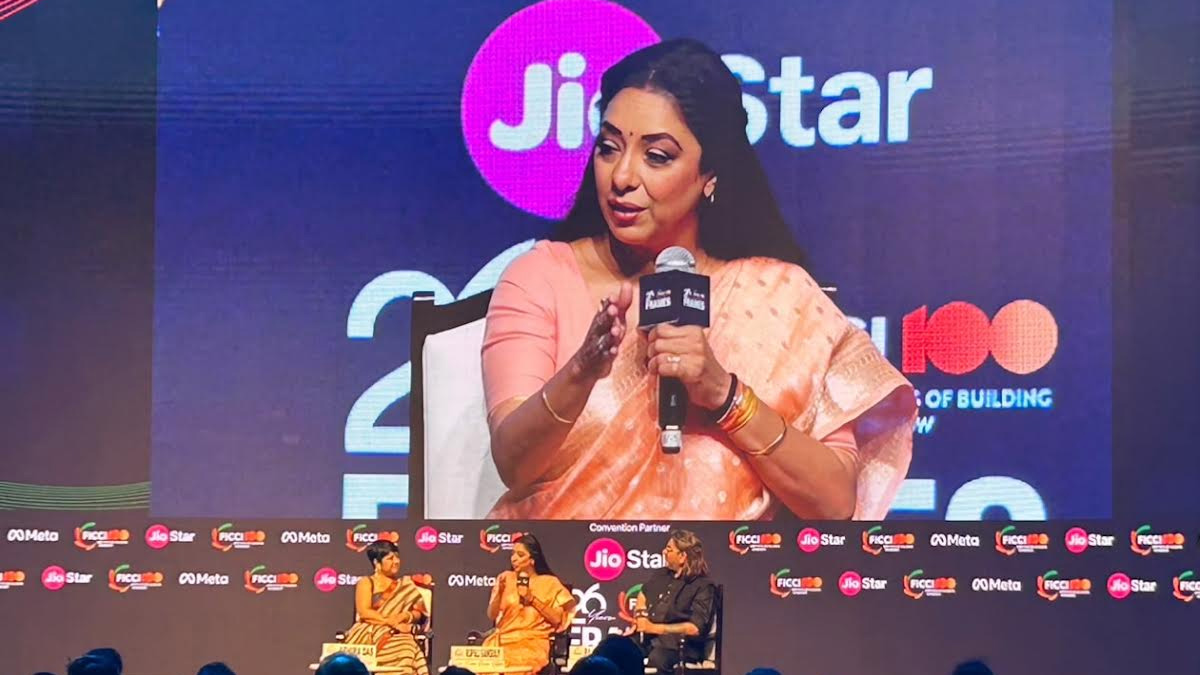
MUMBAI: Sometimes, the biggest changes begin with the smallest conversations. At FICCI Frames 2026, the journey of Anupamaa became the starting point for a wider discussion on how mainstream television can reshape the way Indian women see independence, self-worth and their place within the family.
The session, titled From Screen to Society: Rewriting Women’s Stories of Independence, explored the cultural influence of prime-time storytelling through the experiences of Anupamaa, the homemaker at the heart of the long-running television drama. The conversation brought together the show’s lead actor Rupali Ganguly and director-producer Rajan Shahi, with journalist and writer Abhira Das.
At the centre of the discussion was a simple shift in perspective: a woman who spends years building and sustaining a family should not have to put her own identity, ambitions or financial security on hold.
Anupamaa emerged in the conversation as a character designed around the everyday realities of homemakers rather than larger-than-life drama. The show arrived in July 2020, at a time when the television industry was dealing with the disruption caused by the Covid-19 pandemic and widespread questions about the future of traditional television viewing.
Its central premise, however, was deliberately familiar. Instead of presenting a young romantic heroine, the series placed a middle-aged homemaker at the heart of the narrative. That decision helped turn domestic routines, family responsibilities and the often invisible labour of women into prime-time storytelling.
The show’s resonance was also linked to the personal experiences behind its creation. The character drew from observations of mothers and homemakers whose contribution to the family often goes unrecognised, despite the fact that their work continues seven days a week without a formal salary or conventional professional recognition.
A recurring theme at the session was the way women can gradually disappear into their roles as mothers, wives and caregivers. Anupamaa’s story has repeatedly challenged that idea by presenting self-care, education, work, friendships, mobility and financial independence as legitimate parts of a woman’s life rather than privileges she has to earn.
The conversation also highlighted the importance of small, recognisable moments. Learning to drive, going for a walk, buying something for oneself, making time for friends or simply having an identity beyond the family were presented as seemingly ordinary actions that can carry significant meaning.
The show’s treatment of money has been another important part of that journey. Moments involving Anupamaa opening a bank account, writing a cheque and earning her own money brought financial independence into the domestic conversation. Rather than treating money as an abstract economic issue, the storytelling connected it to dignity, decision-making and a woman’s ability to exercise greater control over her own life.
That emphasis also extended to the idea of guilt. Women were described as often feeling guilty about spending time on themselves, pursuing work, looking after their appearance or making choices that do not directly benefit their families. Anupamaa has attempted to reframe that guilt, suggesting that caring for oneself does not diminish the care given to others.
The show’s influence has extended beyond its core female audience as well. The discussion touched on the growing number of men and younger viewers who watch Anupamaa, creating opportunities for conversations about domestic labour, mothers, wives and the expectations placed on women within families.
This wider audience has helped turn television viewing into a shared family conversation. The show’s themes have also travelled into everyday life, with viewers connecting its storylines to their own decisions around health, mobility, work, relationships and personal time.
Age has been another defining element. Anupamaa challenged the familiar television convention that leading female characters need to be young or fit a particular physical ideal. Its central character is a woman whose life experience, rather than youth, becomes part of her strength.
That idea also informed the way the character was visually presented. Everyday saris, household routines and practical footwear were used to make the protagonist recognisable as a homemaker rather than presenting her through the conventional glamour associated with a television heroine.
The session also underlined how representation can influence aspirations. A woman seeing a character learn to drive can begin considering driving herself. A homemaker watching another woman open a bank account can begin thinking about financial independence. A mother watching someone make time for herself can begin to question why she has been expected to put herself last.
In that sense, Anupamaa’s cultural impact lies not only in the size of its television audience, but in its ability to turn familiar domestic experiences into conversations about agency.
The larger message from the FICCI Frames discussion was that mainstream entertainment can do more than reflect society. When everyday experiences are given space on screen, they can also encourage audiences to question inherited expectations and imagine different possibilities for their own lives.
As television continues to compete with an ever-expanding universe of digital content, the conversation around Anupamaa offered a reminder that sometimes the most powerful stories are the ones that make audiences recognise themselves, and then ask what they might change.






