
Television
Lights out: India’s television business is flying blind, and nobody quite knows for how long
BARC has gone dark, broadcasters are guessing, and digital is quietly cheering


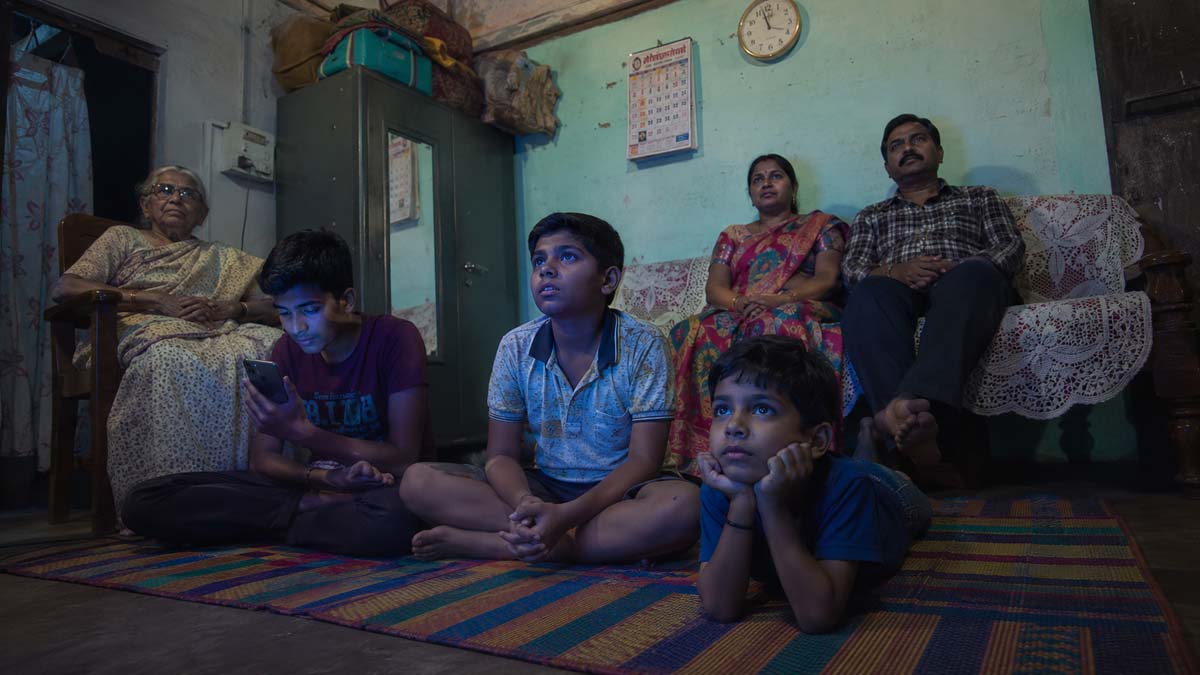
MUMBAI: The screens are still on. The scorecard is not. For the umpteenth time in its history, every single genre of Indian television — news, general entertainment, films, sport, kids, music, infotainment, the lot — is transmitting into a void where the ratings used to be. The ministry of information and broadcasting (MIB) has directed the Broadcast Audience Research Council (BARC) to suspend publication of ratings until it receives registration/licence under the Television Ratings Policy, 2026. BARC has obeyed.
And so India’s roughly Rs 30,000-crore television advertising market, a business built almost entirely on a single weekly number, has been asked to operate on faith, vibes and last quarter’s spreadsheet.
This is not a glitch. It is policy, and a fairly blunt instrument of it.
One wrinkle often lost in the noise: BARC is not simply renewing a licence. The Television Ratings Policy, 2026 does away with the decade-old 2014 framework altogether and replaces it with an entirely new regulatory architecture. In effect, the industry’s sole currency is being asked to qualify all over again under a tougher rulebook built around transparency, governance and accountability. That makes this less a routine paperwork exercise than a regulatory reboot of India’s television measurement ecosystem.
There is another ambition buried inside the reforms being sought under the Television Ratings Policy, 2026. For the first time, the government wants audience measurement to become technology-neutral rather than television-only. The new framework is designed to capture viewing across cable, DTH, connected TVs and OTT-enabled screens within metered homes, acknowledging a reality broadcasters have been wrestling with for years: audiences no longer consume content on just one screen, so the industry’s currency can no longer afford to measure only one.
Why now, why this hard? The proximate cause is procedural rather than punitive, though it has landed like the latter. Clause 14.2 of the new ratings policy is unambiguous: no agency may generate or publish ratings unless it complies with the revised framework. BARC applied within the extended 60-day window the ministry itself granted in May, after the Indian Broadcasting and Digital Foundation (IBDF) lobbied for more time. It even built the contentious landing-page exclusion mechanism required under clause 5.4.1, which strips channel-promotion viewing on cable and DTH set-top boxes out of the ratings calculation. Everything, on paper, was on schedule.
Then the All India Digital Cable Federation (AIDCF) went to the Kerala high court and got clause 5.4.1 stayed. Broadcasters cried foul, arguing distributors were trying to protect a viewership-inflation racket via landing pages. The ministry, having already conceded ground to broadcasters once, appears to have concluded that a legal challenge to one clause should not be allowed to hold the entire reform hostage — and effectively froze ratings pending licence renewal, even as litigation over one of the policy’s key provisions continued.
The Kerala high court has since adjourned the matter; the next hearing is not until mid-July, and few in the industry expect a quick resolution even then. Nishikant Dubey, who chairs parliament’s standing committee on the ministry, has since waded in publicly, questioning why a private, industry-funded body gets to set the number that decides advertising rates at all. That is a governance argument dressed up as a data outage, and it will outlast this particular blackout.
Who bleeds and how fast? Not everyone bleeds at the same rate, and that is the story worth watching.
General entertainment channels are the most exposed. GEC pricing has historically been closely linked to ratings — a show’s overnight or weekly number decides its ad rate the following week, its renewal, its slot. Take that away and sales teams are negotiating with nothing but goodwill and last month’s memory. Programming heads, meanwhile, have lost their compass entirely. New fiction launches, reality format bets, weekend specials — every green light in Indian television is normally pulled or pushed by a Thursday number. Without it, commissioning decisions default to gut feel, star power and, inevitably, whichever promo did best on Instagram. That is not measurement. That is guesswork with better lighting.
News channels are likely to be less affected. As media veterans have long pointed out, news pricing was never fully correlated with ratings in the first place — it is built on brand, distribution muscle and years of relationship pricing, which is partly why the genre absorbed an earlier, narrower ratings freeze with barely a shrug.
Sport sails through more or less untouched, because a FIFA World Cup or an IPL is sold on event economics and sponsorship, not weekly TRPs. Even here the picture is not entirely rosy: industry executives opine that ad volumes on linear television around the ongoing FIFA World have softened, with connected television quietly hoovering up a broader base of advertisers instead.
Kids’ and infotainment channels — smaller, thinner-margined, more dependent on a number to prove their worth to a media planner who has never watched them — are the most vulnerable of all.
Regional and language channels, always the least visible in a Mumbai-centric conversation, may in fact suffer worst: they have neither the sport genre’s event economics nor the news genre’s relationship pricing to fall back on.
The marketers dilemma: no data, no discipline. Put yourself in a brand custodian’s chair for a moment. Every media plan built this year assumed a rolling stream of weekly numbers to check reach, frequency and wastage. That stream has stopped. Historical viewership trends hold up reasonably well over a four-to-eight-week window, brand custodians say, so short-term planning survives on muscle memory. But muscle memory has a shelf life, and marketing, unlike wine, does not improve with age.
There is a subtler cost too, one that rarely makes the trade press: accountability. A CMO justifying a television spend to a chief financial officer needs a number to point to. Digital gives that number instantly — impressions, clicks, conversions, cost per acquisition, all served up before the campaign has even finished running. Television, without ratings, gives nothing but a media plan and a prayer.
In a boardroom increasingly obsessed with return on ad spend, that asymmetry is corrosive. Every quarter this drags on, television’s share of the marketing conversation shrinks a little further, not because the medium stopped working, but because it stopped being able to prove it.
Agency and media executives, refreshingly, are not panicking. Two decades of budget diversification into digital, print and out-of-home have given them ballast that did not exist during the 2012 TAM suspension or the 2015 TAM-to-BARC migration. The trouble starts if this drags into the festive quarter — Ganesh Chaturthi, Navratri, Durga Puja, Diwali — high-stakes non-fiction properties, festive specials, and premium slot pricing all lean on early ratings signals to justify a premium.
Without that number, expect agencies to quietly nudge incremental festive budgets towards Meta and Google, which offer something television currently cannot: same-day proof of impressions, clicks and reach. Every week this blackout continues is a week of measurement-envy transferred straight to digital’s bottom line. Some media buying desks, ever pragmatic, are already leaning more heavily on proxy metrics — Zapr’s real-time panels, social listening, app download spikes during a show’s broadcast slot — imperfect substitutes dressed up as sufficient ones.
The investor angle nobody is talking about. Here is the delicious irony buried in all this. The entire point of the Television Ratings Policy, 2026, was to break BARC’s monopoly and invite competition into audience measurement, which is why the government even lowered the minimum net-worth requirement for a ratings agency from Rs 20 crore to a more approachable Rs 5 crore. Not a single new entrant has applied. Industry executives estimate that building a credible, metered-home measurement system from scratch could cost well over Rs 1,000 crore, and no rational investor commits that kind of capital into a market where the regulator can, and evidently will, switch the entire currency off overnight. The blackout meant to prove the old monopoly’s fragility has instead demonstrated exactly why nobody wants to build a rival to it. Regulatory intent and regulatory outcome are, once again, strangers to each other.
How long and what it costs the ecosystem: Nobody, including the ministry, has offered a date. Ratings return only after BARC’s licence is renewed, its governance reforms — independent directors up to a third of the board, the metered-home sample widening towards 120,000 homes, tighter audits — are certified compliant, and the landing-page litigation is resolved one way or another in Kerala. History offers little comfort on timing: the TAM blackout during cable digitisation in 2012 and the TAM-BARC transition in 2015 both dragged on for months, not weeks.
A protracted freeze does three things at once. It starves smaller and regional broadcasters of their only currency to court advertisers. It hands digital platforms a structural, data-driven advantage precisely when festive budgets are being locked in. And it invites exactly the kind of measurement fragmentation — Zapr numbers here, social engagement metrics there, self-reported claims everywhere — that ratings were invented to prevent in the first place. There is a fourth cost, less immediate but more corrosive: trust.
Every extended data-dark period teaches broadcasters, advertisers and agencies alike that the currency can vanish on a regulatory decision, which makes the next investment in Indian television measurement — public or private — that much harder to justify.
There is a school of thought, only half in jest, that suggests the entire industry has never been happier. With no widely accepted number available, every channel is technically performing exactly as well as it claims to be, and no rival can produce evidence to the contrary. That is the closest television has come to universal agreement in living memory. It will not last, and it should not.
Broadcasters wanted a fairer rulebook. Regulators wanted cleaner data. Distributors wanted their landing pages protected. Everybody got a little of what they asked for, and the entire industry got switched off in the process. India’s television business built its empire on a single Thursday-morning number for thirty years. It may spend the rest of this year discovering just how addicted to that number it really was — and just how quickly digital is happy to fill the silence.






