
TCHxVAM2026
TCH x VAM 2026: India’s content boom sparks debate over ads, subscriptions & scale
At TCH x VAM 2026, streamers unpacked the race between reach, retention and regional storytelling


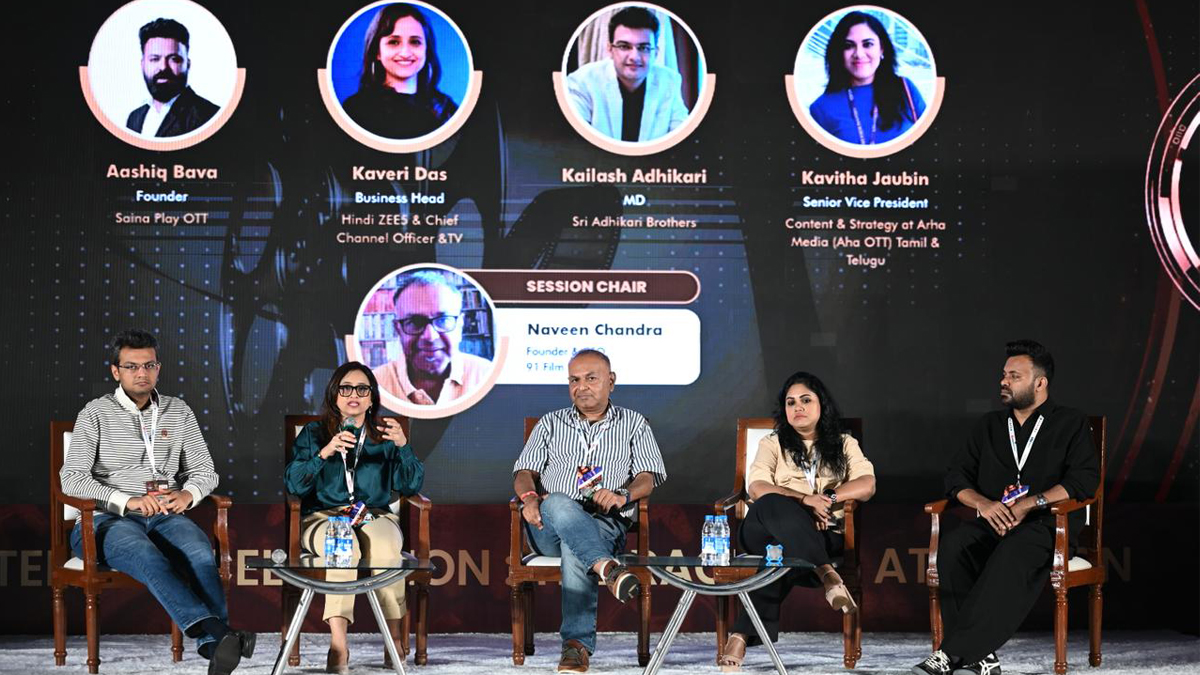
MUMBAI: In India’s streaming wars, content may still be king, but attention is the new currency. And at The Content Hub x VFX & More Summit 2026, the industry made one thing clear: winning eyeballs today requires far more than simply uploading a good show and hoping the algorithm plays fairy godmother.
During the panel discussion “Cracking The Indian Content Code”, Saina Play OTT founder Aashiq Bava, Sri Adhikari Brothers MD Kailash Adhikari, ZEE5 – Hindi business head and &TV chief channel officer Kaveri Das and Arha Media senior vice president – content & strategy Kavitha Jaubin, with the session chaired by 91 Film Studios founder & CEO Naveen Chandra, unpacked how India’s OTT ecosystem is rapidly reshaping itself around regional storytelling, subscription fatigue, advertising pressures and ever-shrinking attention spans.
The conversation revealed just how fragmented and fascinating India’s content economy has become. Platforms emerging from completely different backgrounds are now competing in the same digital arena. While ZEE5 evolved from television broadcasting, Aha OTT grew out of a film-production legacy, and Saina Play OTT transitioned from the era of music cassettes and VHS distribution into streaming.
Yet despite their vastly different origins, the central challenge sounded remarkably similar across the board: how to keep viewers coming back when content is available everywhere, all the time, and often for free.
A recurring theme throughout the session was that Indian audiences are no longer consuming content in the same way they did even a few years ago. Younger viewers are increasingly treating theatres as social destinations while reserving OTT viewing for intimate, personal consumption. Cinema-going, according to the discussion, has become less about watching a film and more about participating in a shared cultural moment with friends, family and fandoms.
That shift is also changing how content is created. The panel explored how storytelling styles differ dramatically across platforms. Television, streaming, podcasts, micro dramas and theatrical films now demand entirely different creative grammars, pacing structures and commercial calculations. Weekly television ratings continue to create relentless pressure for broadcasters, while streaming platforms operate on a more data-heavy model driven by retention metrics, watch time and audience drop-off points.
The discussion also highlighted the widening divide between ad-supported and subscription-led viewing habits. India may be witnessing strong digital subscription growth, but panellists acknowledged that the market remains deeply price-sensitive. Premium storytelling can attract paying audiences, but only if platforms offer differentiated narratives, strong emotional engagement and pricing models tailored to regional markets.
Advertising, meanwhile, remains both an opportunity and a headache. OTT platforms are increasingly relying on hybrid models combining subscription video-on-demand, transactional viewing and advertising-led content. However, with free short-form content flooding YouTube and Instagram, convincing advertisers to stay loyal to a platform is becoming harder than ever.
The panel also touched upon the complexity of India’s multilingual audience behaviour. Regional storytelling may be booming nationally, but cultural nuances still dictate what succeeds in each market. Tamil audiences were described as deeply story-driven and content-sensitive, while Telugu viewers were characterised as more spectacle-oriented, favouring drama, colour and larger-than-life entertainment. Even when the same story travels between markets, platforms are increasingly tweaking tone, pacing and treatment to suit regional sensibilities.
Interestingly, the conversation revealed how streaming is beginning to blur these traditional language boundaries. Telugu audiences are increasingly consuming Tamil content, while Malayalam films continue to find enthusiastic viewers far beyond Kerala through subtitles and OTT discovery.
Malayalam cinema, in particular, emerged as a major talking point. The panel reflected on how the industry has built a national reputation without relying heavily on formulas, star systems or conventional commercial structures. Strong writing, emotional specificity and relatable storytelling were identified as key reasons Malayalam films continue punching far above their weight at the box office and on streaming platforms.
The importance of deep content libraries also came into focus. Catalogues featuring classic films and legacy stars are helping niche platforms survive in an increasingly crowded OTT market where several regional streamers have already shut shop. Older films are finding new life as viewers discover actors, directors and genres through newer breakout hits.
Another major takeaway from the session was that content discovery is now as important as content creation itself. Platforms are no longer just competing on what they make, but also on how frequently they release content, how effectively they localise it, and how intelligently they programme audience behaviour. Daily engagement metrics, dubbed content strategies and release cadence are all becoming critical business levers.
Despite all the conversations around AI, algorithms and platform economics, the panel repeatedly circled back to one enduring truth: audiences still respond most strongly to stories that feel authentic, emotionally resonant and culturally rooted.
As India’s entertainment business races towards a future powered by data and digital scale, the summit made one thing abundantly clear: in the battle for attention, flashy tech may open the door, but compelling storytelling is still what keeps audiences glued to the screen.






