I&B Ministry
Reports suggest BARC may resume weekly TV ratings under new TRP rules
Industry awaits first rankings without landing-page viewership as policy takes effect


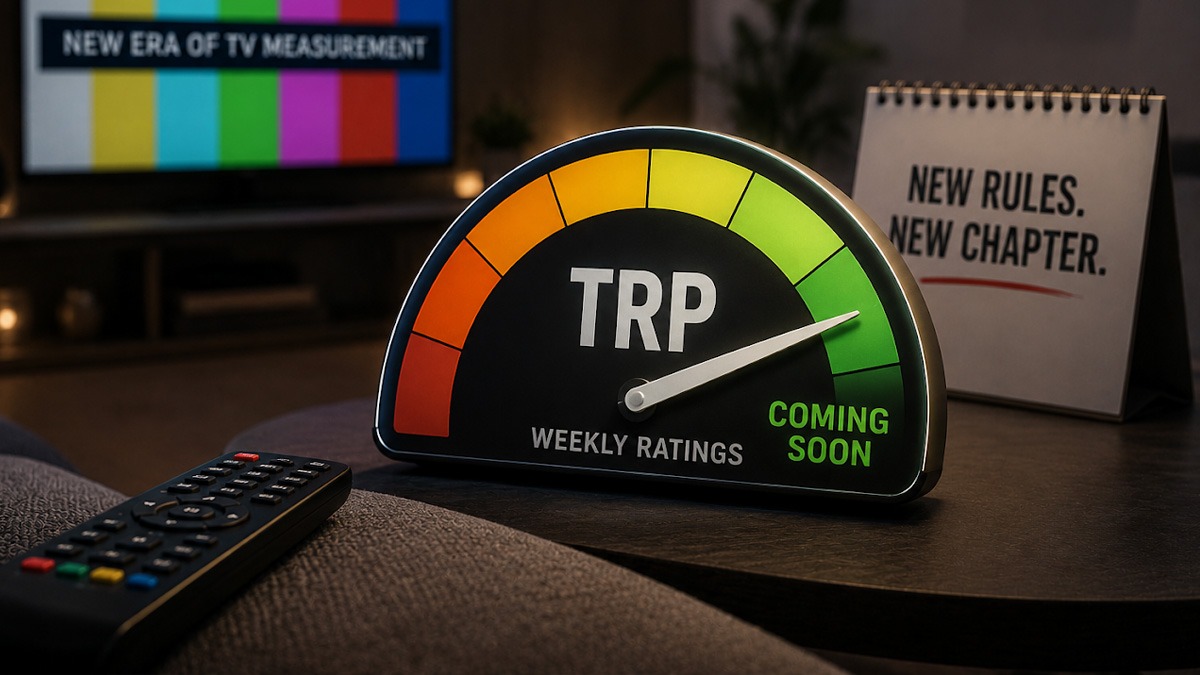
MUMBAI: The wait for India’s television scorecard may finally be nearing its end but the final cue is yet to come. According to industry reports, BARC India is expected to resume publishing weekly television ratings this week, potentially marking the first set of Television Rating Points (TRPs) under the Television Ratings Policy 2026, which excludes the controversial practice of counting landing-page viewership.
While reports suggest the ratings could return this week, neither BARC India nor the Ministry of Information and Broadcasting (MIB) has officially confirmed the restart. If the reports prove accurate, the upcoming release will be the first under the revised methodology and is expected to offer broadcasters, advertisers and media planners a clearer picture of audience preferences driven by active viewing rather than default channel placement.
The Television Ratings Policy 2026 represents one of the most significant overhauls of India’s audience measurement system in recent years. Its most immediate reform is the removal of landing-page viewership, ending the practice of counting passive viewing generated when television sets automatically tuned to preset channels on cable and DTH platforms.
The revised methodology is expected to have its biggest impact on the news genre, where several broadcasters have historically benefited from landing-page placements. Industry observers believe channels with stronger viewer loyalty and appointment viewing could gain ground, while those that relied heavily on automatic visibility may see ratings soften.
The policy also sets out a broader roadmap for the future of television measurement. It proposes expanding the audience measurement panel from 50,000 to 80,000 metered homes, introducing stronger governance, independent audits and greater transparency, while gradually moving towards technology-neutral audience measurement that includes Connected TV (CTV) viewing across smart TVs, television apps and OTT platforms accessed through television screens.
However, these broader reforms are expected to be implemented in phases. The first ratings released under the new framework are expected to continue measuring primarily linear television, with the exclusion of landing-page viewership being the most significant immediate change.
The Kerala High Court’s decision clearing the implementation of the landing-page provision has removed a key legal hurdle, fuelling speculation that weekly ratings are close to returning. However, the court’s ruling did not itself direct BARC to restart publishing ratings.
For Hindi General Entertainment Channels (GECs), the impact is expected to be comparatively modest. Broadcasters such as Star Plus, Colors, Zee TV and Sony TV largely depend on viewers intentionally tuning in for serials and reality shows, making them less reliant on landing-page exposure.
Regional broadcasters serving Tamil, Telugu, Bengali, Marathi, Malayalam, Kannada and other language markets are also expected to remain relatively resilient, thanks to strong audience loyalty. Meanwhile, movie, children’s and music channels are likely to witness only limited changes, with ratings continuing to depend primarily on programming rather than distribution advantages.
If BARC does resume ratings this week, the initial reports will be closely scrutinised by broadcasters, advertisers and media agencies looking to understand how the revised methodology reshapes the television landscape. While some movement in channel rankings is expected in the early weeks, the industry will be watching closely to see whether the new system delivers on its promise of reflecting genuine viewer choice over passive exposure.