I&B Ministry
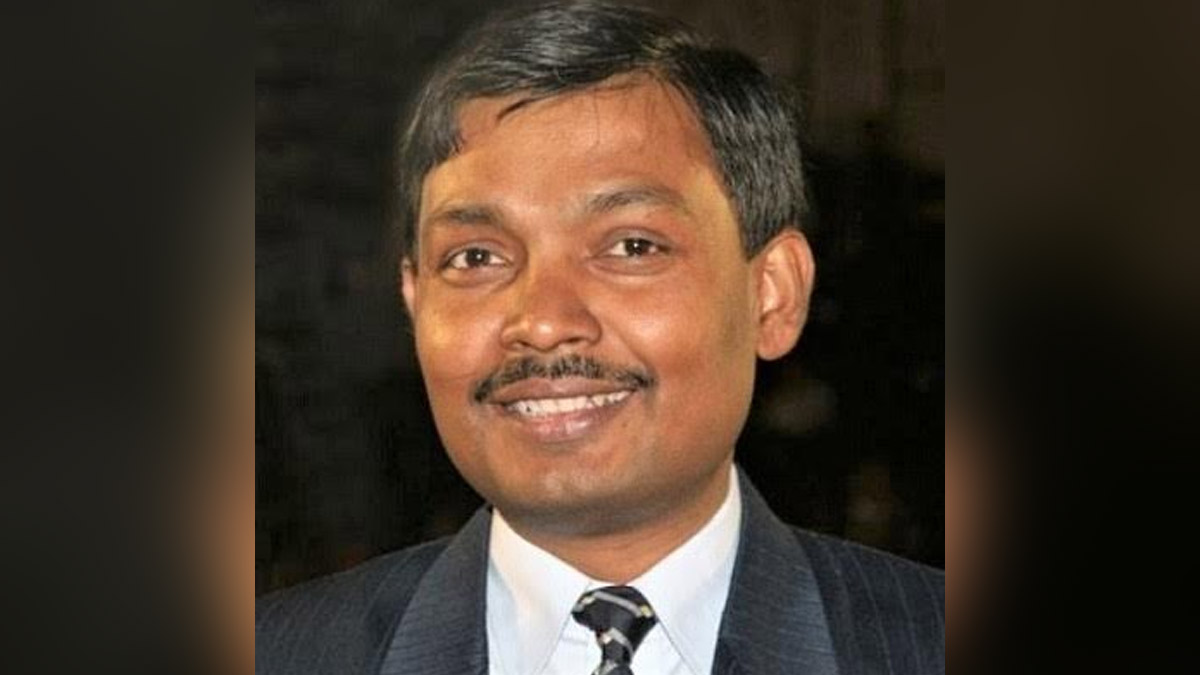
Chanchal Kumar appointed MIB secretary
1992-batch officer shifts from DoNER as Sanjay Jaju heads the north-east ministry
New Delhi: The government has rejigged its top bureaucracy, appointing Chanchal Kumar as secretary in the Ministry of Information and Broadcasting, replacing Sanjay Kumar Jaju in a swift senior-level switch.
Kumar, a 1992-batch IAS officer of the Bihar cadre, moves from the Ministry of Development of North Eastern Region (DoNER), where he had been serving as secretary. He steps into MIB as Jaju exits to take charge as secretary, DoNER.
Kumar is no stranger to handling multiple mandates. In December 2025, while at DoNER, he briefly held additional charge as secretary in the Department of Telecommunications during Neeraj Mittal’s leave from December 12 to December 21, ensuring continuity at a critical time.
Jaju, a 1992-batch IAS officer of the Telangana cadre, had taken over as secretary, MIB in February 2024, succeeding Apurva Chandra, who moved to the Ministry of Health and Family Welfare. His tenure combined administrative continuity with a sharper policy pitch on trust in India’s fast-evolving media and advertising landscape.
Speaking at the AdTrust Summit 2026 organised by the Advertising Standards Council of India, Jaju warned that misleading promotions risk eroding public trust even as digital platforms expand reach for businesses, startups and creators. He flagged rising threats from financial scams, deceptive investment schemes and fraudulent job advertisements targeting vulnerable users.
While noting that commercial speech is protected under freedom of expression, Jaju argued that misleading advertising must face regulatory scrutiny. He pushed for a shift in industry priorities—from scale to credibility, authenticity and transparency—especially in disclosures and sponsored content. Truthfulness, accountability and safeguards for vulnerable audiences, he said, must anchor the ecosystem.
Jaju’s move to DoNER and Kumar’s arrival at MIB signal a calibrated reshuffle at the top—continuity in governance, but with a clear message: credibility is the new currency.

I&B Ministry
Government sets up AI governance group to steer policy
AIGEG to align ministries, assess jobs impact, guide AI deployment.
MUMBAI: If artificial intelligence is the engine, the government is now building the dashboard and making sure everyone reads from the same screen. The Centre has constituted a new inter-ministerial body to coordinate India’s approach to AI, formalising a key recommendation from its governance framework and the Economic Survey. The AI Governance and Economic Group (AIGEG), set up by the Ministry of Electronics and Information Technology, will act as the central platform to align AI-related policy across ministries, regulators and departments, an attempt to bring coherence to what has so far been a fragmented and fast-evolving landscape.
The group will be chaired by union minister Ashwini Vaishnaw, with minister of state Jitin Prasada as vice chairperson. Its composition reflects both technological and economic priorities, bringing together the principal scientific adviser, the chief economic adviser, and the CEO of NITI Aayog, alongside key secretaries from telecommunications, economic affairs and science and technology. A representative from the National Security Council Secretariat is also part of the group, while the MeitY secretary will serve as member convenor.
At its core, AIGEG is designed to do two things: coordinate and anticipate. On the policy front, it will review existing regulatory mechanisms, issue guidance across sectors and ensure companies remain compliant with evolving legal frameworks. Beyond that, it will oversee national initiatives on AI governance, with a focus on enabling responsible innovation rather than merely regulating it.
The economic dimension is equally central. The group has been tasked with assessing how AI-driven automation could reshape jobs identifying which roles are most at risk, where those impacts may be geographically concentrated, and whether technology will augment or replace human labour. Based on these assessments, it will develop mitigation strategies and transition plans, signalling a more proactive stance on workforce disruption.
In parallel, AIGEG will work with industry stakeholders to chart a long-term roadmap for AI adoption, categorising use cases into “deploy”, “pilot” or “defer” buckets depending on readiness factors such as data availability, skill levels and regulatory clarity. The aim is to move from broad ambition to structured execution deciding not just what can be built, but what should be built now.
The group will function as the apex layer in India’s AI governance architecture, supported by a Technology and Policy Expert Committee that will track global developments, emerging risks and regulatory priorities. Together, the two bodies are expected to shape both the pace and direction of AI adoption in the country.
In a landscape where technology often outruns policy, the creation of AIGEG signals an attempt to close that gap ensuring that India’s AI journey is not just rapid, but also coordinated, accountable and economically grounded.