iWorld
We are fundamentally changing storytelling: Hotstar CEO Ajit Mohan

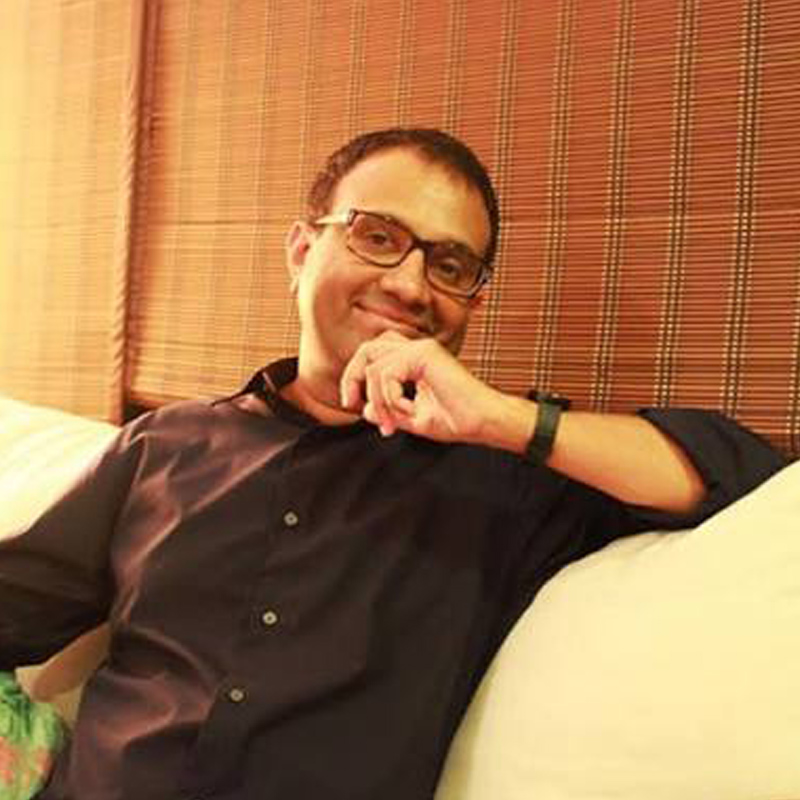
Ajit Mohan is not your flashy kind of guy. Quiet, unassuming normally, he opens up and the words flows easy when it comes to talking about his pet project—the fast-growing Star India-owned OTT service Hotstar. Over the past three years, he has gradually—with the support of Uday Shankar and Sanjay Gupta and, of course, the Murdochs—grown the service, setting new download, watch time and quality records.
With huge money riding behind the cricket rights that Star India has acquired, Mohan is going to play a crucial role in helping monetise what some are calling very expensive acquisitions. Moreover, the global big boys are gearing up to carve out huge slices of India’s one-billion-plus mobile populace. Netflix, Amazon, Facebook, YouTube and JioTV are the majors with deep pockets that will pull out all the stops in terms of content—local and global originals—to gain traction. But Mohan, while respectful of the other players, is quite clear that he and his team will be digging in their heels and will battle without yielding any quarter.
He was in Bali at APOS and he had a conversation with MPA’s Vivek Couto on stage. Excerpts from the interview:
So, what’s the latest that has happened that has got the team excited?
We crossed 7.1 million concurrent users last week. We are gunning for the largest number of concurrent users online. To the best that we know, it is eight million. And that is the number we are aiming for in this IPL. At 10 million, many elements of the internet ecosystem will be tested and challenged. We want to get to eight million before we get to 10 million. If I circle back three years ago when we launched Hotstar, 1.5 million was what was testing what the internet ecosystem could take. I think a lot of different parts of the networks are really geared up. I think we are a much better tech company than we were three years ago. I do believe there is a path to 10 million but I don’t want to jinx it.
Tell us a little bit about your journey at Hotstar.
A good friend of mine who works for one of the global tech companies told me in 2014 when I was about to take up the position: “Many broadcasters have gone down this path. You should try it. Because it’s good to try things in life. But in six months, you will probably figure out that this is probably not for a media company.”
And, for me, if I step back and think about what’s happening in Asia, a few things stand out. I think the global tech majors have done an amazing job in shaping many markets. But I think they have also been quite successful in seeding this narrative that there is no future for old media companies. We are establishing that, especially at Hotstar, that the narrative is not true. That if you really build a service that has its DNA in storytelling and you build technological capabilities around it. I think, the future is very much for people who are grounded in stories but who have the aggression and forward-looking approach in building real technical capabilities. And I genuinely believe that one of the myths that has been broken is the belief that it would be short-form content that would work on the mobile. And most of the world is seeing the internet for the first time on a mobile. I think that has been turned on its head. The consumers’ appetite is for great stories; it’s for curated long-form content, the kind of stories that have worked for the last 40-50 or 400 years. And for me that is the big proof of concept that Hotstar has provided for the rest of the world that it is for us to shape this future. That we are very much at the centre of the story.
What is the transformation that is taking place at Hotstar?
While our DNA is in storytelling, we were quite conscious that we needed to become a technology company. Over the last three years, we have worked to build serious technological capabilities inside the company. I don’t think it is possible to outsource technology or to build a service by a patchwork of technology partners. Today, we have more than a 100 engineers who work at Hotstar. We are looking at doubling that in the next six to nine months. And, for me, even the scale that we are able to do today is because we have people inside the company, who are tuning technology to address the scale that’s being driven by the demand from consumers.
I think the second point is I do believe that great stories shine, one way in which we have been different than even some of the pioneers in streaming is we did not look at stories from the lens of “it’s the same content and it is on a different screen. Or it’s the same content that’s on broadcast that is available on demand.” I think we have looked at it saying we can change the format of storytelling. We can create new experiences. As an example, in cricket, what we did was we created a new proposition where consumers could come and watch a match but they could also play a game while watching the match. And more than 20 million people who have taken part in the watch and play feature. So, all of a sudden, the proposition is not watching the same content, it’s fundamentally changing storytelling. That is core to what we are doing at Hotstar.
Unlike other tech companies in the world, I don’t think we have the desire to do everything. We have not turned around and said look now we are really doing well in one genre, now let’s get into food; and let’s be a food app, an ecommerce app. We believe the biggest opportunity is in video. And it fundamentally is creating experiences around video, and we have obsessively been focused on doing that one thing really well.
What kind of content is being consumed nowadays? Is it primarily sport?
We have been more vocal about the sports numbers, but the reality is that most of our consumption is on TV shows and movies. Then there are days when there is a large cricket match, the scale is dramatic for that day. But if I look at it over a year, then 75-80 per cent of our watch time still comes from outside of sports. We’re not a sports platform. What’s special is that we are bringing together TV shows, movies, sports, news—all on a single platform. In less than one year of introducing news on our platform, we are already one of the largest video destinations for news in India.
One of the interesting challenges we have is we have made the choice to put everything in a single service and I think that’s a challenge some of our peers may not have; we have a lot of diverse content. And as much as one of our objectives is to match the right content to the right users, one of the challenges we face every day is the risk of alienation. Because India is not a single country with the appetite for the same stories everywhere. For instance, if we serve a Tamil movie to someone whose language is Hindi, you are signalling to the user that you don’t understand him.
So, we have an interesting technology challenge of leveraging the scale of bringing everything together and yet create a platform that a set of users feels is deeply personal and intuitive.
We are finding that at the beginning of Hotstar a lot of people were coming in and looking at it as a catch-up destination. They would see an episode of a TV show if they did not watch it on TV. More and more people were introduced to the proposition of the platform, to start looking at it as a primary screen. Today, hardcore users are watching as much time in a month or more in a month as much as the core user of that television show on broadcast TV. It no longer is a catch-up destination. For a lot of people, it is the primary screen.
What is the demographic of the user today?
Maybe it is no longer conventional wisdom. There is a belief that content is for millennials, whoever they are, and in Asia almost every one is a millennial, it is a very young audience. The content on TV would be very different from what works for on demand or on the mobile. The average age in India is 26-27, they are young audiences. What works on TV works well on Hotstar as well.
I think it is fundamentally about great stories. There is no format for millennials that anyone has cracked so far that stands out. The second thing that does stand out— maybe because we have cracked some of the classical streams of distribution in the cable and satellite industry—we are not seeing that people are consuming one set of content. We have consumers who are watching Game of Thrones as well as a Tamil movie or Homeland and a Hindi TV show. I think some of the stereotypes that have been created in broadcast television is that there are users for a certain kind of an Indian TV show; there are users for an American TV show.
We are finding that those boundaries, those stereotypes don’t exist. People’s appetite does not seem to conform to the constraints we have set from a distribution point of view in the old world. We are seeing, on average, between 45 and 60 minutes a day in terms of people coming in and spending time. And that’s where I think of the constraints of three years ago when data costs were high especially relative to what they were used to paying for pay TV and the bandwidth was very patchy. That’s changed: there is no fear of data charges anymore. If you leave aside what we in India call masala content, our belief is that we are doing watch time every day on Hotstar maybe the same or more than what YouTube does in India. For me, it is a big shift from what the environment was three to four years ago.
How’s the advertiser client looking at you following your direct to brand strategy, which has potentially cut out the agency?
The proposition that we have offered to the advertisers for the past couple of years, we believe it works from a consumer point of view as well. Brands have been built on TV because consumers were paying attention. And in the transition from linear television to video-on-demand services, a lot of advertisers got excited about the great data that was available: you can slice and dice audiences, you could target specific audiences. But I think what was lost in that process and I think now there is consciousness of that: you had a lot of awareness about of your users, you could play around on dashboard, but those consumers are not paying enough attention. It is difficult to pay attention to a two-minute video when you are scrolling around stuff.
And, therefore, our big pitch to advertisers was this marries the best of what worked for TV, real engagement, with the audience understanding that comes with digital. And if I bring together the best of both worlds, we have a proposition for you as an advertiser that is fairly unique.
It’s not been easy. I think the tech companies have done a fabulous job of building that— some of them only self-serving. It’s been our mission to tell people that it is possible to build brands on digital by bringing the power of engagement and data.
We launched the Hotstar ad server a few weeks ago that allows smaller advertisers to connect with us directly. Our objective is not to cut out the agencies. Agencies have been great partners for us. They have had huge belief in what we are doing. But I believe Google and Facebook have done a phenomenal job; you do have to have a platform for smaller advertisers who may not have the scale of the marketing spend or even the capabilities to hire these types of agencies. It is early days and we are saying that a small advertiser in a small town of India or an early-stage start up should have the same access to Hotstar as the largest marketer, which is Unilever.
We have been successful in commanding a premium because of the advertiser proposition I spoke about. But I think as the market expands dramatically, I think it is an open question where will CPMs land.
What is your view on subscription?
On the subscription side, just as there was skepticism that India was ready for online streaming, there is skepticism whether Indians will pay for it. And we are taking on the mantle and as a leader we are saying: if you create differentiated content, we do believe subscription can take off in India. And I think that party started with American shows and movies. We do believe that we have the best English proposition in India. We believe that the best American films and TV shows, and live sports and local TV shows being made available to users before they watch on TV, I think we are going at it a lot more aggressively. The early focus of the first three years was on building the platform, getting tech right, building up the scale. We have 15 million users this month, that is massive scale.