DTH
Union Budget: FM lifts customs duty on set top boxes, FBT for news channels remains

NEW DELHI / MUMBAI: India’s finance minister P Chidambaram, while presenting the 2006 Union Budget, hailed by experts as a “fine” one, today preferred to ignore the media and entertainment sector by and large, except for some fringe benefits.
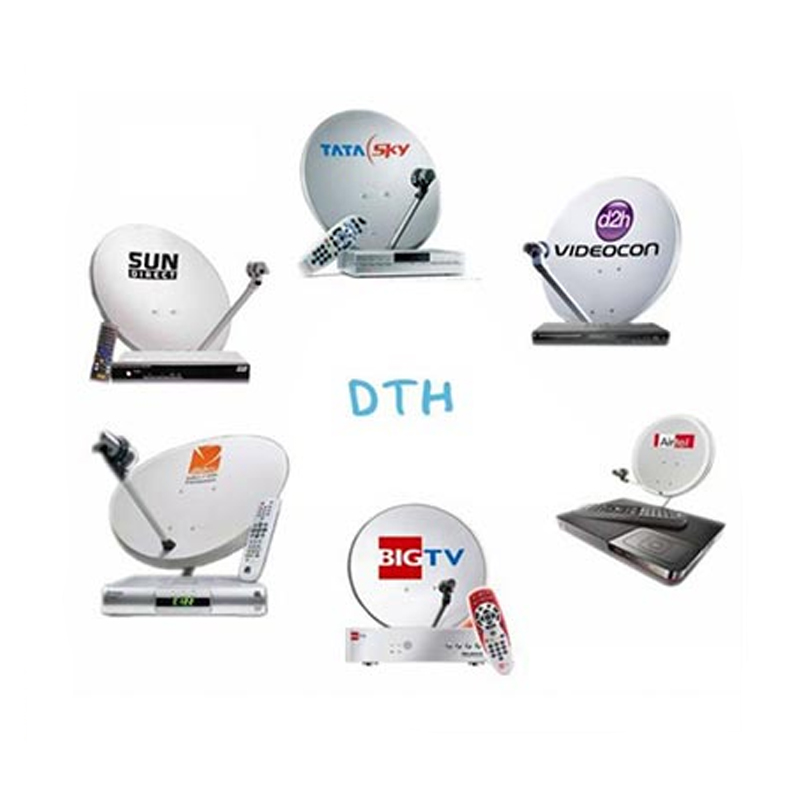
For starters, customs duty on set top boxes (STBs) has been reduced to zero per cent from 15 per cent, while an excise duty of 16 per cent has been imposed on STBs.
The move is seen as laying a level-playing field for local STB manufacturers. As Chidambaram in his budget speech said, “This will equalise the duty rates on various types of STBs.”
Overall, the government has overlooked some of the major demands of the electronic medium like reduction of fringe benefit tax on news gathering-related travel and removing of service tax on advertisements on TV.
Commenting on the cut in duty on STBs, Essel Group chairman Subhash Chandra said, “The broadcasting business is still in its infancy in India and a pro-active regime can help this industry achieve milestones much faster than any other country. This cut in duty on set top boxes is one such step that will take the industry forward and help towards implementing conditional access in various forms.”
“This will also help significantly in taking entertainment to the masses through Dish TV, Indias first DTH service,” Chandra said.
Apart from STBs, there was not much direct reference to the media and entertainment sector in Indias budgetary proposal for the next financial year beginning 1 April 2006.
The service tax net has not only been expanded, but the rate of taxation too has been hiked to 12 per cent from 10 per cent for all existing and proposed categories. This will have a wider impact on the entire media and entertainment industry.
The finance minister today said in the Lok Sabha (Lower House) that in 2005-06, the services sector is estimated to contribute 54 per cent of GDP. Naturally, it should also contribute significantly to the exchequer.
A fallout of service tax hike could be that cable operators will pass on the increase to the consumers who may have to shell out more for their cable and other related services.
The government proposes to expand the service tax net to include banks ATM operations, maintenance and management, registrars, share transfer agents, bankers to a public issue, sale of space or time for advertisements other than in the print media and sponsorship of events by companies other than sports events.
The other sectors that will come under the service tax net include, international air travel excluding economy class passengers, container services on rail, excluding railway freight charges, business support services, auctioneering, recovery agents, ship management services, travel on cruise ships and public relations management services.
Media industry throws up mixed reaction
That the Budget had very little for the media and entertainment sector was emphasised by industry stalwarts.
Said Star India CEO Peter Mukerjea, “The Budget had very little relevance from the media point of view. The FM missed an opportunity to give the media industry a boost and bring it in line with the IT sector.”
While admitting that lowering of customs duty on STBs will boost local manufacturing, Zee Telefilms’ Jawahar Goel echoed the industry sentiment when he said, Overall, no major demands have been acceded to by the government, which shows the difference in clout of journalists in the electronic and print media.
Direct-to-home (DTH) operators expect to particularly benefit from change in the duty regime related to STBs. But there seems little immediate impact on the cable TV industry, which already has a big stockpile of boxes.
Says Hathway Cable & Datacom CEO K Jayaraman, “It will certainly be a boon for DTH operators. If cable operators get their act together and give a big push towards digitalisation, it can benefit them as well.”
Agrees Siticable CEO Jagjit Kohli, “DTH operators will largely benefit from this. On the STB manufacturing front, there will now be a level-playing field. By imposing excise duty, one mistake has been corrected. Against import of chips and other items, a rebate can be claimed on the final product.”
But will local STB manufacturing get an impetus? Jayaraman disagrees. “I am sceptical. The trend will not be against importing of STBs, at least in the short run. We can expect assembling units here but only if volumes are reached.”
So how does the media industry perceive of the overall impact of the Budget? Says UTV CEO Ronnie Screwvala, “The good news is that there is a sense of consistency and long term thinking by the FM. But the sense of disappointment is that the Budget has not clearly identified five industries which had potential for high growth in the short term – telecom, media, biotech, retail and tourism.”
Regarding a two per cent increase in service tax, Screwvala said this was more a universal measure and not restricted to the media industry. “The only difference is that in other sectors it can be passed on entirely to the end consumer. In the media sector the motion of passing down will also happen by and large but a minor absorption will need to be taken somewhere in the value chain,” he pointed out.
Media scrips trade cautiously
The day was marked by high volatility in the stock market soon after the finance minister began his Budget speech. The market initially reacted negatively and the benchmark Sensex dropped nearly 75 points to as low as 10,206.06, when a hike of 25 per cent in the securities transaction tax (STT) was announced.
The Sensex, however, bounced back and settled with a gain of 88.15 points at a new record closing high of 10,370.24, after scaling a life-time intraday high of 10,422.65 with a gain of nearly 140 points over Monday’s closing level.
Media scrips took a cautious approach to the Budget. Zee Telefilms opened at Rs 173.85, touched a high of Rs 177.10 and a low of Rs 170.55, before closing at Rs 175.90.
Production house Balaji Telefilms, which opened at Rs 166, closed the day at Rs 166.05.
Among the news channels, NDTV Ltd fell from Rs 213.50 (opening) to close at Rs 211.80. TV Today also slipped from its opening at Rs 93.60 to close at Rs 92.65. Beating the trend, TV18 moved up from Rs 497.10 to close at Rs 501.10.
Some of the other highlights of the Budget:
*The personal and corporate tax rates remain unchanged, while no new taxes introduced.
* Service tax has been raised to 12 per cent from 10 per cent. Fringe benefit taxes brought down.
* Comprehensive Insurance Regulatory and Development Authority bill to be introduced in 2006-07 incorporating the recommendations of KP Narasimhan Committee on insurance sector revamp. The committee has already submitted its report to government and IRDA is studying its recommendations. o Small cars will become cheaper, with lowering of excise duty to 16 per cent from existing 24 per cent on cars having up to 1500 cc (diesel) and 1200 cc (petrol) capacity and measuring up to 4000 mm.
* Soft drinks too are likely to get cheaper with the reduction of duties.
* The government has made efforts to bring customs duty down on a host of industrial items. The peak non-agriculture import duty has been reduced from 15 per cent to 12.5 per cent.
* On the fiscal front, as against a budgeted 2.7 per cent revenue deficit, government has reported 2.6 per cent revenue deficit. Fiscal deficit is also lower at 4.1 per cent as against budgeted 4.3 per cent for 2005-06.
* The growing services sector has been put at par with manufacturing. SMEs in services to get status of small sector industry (SSI) in manufacturing sector. To fund them, a corpus will be raised by SIDBI for Rs 25 billion from present Rs 11.22 billion in next five years.
* The government intends to create a window for equity participation and viability gap funding for growth of IT sector. The said window will be kept open for 3 years.
* Fringe benefit tax rates on travel, tour reduced. But this does not cover the travel undertaken to gather news by TV news camera units.
* With an objective of making India a preferred destination for the manufacturing of semi-conductors and other high technology IT products including wafer, assembled kits, test and manufacturing of semi-conductors telecom ministry will announce a policy.