iWorld
The Twitter-Elon Musk tussle: To be ‘bot’ or not to be

Mumbai: The Twitter acquisition drama has been playing out- where else but on Twitter- on a daily basis (or hourly, if you go by Musk’s tweets) for the last several weeks. The latest in the Elon Musk-Twitter saga is that the Twitter Inc board has decided to go ahead and enforce its $44 billion agreement to be bought by Elon Musk. The board’s statement comes on the back of multiple tweets from Musk in the last several days that seem to indicate that the billionaire appears to be rethinking the whole deal.
“We intend to close the transaction and enforce the merger agreement,” the board said on Tuesday in a statement, adding, “the transaction is in the best interest of all shareholders.”
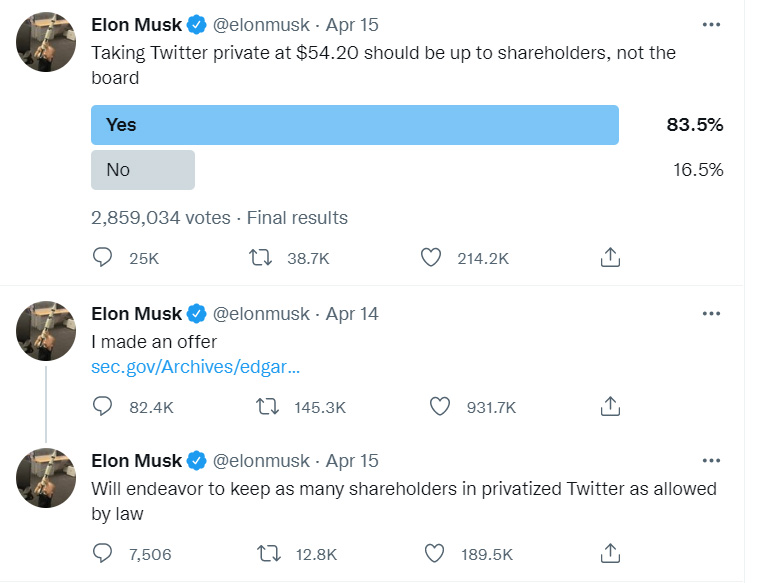
Prior to this, the board voted to unanimously recommend that shareholders approve Musk’s $54.20 per share offer.
Earlier on Tuesday, Elon Musk intensified his very public dispute with the Twitter CEO on the matter of bots or fake accounts on the platform, saying his acquisition of the social media company “cannot move forward” until he sees more information about the prevalence of spam accounts.
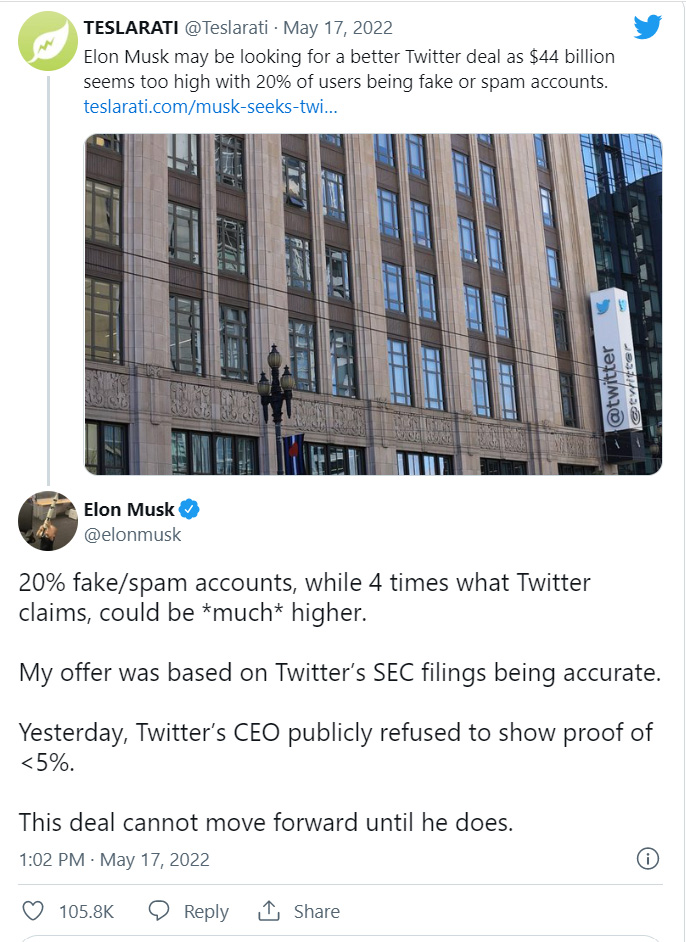
“20% fake/spam accounts, while 4 times what Twitter claims, could be *much* higher. My offer was based on Twitter’s SEC filings being accurate. Yesterday, Twitter’s CEO publicly refused to show proof of <5%. This deal cannot move forward until he does,” Musk tweeted, citing an article by Teslarati, (which, by the way, is a media company and a publisher of news on Tesla, SpaceX, and ventures, affiliated with Musk himself!) that said, “Elon Musk may be looking for a better Twitter deal as $44 billion seems too high with 20% of users being fake or spam accounts.”
The article suggested Twitter’s filings with the Securities and Exchange Commission were misleading. The company has maintained that less than five per cent of its daily active users are spam accounts.
In yet another twist in the proposed acquisition, earlier on Friday, Musk had tweeted that his planned $44 billion purchase of Twitter is “temporarily on hold” pending details on spam and fake accounts on the social media platform.
The proposed takeover includes a $ one billion breakup fee for each party, which means Musk will have to pay the said amount if he ends the deal or fails to deliver the acquisition funding as promised. Musk might be exempted from that requirement only if he can show a material change in the company’s situation or the information it has provided.
This is just the latest in a series of twists and U-turns that have been doing the rounds on the platform, regarding the company’s take over by Musk amid increasing signs of internal turmoil between the two parties.
In fact, ever since the billionaire grandly announced his offer to buy out the micro blogging platform on 14 April, the platform has been abuzz with new speculations on the acquisition front, mostly triggered by the Tesla founder himself. Musk has been highly active on the platform even before that, and became more so vocal about the site’s alleged shortcomings when he started building his stake in the company and became an active investor in April this year.
This led to speculations on Musk being keen to join the company’s board, further amplified by the Twitter CEO’s own tweet on 5 April welcoming Musk onboard, where Agrawal wrote about the billionaire: “He’s both a passionate believer and intense critic of the service which is exactly what we need on @Twitter, and in the boardroom, to make us stronger in the long-term.”
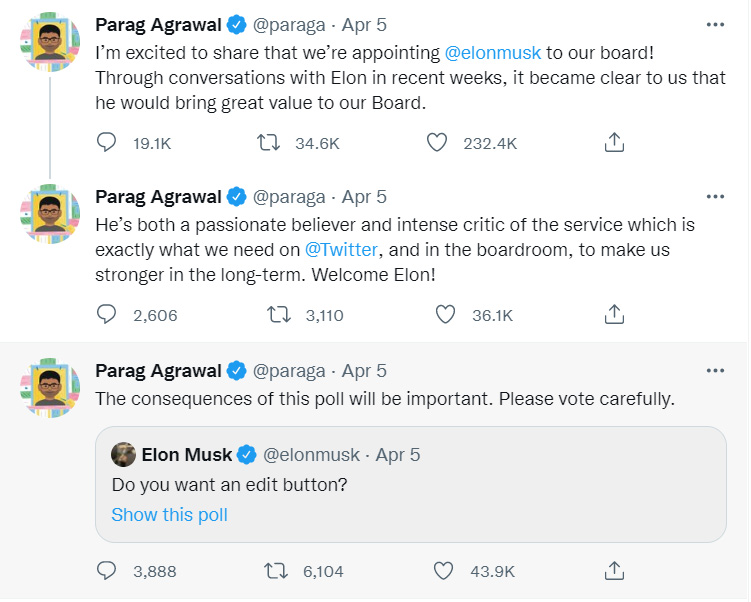
However, Musk surprised everyone- most of all, the Twitter management- by rejecting the company’s offer to join its board, instead offering to buy out the company itself!
With Twitter now committed to completing the sale even as Musk continues to drag his feet over it, it remains to be seen how the rest of this very public saga plays out!