I&B Ministry
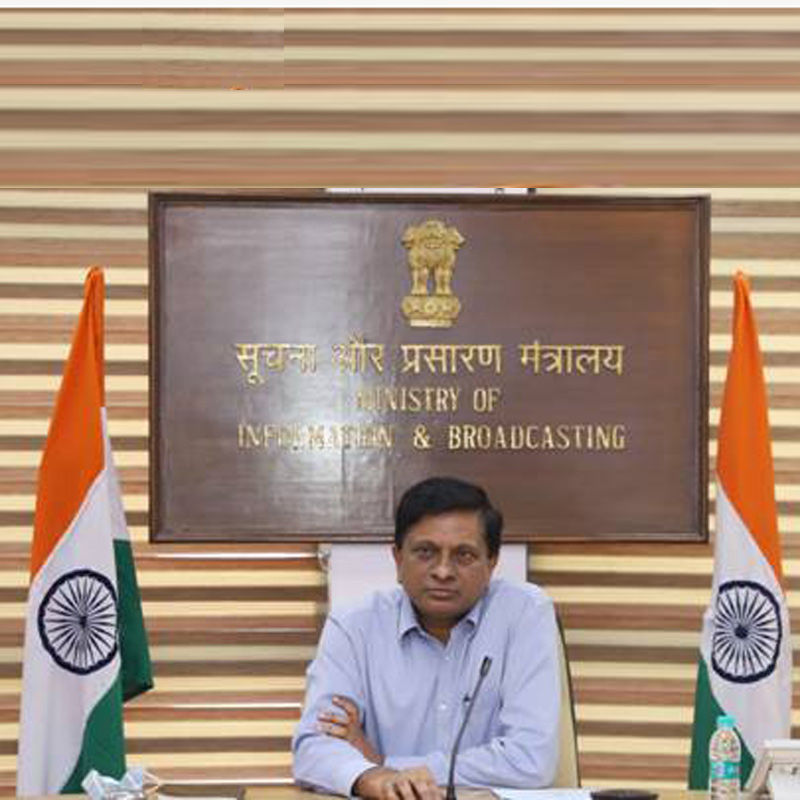
SK Arora replaces Navin Chawla as I&B secretary

MUMBAI / NEWDELHI: The government today said it has circulated a draft downlinking and uplink policy for feedback. This is an attempt to put a regulatory framework in place for the broadcast sector.
Briefing newspersons today afternoon after taking over as the new information and broadcasting ministry secretary, SK Arora said, “The drafts have been sent to various ministries for comments. The downlink policy proposes to fill a regulatory gap for TV channels that uplink out of India and where the broadcaster technically does not fall within the ambit of the Indian government jurisdiction.”
Arora, information & broadcasting additional secretary Union of India, was today elevated and named as the new I&B secretary. He fills a slot left vacant since 14 May after the incumbent Navin Chawla moved up to a new posting as an election commissioner of India in the Election Commission that is responsible for conducting polls in the country.
Asked about the details of the uplink and the downlink policies, Arora refused to dwell further on the issue until a Cabinet clearance.
To a question on whether broadcasting companies uplinking channels from abroad would have to necessarily register themselves in India under the proposed downlink policy, Arora said that these were issues that “would be looked into, while framing the rules.”
On the issue of radio broadcast policy, with a special eye on FM radio, Arora said that feedback from most related ministries have been obtained, except one, and “soon the policy would be taken to the Cabinet for clearance.”
Dwelling on government thinking and initiatives on attracting foreign investment in various sectors, including media, Arora said all efforts would be made to encourage foreign investment, but refused to go into specifics related to FM radio and whether FII investment would be allowed.
On the proposed framing of service rules for Prasar Bharati, which manages Doordarshan and All India Radio, Arora said that a panel has been set up under the I&B secretary last month to look into various issues, including the “financial structure of Prasar Bharati” and how the organization could augment its revenues without sacrificing its pubcaster role.
“I don’t think both are mutually exclusive (whether to be a pubcaster or think like commercial media organizations). The idea is to see how Prasar Bharati can retain its public broadcaster’s role, while trying to optimize revenues,” he explained, adding the panel has been given a three-month period to sort out issues.
He also ruled out any immediate reduction of the 45,000 workforce in Prasar Bharati, which, according to critics, is one of the main reasons for a mismatch between expenditure and earnings.
Surinder Kumar Arora was posted as additional secretary in the same ministry since October 2004 and is a 1971 batch Indian Administrative Service officer from Andhra Pradesh cadre. Born in October 1948, he is a postgraduate in Political Science as well as in Rural Development.
During his career, Arora has held several prestigious positions such as additional secretary and financial advisor for the ministry of commerce during July 2003-July2004, principal financial secretary in the Andhra Pradesh government for four and a half years from January 1999 and DG of National Institute of Agriculture Extension Management, Hyderabad, under the ministry of agriculture from July 1992 to July1997.