I&B Ministry
I&B ministry proposes guidelines for encryption of channels

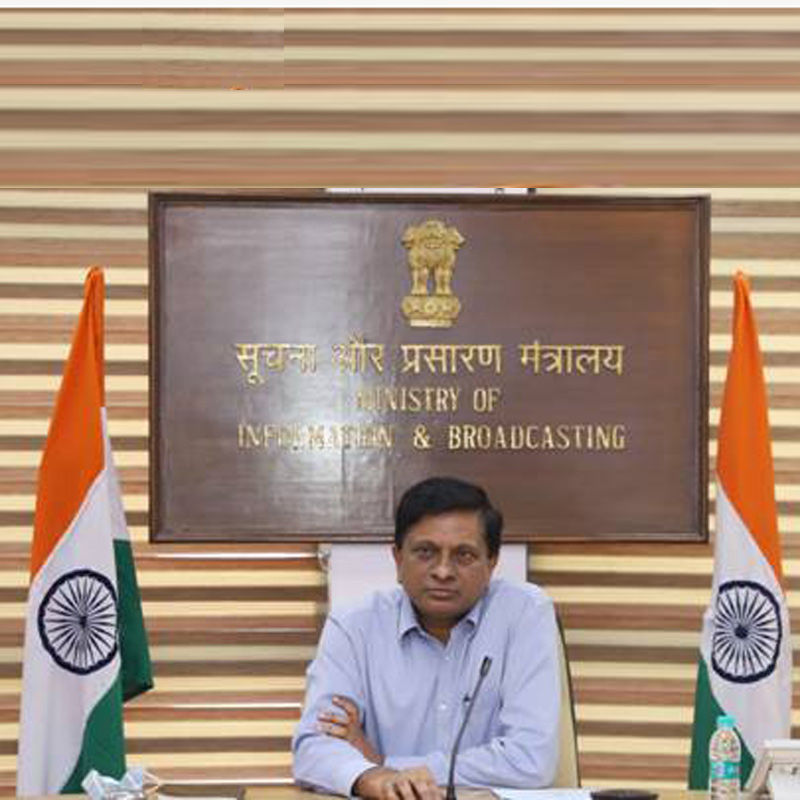
Mumbai: In an organised press briefing on Wednesday, the ministry of information & broadcasting introduced revised uplinking and downlinking guidelines for TV channels in India, as I&B secretary Apurva Chandra informed. The earlier guidelines were issued in 2011.
As per the new guidelines, the encryption of channels is now mandatory for all bands other than C band.
The following objectives are set to be achieved by the proposed guidelines:
1. Ease of compliance for the permission holder:
The proposed guidelines give importance to ease of compliance for the permission holder.
a) There is no requirement to obtain prior permission for live event telecasts; only the pre-registration of events would be necessary.
b) The requirement of prior permission for a change of language or conversion from Standard Definition (SD) to High Definition (HD), or vice versa is also not required.
2. Ease of doing business
a. The guidelines proposed a specific timeline for the grant of permission.
b. Limited liability partnership (LLP) entities can also seek permission.
c. A news agency can get permission for a period of five years instead of one year.
d. A channel can be uplinked by using the facilities of more than one teleport/satellite, as opposed to only one teleport/satellite.
e. The new guidelines have removed certain restrictions on the transfer of a channel from one entity to another.
f. A teleport operator can uplink a foreign channel for being downlinked outside India, enabling earning of foreign exchange for the operator.
3. Simplification and Rationalisation
a. One composite set of guidelines instead of two separate guidelines;
b. The structure of the guidelines has been systematised to avoid duplication, and common parameters, including financial requirements, etc., have been placed in appendices;
c. The penalty clauses have been rationalised to separate the nature of penalties that have been proposed for different types of contraventions as opposed to the uniform penalty as at present.