iWorld
Reclaiming bold – Why Indian entertainment must dare again: Alok Jain, JioStar

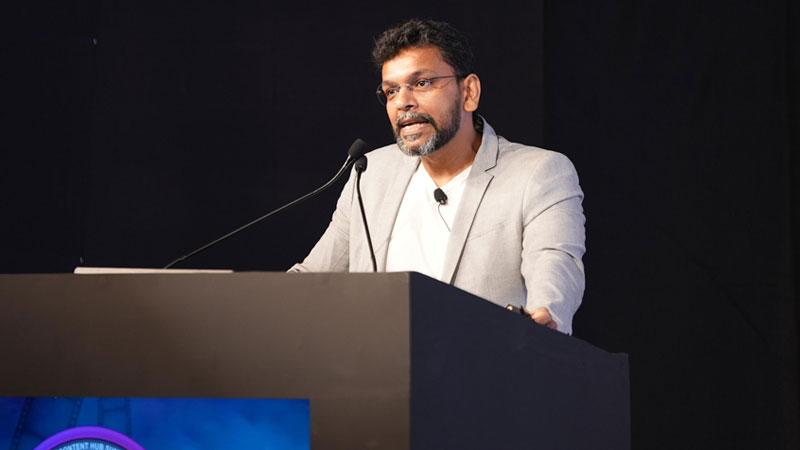
MUMBAI: The 9th Content Hub Summit 2025 opened with momentum, bringing together leaders from across the entertainment landscape to explore what’s driving the industry forward. From the surge in local content and continued growth of television, to the rise of the creator economy and the growing influence of AI in storytelling, the discussions reflected a fast-evolving and opportunity-rich ecosystem.
In a keynote address that surely stirred the chai, Alok Jain from JioStar insisted that the only path forward is to be bold. First up, challenging the industry’s penchant for playing it safe. “We have mistakenly assumed that the only way of making great content in the future is by following what has worked in the past.” While acknowledging the relevance of history, Jain stressed that in this industry, “the past will not always define the future.” Bold content needs a “big leap of faith”. Every time the industry has seen great stories emerge across TV, digital or movies, it’s been because we dared to reimagine.
Jain didn’t mince words, highlighting several hurdles stifling the industry’s boldness. The “I am the world” phenomenon. One of the most powerful moments in the keynote was Jain’s critique of creative myopia – he cited Ormax, which notes a staggering 49 per cent of OTT content is based in Delhi and Mumbai. “We all think our immediate surroundings, our friends, our family – is the entire world.. but that’s not true,” Jain said, urging content creators to look beyond their metropolitan bubbles. He painted a vibrant picture of a nation of 1.4 billion people, 60 per cent of whom are under 35 years, highlighting unparalleled diversity across states, territories, languages, and dialects – insisting that this “scale along with diversity is our true strength.”
Jain touched upon access for emerging talent being restricted, with systemic walls blocking their entry—an issue that urgently needs to be addressed. He says, “it is extremely difficult for anyone new with a creative voice to come and pitch a great piece of content.” In an age where technology has democratized content creation and “every consumer is also… a creator,” such barriers are not just outdated, but detrimental. If we don’t actively dismantle these walls, we risk missing out on the next generation of storytellers who are already shaping culture from the margins.
Jain critiqued the industry’s habit of asking “what have you done before?” when new talent approaches them. He advocated for “betting more on the potential the person can have,” even if it’s a riskier approach. He highlighted successes like Taaza Khabar which was Bhuvan Bam’s first OTT show, Thukra Ke Mera Pyaar helmed by new makers and a fresh cast, and 4 successful seasons of MTV Hustle as examples of fostering new talent.
And then there’s the elephant in the room: Economics. “As an industry we tend to believe that big means big budget only,” Jain lamented. He delivered a line that truly hit home: “Not everything that costs a lot is worth a lot.”
Despite these headwinds, Jain expressed bullish optimism about India’s potential. Our digital prowess is undeniable – the largest e-commerce market, ubiquitous UPI transactions, and a thriving startup ecosystem with a plethora of unicorns. And entertainment leads the charge of this growth story : the largest TV viewer base globally, highest movie production, and half a billion streaming users. With 200,000 hours of professionally generated content annually, India is a “creative powerhouse.” And we are only getting started, there is “significant headroom for growth to be achieved across TV (70% penetration), Movies (Only 1 theater for every 140,000 people) and Digital (65% internet penetration). What’s truly remarkable about India is that no single medium is growing at the cost of another; instead, all are evolving and thriving side by side, creating a uniquely dynamic media landscape.”
In fact, Jain directly challenged two prevailing industry myths: “No one watches TV anymore”, and “theatres are dead.”
“Around 850 million viewers tune into linear TV every month, and watch ~3 hours of content daily – which is almost 4 times greater than average OTT consumption. 190,000 hours out of 200,000 of original content created in India is made for TV and it continues to be the bedrock of the entertainment landscape in India.” Citing BARC data, he pointed out that TV viewership has remained steady for the last 17 years. “TV is not dying,” he declared, urging the audience to look beyond their “I am the world” bubble.
Similarly, for cinema, he spoke about recent examples like Saiyaara and Chhaava, proving that “if we make great content, people will come to the theatres.”
JioStar, as India’s largest broadcaster, digital platform, and content studio, is taking on the mantle of being bold in form and voice. The company’s success stories demonstrate their commitment to understanding and serving diverse consumer needs – with shows like Anupamaa (unshackling from patriarchy), Taali, Shakti – Astitva Ke Ehsaas Ki (LGBTQ+ themes) and the enduring popularity of MTV Roadies, which just concluded its 20th season, constantly innovating and staying close to its audience.
Acknowledging that consumers are screen-agnostic, moving seamlessly between TV, digital, and cinema, JioStar is backing bold formats across all mediums. Their show Laughter Chefs is a prime example, topping viewership charts on both television and JioHotstar.
Jain concluded with a clarion call for the Indian entertainment industry: “The world is watching India, and we must give them more than just the volume. Need of the hour is innovation across the entire value chain, from understanding consumers and crafting compelling stories to smart budgeting, production, marketing, and embracing technology like Gen AI.