News Broadcasting
Rajdeep Sardesai and Arnab Goswami poles apart on future of journalism

MUMBAI: The venue: the National Centre of Performing Arts auditorium in south Mumbai. The occasion: a panel discussion that preceded the Press Club of India’s Red Ink Awards. On stage were IBN18 editor-in-chief Rajdeep Sardesai, Times Now editor-in-chief Arnab Goswami, and Dainik Divya Marathi chief editor Kumar Ketkar, O&M national creative director and chairman Piyush Pandey. And for a change it was they who were grilled by Star India CEO Uday Shankar, a former journalist himself. The topic: Elections 2014: were we fair or did we stoke the NaMo wave?’
Shankar set the pace for the panel when he spoke first, stating that it is he who would be asking the questions and no one would be allowed to answer – in all probability taking a jab at Arnab. As the audience burst into laughter, he then told Rajdeep to open the debate by speaking his mind.
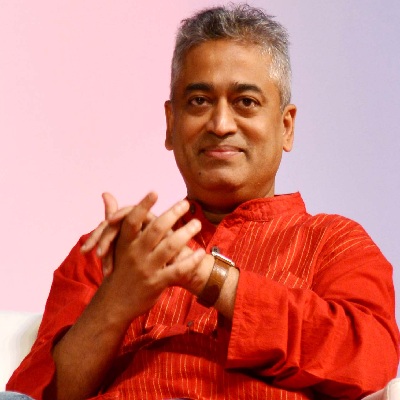
Dressed as casually as one can get, in a red kurta, simple trousers and chappals, Sardesai delivered a hard hitting monologue on Modi and the kind of journalism that exists in India now.
“Modi had the most innovative and sustained campaign that we have ever seen in an Indian election,” he said, while pointing out that Congress president Rahul Gandhi was like a kid in kindergarten in front of Modi. But he also said that it was unfair to blame the media for creating the NaMo wave.
“Some channels have abandoned the basic role of media. They are now doing cheerleading or supari journalism to get more viewers and ratings. Modi was not subject to the intense scrutiny in the last two years that the others were subject to. While he was brilliant with his social media strategy and communication he was spared the ignominy that others were subject to. Some channels elevated Narendra Modi to God. He is a good politician and communicator but not a messiah. Some journalists need to ask themselves if they want to do journalism or hagiography,” he added.
On the other hand, Arnab instantly put himself and his channel in the spotlight by stating that one of the positives of being located in Mumbai, far away from the hub of channels (Noida) was that it keeps him disassociated with politicians.
“I am not romantically involved with any political party so I don’t end up having a bitter break up with them. My distance with politicians is both physical and psychological. We in India are overawed by them. Modi was the focus because there was no competition. We are not dependent on politicians for ratings. There is no scientific evidence that Modi gets ratings,” he said while also stating that he wasn’t aware of this supari journalism that Rajdeep referred to.
“The next 10 years of journalism to me are very bright,” said Arnab. A view that Shankar totally endorsed. Said he: “The future of journalism is bright because we do something that is essential to the society. We should not be cynical about the media, without them the country would not have been what it is.”
However, Arnab’s view seemed to have irked Rajdeep who in the latter part of the discussion said, “We can state that in 10 years things will be great and things are going to change, but arrogance is the downfall of every journalist! At our time, it was never that what the anchor said would matter more than what the guests said.”
Ketkar who comes from the print side of the media and was the senior most scribe on the panel let loose his spleen as he lambasted the electronic media for sidetracking and sideswiping print publications.
“It is the electronic media that sets the tone for the next day’s morning headlines in the paper by these discussions. The people don’t set the agenda, the media does. The media has covered how miserable Bihar is but no mention of the Gujarat floods when Modi was campaigning at the height of his campaign trail. So, it is not just that you have to speak more about something, but by also not showing something you can stoke the fire,” he said.
 |
While the three editors did not refrain from taking digs and potshots at each other for the kind of journalism that is being resorted to, it was Piyush Pandey – the man behind the Narendra Modi election campaign – who gave his insights on what led to NaMo wave. He pointed out that no matter what Modi did, he never gave the media a chance to ignore him; he made sure he was in the public eye, consistently giving out the right message that the public wanted to hear. “The media rode the Modi wave. It did not create it,” he said.
While the very topic was sidelined, the editors were deeply engaged in pontificating on the state of journalism in the country with Goswami being the most optimistic about it.
Having recently taken a month long break from his editorial duties, Rajdeep was the most vocal about the fact that news television needs to find its bearings quickly.
“The idea that the television makes or breaks will not hold anymore. I really think that we have lost the capacity to go beyond the dramatic headline. We have lost our nerve. We need to introspect and ask ourselves : are we willing to do a serious interrogation of the Gujarat model, positive and negative?” he questioned. The fact that the BJP did well in places where cable TV did not reach efficiently was also brought out by Shankar and Sardesai.
While the discussion didn’t see any real conclusion, it did end with a valuable point to ponder: whether journalists were getting too emotionally involved with politicians?
Shankar had the last word on this. Said he: “I think there is too much reverence even now in Indian media and on the other hand, there is too much emotional attachment. Either we are just cynical or when we go there we get sucked in. There has to be a balance in between. Overall, I think we shouldn’t be cynical about media. We have lots to capture and improve but without the media, this place, this country would be much worse.”