iWorld
Prime Video’s Gaurav Gandhi, Disney+ Hotstar’s Sunil Rayan on growing SVOD in India

Mumbai: After the windfall of 2020, the streaming industry saw consumers’ on-demand content consumption patterns getting more and more well-entrenched and diversified in 2021. As exaggerated trends rationalised, players in the OTT world emerged out of the unarguably positive conundrum with a lot more clarity on charting their individual growth stories and also that of the industry as a whole.
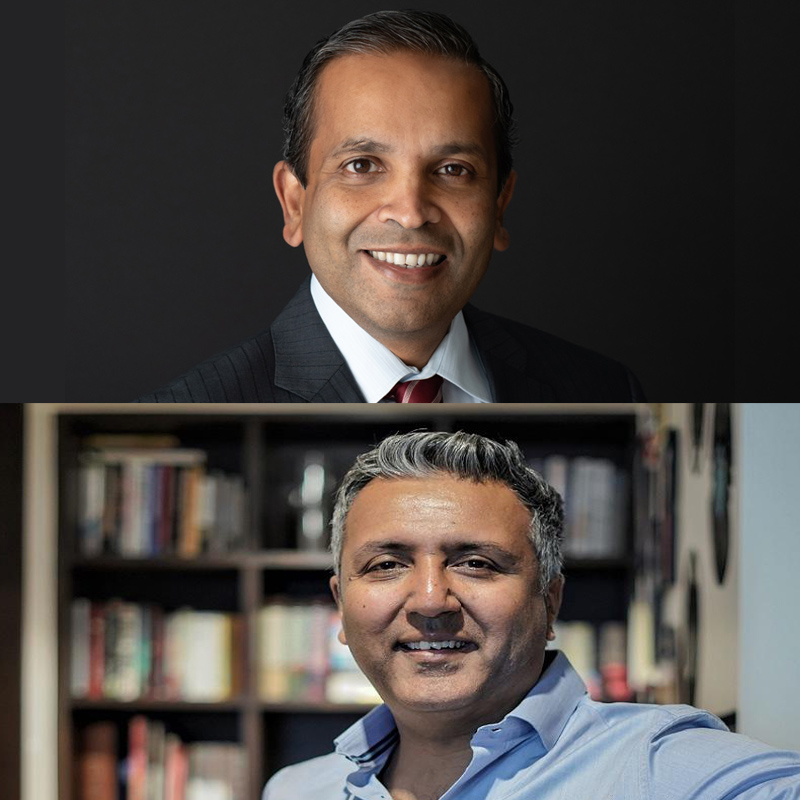
At the Apos Indian Summit – a two-day virtual event which concluded on 24 November – Disney+ Hotstar president Sunil Rayan and Amazon Prime Video country head Gaurav Gandhi talked about having learned the “balancing act” through the session titled – ‘The Next Stage of Growth for Online Video’.
Drivers for Adoption
In addition to widely discussed factors such as affordability of internet services, smartphones, and smart TVs and the availability of content, Rayan and Gandhi had their own unique insights on the growth drivers for streaming services.
According to Rayan the surge in volume and diversity of content through the years has brought about the mainstreaming of online video in different stages. “While the early stages were mostly about penetrating the market, the second wave of creating localised content that we are currently riding has propelled the trend further. Going into the third stage of deep localisation where user experience will become highly personalised, we will witness another leap in adoption,” he averred.
Like Rayan, Gandhi too believes that the encouraging pace at which Indians took to on-demand services was also a result of a new wave of content coming in. “The content distribution structure in India has always been such that it didn’t allow scope for any kind of premium cable or premium pay. As a result, we never really had access to high cinematic quality content. In the last three or four years streaming platforms have brought world-class content including original long-format series that Indian viewers had not seen before. And this includes both global content and local, home-grown stories,” he said.
Commenting further, he added that a significant factor in the five-year-growth story of video streaming in India has been its “rich and robust content ecosystem with content industries in over ten languages. That makes it a prolific entertainment market.”
The emergence of films as a popular segment on streaming platforms, accentuated by the direct-to-digital wave of 2020, further quickened the pace of adoption. “India has a large audience base that loves movies, but the country is very under-screened. Video streaming not only solved the problem of limited access to new movies in the very early window but also enhanced their reach and accessibility. Indian films are today being watched in over 4500 cities and towns and 180-190 countries worldwide on various streaming services. It has also encouraged talent, fetching its appeal across borders,” stated Gandhi.
Both Rayan and Gandhi recognised the role of advancements in digital payment infrastructure in transforming a largely ad-supported industry into subscription-driven. Rayan shared that a “significant portion of payments for Disney+ Hotstar comes through UPI.”
Developments such as these and others like rapid growth in smart TV sales, give Gandhi a good reason to dispel the prevailing notion of India being a highly price-sensitive market where viewers are unwilling to pay for content. He estimates the addressable market for SVOD in India to be above 50 million currently, with a potential to reach nearly 100 million in the coming years.
The response to Disney+ Hotstar’s revised pricing plan designed to have devices tailored against tiers is another testimony to the acceptance of SVOD by value-seeking customers. Elaborating on the rationale behind the new scheme, he stated, “While we were providing access to all types of content, the mode of access is where we thought we could add more value. The broad idea was to make available all types of content to individuals as opposed to having content restrictions by tiers.”
Growing the SVOD Category
Rayan observed that going ahead “the overall success of SVOD will depend on three factors – making content more interactive, innovation in business models beyond the existing freemium, AVOD, TVOD, SVOD to something like ‘mircotransactions,’ and taking the user experience to a level where people can get their ‘intent’ from the platform itself.”
Disney+ Hotstar started its Originals journey in 2019 and it has since then diversified into various genres and formats. “We intend to deliver a piece of original content every two weeks for all our different kinds of users including sports fans, active streaming users, and ‘TV watchers’ who use OTT as a ‘companion app’ to TV. Additionally, we are also exploring ways to get internet users on to our platform with short-form content, short but episodic and other formats that are native to digital,” said Rayan.
India is one of the highest engaged countries for Prime Video service in the world. Having grown three times in the last two years, today it enjoys viewership from 99 per cent of the pin codes. Another highly encouraging development witnessed by the brand is the emergence of ‘cross viewership’ wherein viewers are watching content across languages. “Today 50 per cent of the viewership for Tamil, Telugu, Malayalam, and Kannada DTS films on our platform comes from outside the home state. Similarly, international language content such as ‘Parasite’ last year or ‘Maradona: The Blessed Dream’, this year is being viewed widely,” shared Gandhi.
He credits the quality of Indian content on streaming services that are at par with international standards for the 20 per cent viewership (one in every five views) on Prime Video originals coming from outside India. According to Gandhi, another significant trend in the past couple of years, especially through 2020-21, has been the acceptance of OTTs as a ‘living room phenomenon’ and a product for the household as well as the individual, simultaneously.
Buoyed by these developments, Prime Video has doubled down on investments in the content to keep the momentum on SVOD going in 2022. As regards sports content, while it has made a start in the direction, Gandhi asserted, “We feel very good about the fact that our overall entertainment portfolio has many strong pieces in it, and we are not dependent on anyone. We would like to evaluate the opportunities that exist in sports, but we are not compelled to.”
For Disney+ Hotstar 2022 will be about “working on user engagement, experience, and stickiness while delivering quality content at scale,” informed Rayan.