eNews
Netflix CEOs play coy about Warner Bros Discovery acquisition

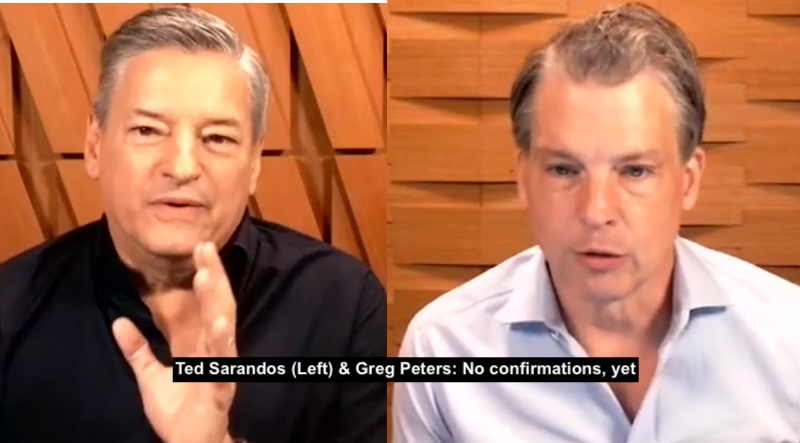
LOS ANGELES: Netflix is keeping its cards close whilst the rest of Hollywood scrambles for Warner Bros Discovery’s assets. Asked during Tuesday’s third-quarter earnings call whether the streaming giant might join the bidding war, co-chief executives Ted Sarandos and Greg Peters delivered a masterclass in strategic ambiguity: they ruled nothing out, but ruled nothing in either.
“It’s true that historically, we’ve been more builders than buyers, and we think we have plenty of runway for growth without fundamentally changing that playbook,” said Sarandos. “Nothing is a must-have for us.”
Yet he added that Netflix looks at “all” merger opportunities through the same lens—a nod that Warner Bros Discovery’s studio and streaming empire, including HBO, HBO Max and Warner Bros Television, might just pique its interest.
What Netflix definitely won’t touch are Warner Bros Discovery’s linear networks. “We’ve been very clear in the past that we have no interest in owning legacy media networks, so there is no change there,” Sarandos said. That rules out a bid for the whole company, which Warner Bros Discovery is splitting in two: one entity (Warner Bros) housing the streaming and studio jewels, the other (Discovery Global) lumping together cable channels and Discovery+.
The carve-up comes after Warner Bros Discovery announced it was reviewing “strategic options” following “unsolicited interest” from “multiple” parties. Paramount is reportedly leading the charge, having offered $20 per share for the lot, then upping its bid to $24—both rejected. CNBC reports that Netflix and Comcast are also circling.
Peters downplayed the threat of rivals bulking up through deals, pointing to mega-mergers like Disney-Fox, Amazon-MGM and Discovery-WarnerMedia that failed to shake up the landscape. “None of those mergers represented a fundamental shift in the competitive landscape,” he said. “Watching some of our competitors potentially get bigger via M&A does not change our view.”
The caginess came as Netflix reported third-quarter revenue up 17 per cent year-on-year to $11.5bn, in line with forecasts. Operating income rose 12 per cent to $3.2bn, though it fell short of expectations after a $619m hit from a dispute with Brazilian tax authorities. Shares tumbled 6.5 per cent in after-hours trading, though Netflix insisted the tax spat won’t dent future results.
By region, revenue in the US and Canada grew 17 per cent to $5.01bn, Europe, Middle East and Africa climbed 18 per cent to $3.7bn, Latin America rose 10 per cent to $1.37bn and Asia Pacific surged 21 per cent to $1.37bn. Netflix now commands 8.6 per cent of US television viewing time, up from 7.5 per cent in late 2022, and 9.4 per cent in Britain, up from 7.7 per cent.
Hits last quarter included Wednesday season two (114m views), The Thursday Murder Club (61m) and My Oxford Year (81m). The Canelo-Crawford boxing match drew 41m viewers, making it the most-watched men’s championship bout this century, Netflix claimed.
For now, Sarandos and Peters are content to watch the feeding frenzy from the sidelines. But their refusal to slam the door suggests they might yet crash the party—provided the price is right and the baggage left behind.