News Broadcasting
NDTV Infrashakti Awards 2024: Honouring India’s visionaries in infrastructure development


Mumbai: NDTV, a trailblazer in Indian TV news and digital journalism, has announced its prestigious NDTV Infrashakti Awards 2024, with knowledge partner Infravision Foundation, that recognises numerous infrastructure initiatives that illuminate India’s true growth story. The awards showcase the pulse of our vibrant country, celebrating infrastructure advancements that have the potential to transform lives and foster community connectivity. The awards will spotlight many remarkable individuals and institutional efforts that inspire innovation and excellence on the road to a Viksit Bharat in the presence of Road Transport and Highways minister Nitin Gadkari; Ports, Shipping and Waterways minister Sarbananda Sonowal; and Petroleum and Natural Gas minister Hardeep Singh Puri.
Comprising of six jury-selected categories and one popular choice/viewers’ choice category, the NDTV Infrashakti Awards 2024 categories are Rural Infra Pioneer, Renewable Energy Star, Water Saviour, Urban Infra Hero, Infra Visionary, and Transport Trailblazer. Additionally, the People’s Choice Award under the Inclusive Infrastructure category allows the people of India to cast their votes, and get their voice heard.
The NDTV Infrashakti Awards 2024 will be judged by an esteemed panel of five jury members: Prime Minister’s economic advisory council chairman Dr Bibek Debroy; GSK Pharmaceuticals’ chairperson and HDFC Ltd’s former MD Renu Sud Karnad; Dilip Cherian, an image guru specialising in litigation landscaping and policy analysis; Gul Panag, an actor, sustainability advocate, and social activist; and Professor G Raghuram, former director, IIMB, and professor Emeritus at Gujarat Maritime University.

As an integral component of NDTV’s expansive Infrashakti campaign, ‘INFRASTRUCTURE: INDIA’S GROWTH STORY,’ the campaign showcases how sustainable infrastructure embodies a vital synergy between climate mitigation and economic growth, offering a tremendous opportunity for positive change.
By recognising and celebrating the efforts of those transforming India’s infrastructure landscape, the NDTV Infrashakti Awards aim to inspire further innovation and excellence in the sector. These awards honour the visionaries driving India’s growth story and making significant contributions to a sustainable future.
To watch the awards tune in to NDTV 24×7 and NDTV Profit on 2 July 2024, 4 pm onwards. For more information and updates, visit Infrashakti Awards 2024 .







News Broadcasting
News18 India launches Command Centre war explainer with Arya
New show shifts from debates to decoding global conflicts and impacts
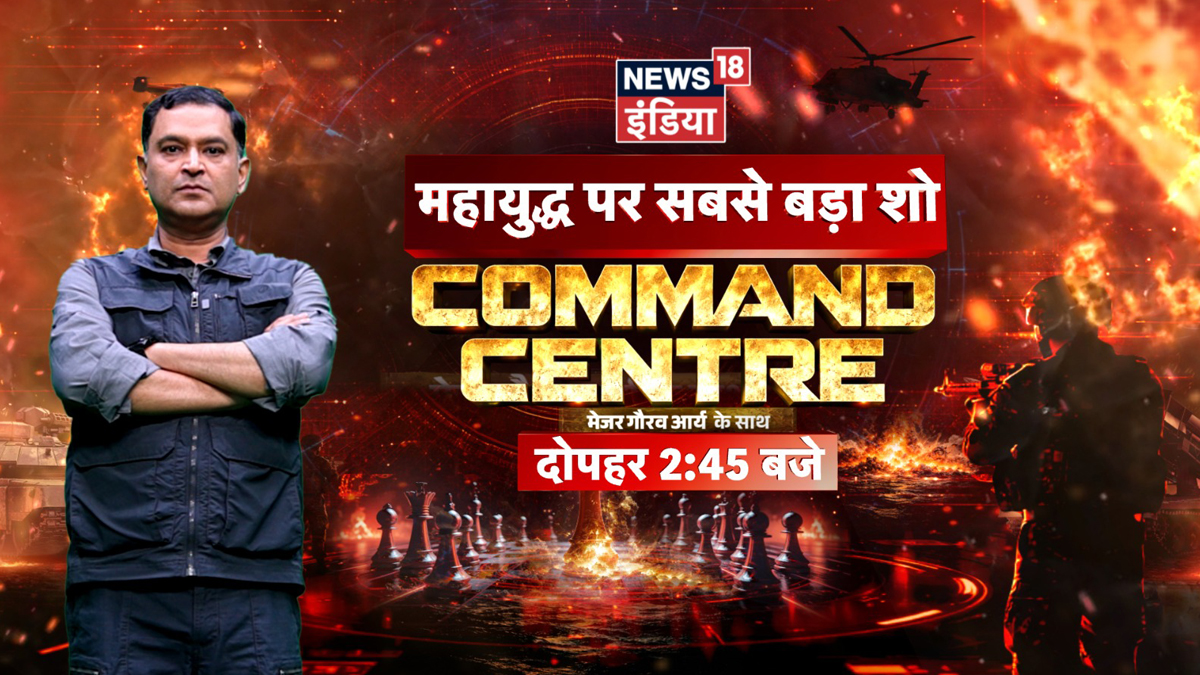
MUMBAI: News18 India has rolled out a new war-focused programme, Command Centre, featuring Gaurav Arya, as it looks to offer viewers a sharper, more grounded take on global conflicts amid rising tensions in West Asia.
Positioned as an “insider war room”, the show moves away from conventional panel debates and instead focuses on explaining military developments, decoding strategy and connecting global events to their everyday impact, from fuel prices to economic shifts.
The format leans heavily on visuals and data. The studio has been designed like a command hub, complete with large LED war maps, real-time graphics and an alert system to track developments as they unfold.
At the centre of it all is Arya, who brings his military background to simplify complex war strategies for viewers. His signature line, “Seedhi baat samjhiye”, anchors the show’s promise of clarity over noise.
News18 India managing editor Jyoti Kamal said, “Command Centre, featuring Major Gaurav Arya is designed to deliver accurate insights and a clear perspective on how evolving conflicts impact everyday life, from household budgets to national security. With expert voices analysing every development in real time, the show goes beyond headlines to decode what’s happening now, what it means, and what could come next.”
Echoing the intent, Gaurav Arya added, “In times of war, confusion is the biggest threat. With News18 India’s Command Centre, we are bringing viewers inside the war room, decoding strategies, tracking every escalation, and explaining, in the simplest terms, what it means for India and for every household. Seedhi baat samjhiye, this is where you understand not just what is happening, but what happens next.”
The weekday show will air in the afternoon slot and will also feature Gaurav Shukla, adding to its editorial depth.
With its mix of analysis, visuals and a clear focus on impact, the show reflects a broader shift in news consumption. Viewers are no longer just watching events unfold, they are looking to understand what those events mean for them.







