News Broadcasting
NBA, DUJ condemn attack on journalists outside Patiala House courts in Delhi

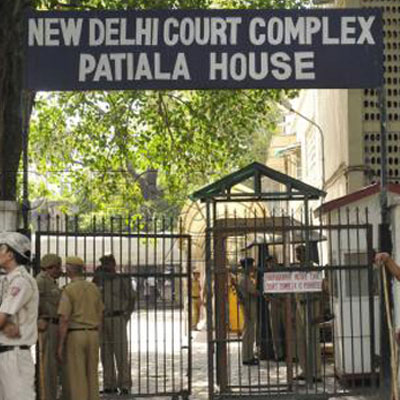
NEW DELHI / MUMBAI: The News Broadcasters Association (NBA) has condemned the assault by lawyers and others on journalists and cameramen, especially women journalists, who were reporting from Patiala House Court ON 15 February.
The incident occurred when JNU Students Union president Kanhaiya Kumar was to be produced in the Court.
Condemning the incident and terming it as an attack on the freedom of the press, NBA president Rajat Sharma called it a cowardly attack meant to intimidate journalists carrying out their work in disseminating news and information, a service that is essential for any democratic society.

Senior journalist and India Today Group consulting editor Rajdeep Sardesai said, “The journalists are rightly showing solidarity to what happened yesterday at the Patiala House. What happened yesterday was unexpected. The way the lawyers acted is just shocking. The journalists should definitely unite and stand as one against this.”
Expressing his doubts on the credibility of the lawyers present at the Patiala Court, he added, “Who are these lawyers? They behaved more like politicians. Denoting the media with such terms is just not accepted.”
NDTV India senior executive editor Ravish Kumar said, “It is good to see journalists showing solidarity and coming together but the problem is that there are still many journalists who have not united to fight against this. What happened yesterday in the premise of a court is shocking. It is the right of any person to get a lawyer. The terrorists also get lawyers and the lawyers have taken up such cases in the past. The problem is that the lawyers have started to behave like judges. They should follow the ethics taught to them in their law schools.”
CNN-IBN executive editor Bhupendra Chaubey opined, “I genuinely believe that this is a threat to the expression of one’s views in today’s politics. This type of lynch mob is dangerous and has to be tackled soon. It is good to see journalists coming together to fight this. This looks like a new definition of nationalism, which is being written now in our country. Nationalists and anti-nationalists are now defined by the ruling party but that is ideally supposed to be an individual’s decision. The way it has happened is just not acceptable.”
Earlier, the Delhi Union of Journalists had also condemned the attack at Patiala House as well as at the campus. The DUJ has given a call for observance of a Black Day on 19 February.
The Union strongly deplored the beating up of journalists, students and teachers in the Patiala House Courts by “goons.” Several of them including a few journalists were severely injured and had to be taken to the hospital.
The DUJ said it was “surprising that though there was a heavy presence of the Police, it refused to intervene despite repeated requests by those who were being beaten up.”
The DUJ demanded the immediate arrest of all those who indulged in this violence. “It is the responsibility of the police to provide protection to journalists who were discharging their duty,” it said.
Congress spokesman Kapil Sibal later said at a party briefing that a matter in this connection had been mentioned in the Supreme Court and was likely to be heard tomorrow (17 February).





News Broadcasting
CNN-News18 to host Fury in the Gulf conclave on West Asia crisis
Three-hour summit to unpack geopolitical fallout and impact on India
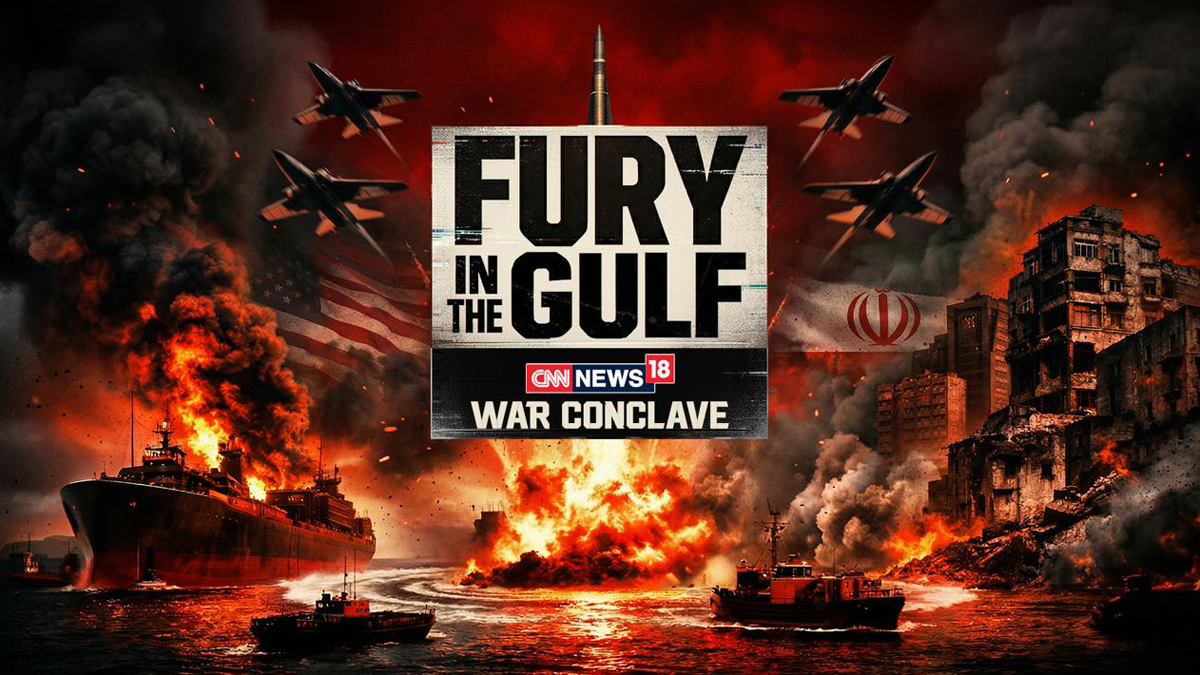
MUMBAI: CNN-News18 is set to host a special three-hour broadcast, Fury in the Gulf – War Conclave, on April 7, aiming to decode the escalating West Asia crisis and its far-reaching implications for India.
Scheduled from 4:00 PM to 7:00 PM, the conclave comes at a time when tensions between Iran and the United States are reshaping global geopolitics and triggering economic uncertainty. With India’s deep energy ties, trade links and large diaspora in the Gulf, the developments carry significant domestic relevance.
Built around the theme ‘Conflict, Consequences, and The Future,’ the programme will feature six curated sessions combining one-on-one interviews and panel discussions. The focus is to cut through the clutter and offer viewers a clearer understanding of the fast-evolving situation.
Key sessions include ‘Diplomacy in Times of War’ featuring Shashi Tharoor, and ‘World After the Iran Conflict’ with voices such as Ram Madhav, Reuven Azar, representatives from the European Union and the Iranian Deputy Envoy. Another session titled ‘Another Dunkirk?’ will bring together K. J. S. Dhillon and Jitin Prasada among others.
CNN-News18 editorial affairs director Rahul Shivshankar said, “In times of war, clarity becomes the most powerful tool. Fury in the Gulf – War Conclave brings together credible voices to address the questions and confusion that arise amid an overwhelming influx of information.”
He added that the initiative is aimed at delivering “facts, perspective, and insight” at a time when misinformation can easily cloud public understanding.
Echoing the sentiment, CNN-News18 CEO– English and business news Smriti Mehra said the conflict marks a defining global moment, with consequences that extend well beyond the region. She noted that the conclave seeks to present the crisis with “depth, nuance and responsibility” so audiences can better grasp its real-world impact.
As geopolitical tensions continue to dominate headlines, the conclave positions itself as an attempt to bring order to the noise, offering viewers a structured, insight-led look at a complex and rapidly shifting global situation.






