iWorld
MX Player launches home-grown short-video app TakaTak
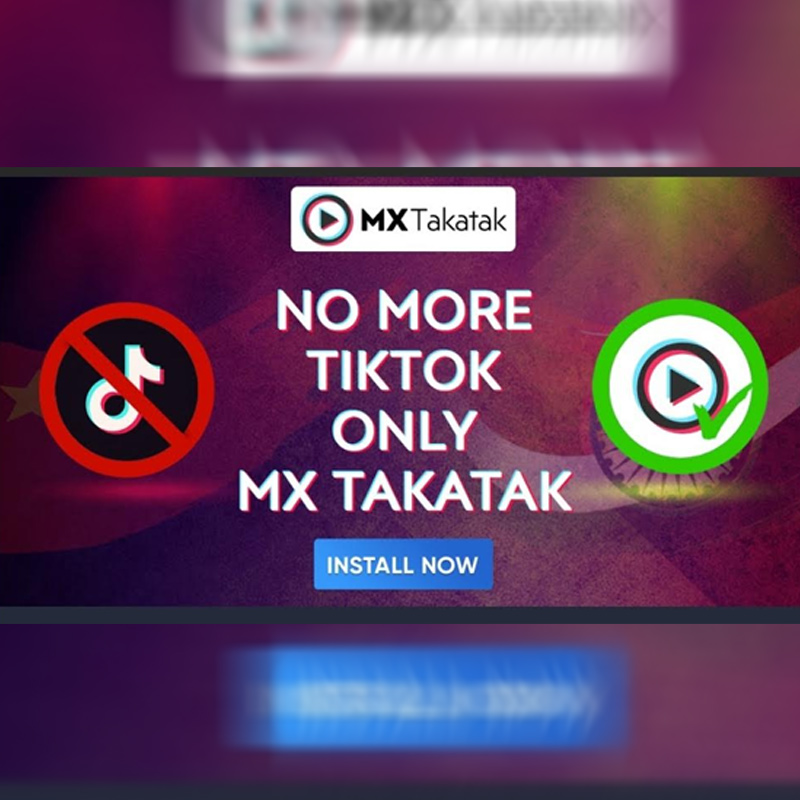
KOLKATA: It seems that with the sudden boom of short-video platforms, even streaming services providing premium original content are keen to take the lead while TikTok stays banned. With the Chinese app being blocked, it has created a huge void in the market and the latest player to enter is MX Player with MX TakaTak.
"MX TakaTak is a short video community, made locally and especially by MX Media & Entertainment in India. On MX TakaTak, we provide rich video content and encourage creation full of imagination," reads the description on Google Play Store.
MX TakaTak offers users real and fun videos that they can watch and share on social media. They can browse all types of videos, ranging from dialogue dubbing, comedy, gaming, DIY, food, sports, memes, and many more.
It has entered the market at a moment when the anti-Chinese sentiment and also call for local apps rising. In its description, MX Player emphasises that it is grown “locally’.
With the MX TakaTak app, users can create short fun music videos on the go, dub their favourite movies dialogue, dance videos, and a lot more, and also share on Facebook, Whatsapp, and other social media platforms. They can edit videos using the app's editing features and share them directly.

iWorld
WhatsApp may soon let users to pick who sees their status updates
The messaging giant is borrowing a page from Instagram’s playbook as it pushes to give users finer control over their social circles.
CALIFORNIA: WhatsApp is quietly working on a feature that could make its Status function considerably smarter and considerably more private.
According to reports from beta tracking platforms, the app is testing a tool called Status lists, which would allow users to create named groups such as close friends, family and colleagues, and control precisely which group sees each update. It is a meaningful step up from the platform’s current blunt instruments, which offer only three options: share with all contacts, exclude specific people, or manually select individuals each time.
The new feature draws an obvious comparison with Instagram’s Close Friends function, and the resemblance is unlikely to be accidental. Both platforms sit within Meta’s family, and the company has been nudging them toward a common logic of audience segmentation for some time.
The move also fits neatly into WhatsApp’s broader privacy push. The platform has been rolling out enhanced chat protections and is exploring the introduction of usernames, which would allow users to connect without exchanging phone numbers. Status lists extend that philosophy from messaging into broadcasting.
Meanwhile, Status itself has been evolving well beyond its origins as a simple photo-and-text slideshow. The feature now supports music stickers, collages, longer videos and interactive elements, pushing it closer to the social-media-style story format pioneered by Snapchat and refined by Instagram. In that context, finer audience controls are not merely a privacy feature. They are a precondition for people sharing more.
The feature remains in development and has not been confirmed for release. WhatsApp routinely tests tools that are later modified or quietly shelved. But the direction of travel is clear: the app wants Status to be a destination, not an afterthought. Letting users decide exactly who is in the audience is how it gets there.