High Court
Mumbai High Court postpones cable case to 18 June

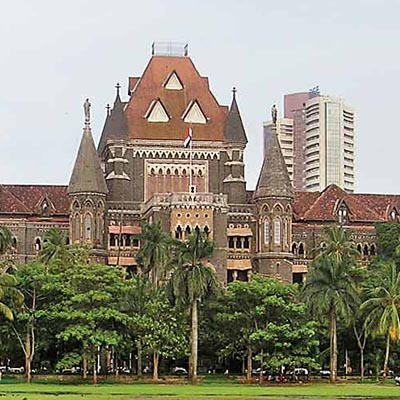
MUMBAI: The trade was anxiously awaiting a decision but none was forthcoming. A division bench of the Mumbai High Court comprising Chief Justice CL Thakker and Dr Dhananjay Chandrachud today further postponed the crucial hearing of the “cable case” to 18 June 2003.
Chaitanya D Mehta, representing the chief petitioner Bharatiya Janata Party (BJP) member of Parliament Kirit Somaiya and other politicians, opened proceedings by stating the original petition is not restricted merely to monthly cable charges payable by the consumer. Mehta stated that the other issues included disconnections, black outs by cable operators, incorrect disclosures and non payment of applicable taxes to the state and Central government.
During the court room proceedings a lot of inconsistent statements were made by the assembled lawyers. For instance, Mehta read out the applicable sections which stated that the Union government was empowered to dictate the ceiling rate of the monthly cable charges. However, it is important to note that he was quoting from the recently amended Cable Television Networks (Regulation) Amendment Bill 2002 which empowers the government to determine the ceiling price of free-to-air (FTA) channels – and not the pay channels. Also, industry sources present in the court mentioned that some of these sections will only become applicable from 14 July 2003 when conditional access system (CAS) commences in the metropolitan cities.
Mehta also appealed to the Lordships to postpone the hearing to 18 July as the Central government is supposed to ratify certain aspects of CAS by 17 July 2003 – three days after the implementation process commences!
However, Mehta was bang on target when he raised the issue of compliance. He pointed out that there could be 2 million subscribers in the city of Mumbai but the statistics available with the government indicated the figure was in the region of 4,47,000. He also mentioned that the government should be earning revenues of Rs 60 million per month instead of the Rs 13 million that it is getting. He questioned as to why the state and central government enforcement authorities (excise department, income tax department officials and the legal authorities such as the police) had failed to enforce and interpret the laws correctly.
Mehta wondered whether there was a nexus between the enforcement authorities and cable operators. He stated that the laws clearly said that cable operators must maintain a maintenance register in the prescribed form and produce (on demand by the enforcement authorities) information on all aspects of their business including the exact number of customers serviced.
Mehta also quoted sub sections 3, 4A, 5 amongst others which empowered enforcement authorities to seize equipment of defaulting cable operators. He pointed out that the broadcasters had admitted (in their petition as well as in public statements) that only 25 per cent of the actual subscriber base was declared by the cable trade.
This line of reasoning was seconded by Doordarshan / Prasar Bharati lawyer additional solicitor-general of Maharashtra SB Jaisinghani. Jaisinghani wondered as to why the enforcement authorities had failed to conduct a single raid on any cable operator till date. He appealed to the lordships to give the requisite instructions to the enforcement authorities.
The lawyers of the cable operators raised the issue of the chief petitioner (BJP MP Somaiya) misguiding the general masses by wrongly informing them (through banners in public places) that the High Court order of 7 March included an injunction against raising cable charges. One of the lawyers representing respondent No 25 (cable distributor Sada Kadam) and Mumbai Cable Operators Federation lawyer AM Saraogi urged the lordships to clarify that they had not passed an injunction. They said that the “political gimmick” was affecting the day-to-day cable business.
The lawyers representing the cable operators also stated that the consumers were taking recourse to the incorrect or partly correct interpretations made by the chief petitioners in their public communication and refraining from making monthly cable payments. They pointed out that petition of the chief petitioner mentioned that the broadcasters were charging Rs 240 per month for pay channels. They argued that the cable trade was willing to charge Rs 150 as long as the chief petitioner was willing to compensate the difference in amount.
Meanwhile, MSO InCablenet lawyer Janak Dwarkadas again requested the Lordships to give their verdict as the broadcasters were cutting signals to the MSOs for non-payment of dues whereas the consumers refused to pay in lieu of the incorrect messages sent out by the chief petitioners and politicians.
After the Lordships postponed the hearing to 18 June 2003, some of the assembled members of the cable trade mentioned that the case would drag on till July 2003 when CAS would come into effect.
“There is no will to sort out the problem. However, it is a win-win situation for the politicians. Even if their petition is dismissed, later on, they can admit that they tried their best and score political brownie points. But, the trade will continue to suffer due to consumers refusing to pay and taking recourse to the campaign of the politicians. With the decision being postponed, we shall have to battle on in order to collect our rightful dues,” says a cable operator on condition on anonymity while speaking to indiantelevision.com.