I&B Ministry
Mittal wants self-regulation for new media, Rathore says IT Act adequate

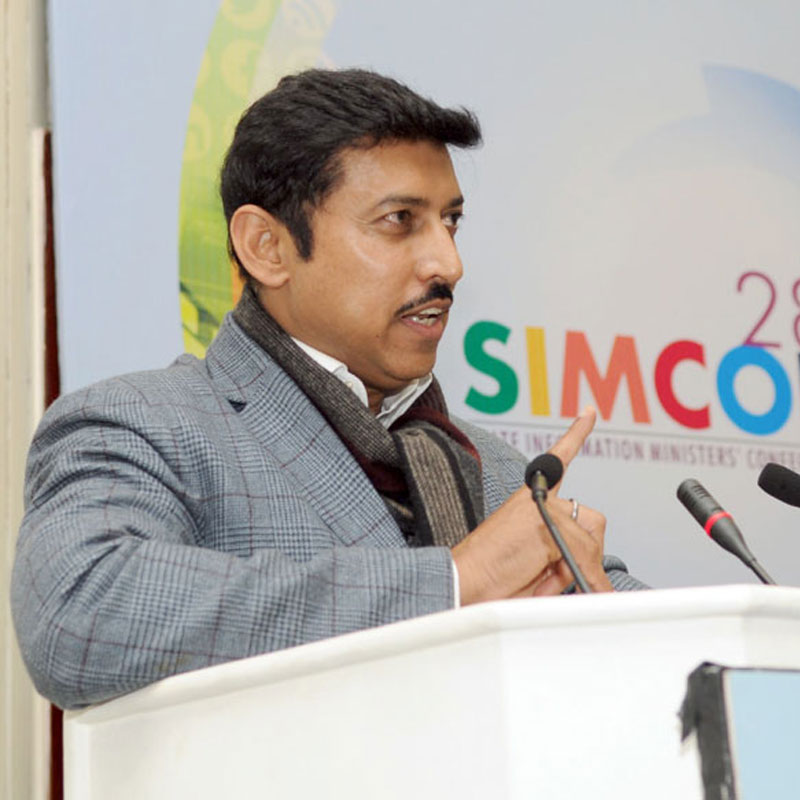
NEW DELHI: Even as Minister of State for Information and Broadcasting Rajyavardhan Rathore categorically told Parliament earlier this month that his Ministry was not contemplating any regulatory framework for censorship of content appearing on the internet, Secretary Ajay Mittal has said the Centre is concerned about new media in the absence of a regulatory framework.
Speaking in Kolkata at the Merchants’ Chamber of Commerce and Industries (MCCI), Mittal said
“An important area of challenge in the new media is that there is unfortunately no regulatory framework. What you cannot see on TV or hear on your radio, it is all possibly up there in open access.”
Mittal said much more was needed to be done to prepare the government and its officers to deal with the “completely new paradigm of digital media”.
He said the Ministry was discussing with the state governments and “we are now going to train their people in the information sector so that they can deal with the challenges created by new media that is causing a whole lot of concern.”
Mittal said questions have also been raised in Parliament on “this issue of digital media without any boundaries. We are very clear that in the media space the best form of regulation is self regulation and the government would like to keep away as far as possible.”
Rathore had said in reply to a question about censoring new platforms for publication and broadcasting of media content like social networks and online video services that Section 69A of the Information Technology Act 2000 provides for blocking access to information under specific conditions. He said the Act has provisions for removal of objectionable online content.
The Information Technology (Intermediary Guidelines) rules 2011 require that the Intermediaries shall observe due diligence while discharging their duties and shall inform the users of computer resources not to host, display, upload, modify, publish, transmit, update or share any information that is harmful, objectionable, affects minors and is unlawful in any way.
As far as OTT was concerned, sources in the ministry told indiantelevision.com that this was still a new subject, and the government would take action in the event of any complaints from viewers and subscribers.
The Ministry, sources said, has no control over films appearing online as this falls in the ambit of the IT Act which is administered by IT Ministry.