iWorld
Micro content makes a big play at VIDNET 2025
MUMBAI: If stories are shrinking, the excitement certainly is not. At VIDNET 2025, the session on micro content took centre stage as panellists unpacked how two-minute dramas are quietly rewriting India’s viewing habits.
Mautik Tolia set the tone, noting that nearly three-fourths of daily digital viewing now comes from snackable videos. With attention spans dipping to eight seconds for Gen Z, he said micro-dramas are not a fad but a force.
Bullet founder and cbo Azeem Lalani, compared the shift to cricket’s leap from test matches to T20s. He predicted the fledgling category could touch $100 million in its first year, though current projections seem inflated. He argued that India’s diversity and young skew make pay-per-view the more honest model, especially for an audience that only pays when hooked.
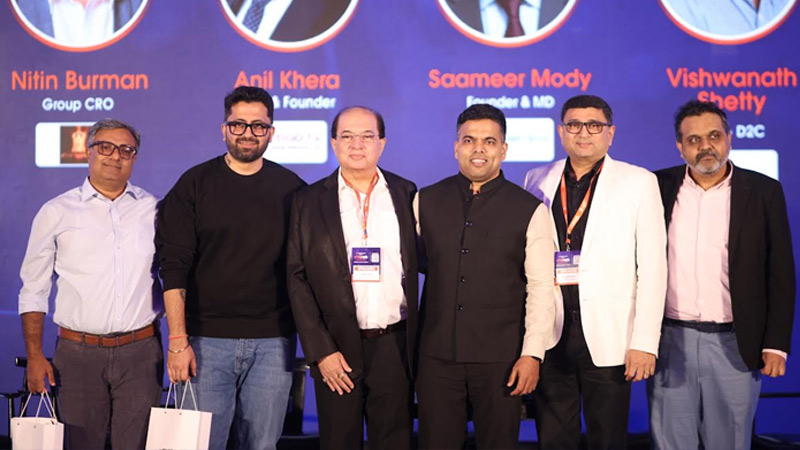
Balaji Telefilms group cro Nitin Burman, said micro-dramas will coexist with long-form shows. India’s mobile-first behaviour, he noted, creates fertile ground for brand spends. Balaji, instead of competing as a platform, has pivoted to production and now makes 30 to 35 micro-dramas a month.
Industry veteran, One Take Media founder and ceo Anil Khera, said the format suits viewers who cannot commit to thirty-minute episodes. However, the genre playbook remains fluid. Family sagas may not translate well to vertical screens, while thriller-flavoured romance and relationship dramas currently dominate.
For Pocket Films founder and md Sameer Mody, the format works because it merges India’s love for stories with the ease of vertical scrolling. He believes the audience is not limited by age but by mood and moment, and his platform now offers everything from episodic micro-dramas to horizontal shows in one app.
From a brand perspective, Pocket Aces svp marketing Vishwanath Shetty said the early rush is driven by the urge to be first. While views matter, brands increasingly prioritise perception shifts, especially among Gen Z and Gen Alpha. Campaigns with Myntra, IPL and NPCI have shown that vertical storytelling can build conversations, not just numbers.
As attention fragments and creativity compresses, micro-dramas appear to be carving out a cultural niche. The formats may be tiny, but the ambitions, it seems, are nothing short of cinematic.

Gaming
Bluestone FY26 revenue rises to Rs 2,436 crore, turns profitable
Q4 profit at Rs 31 crore, full-year profit at Rs 13 crore vs loss last year.
MUMBAI: From sparkle to numbers, Bluestone seems to be polishing more than just jewellery this year. Bluestone Jewellery and Lifestyle Limited reported a sharp turnaround in FY26, with revenue from operations rising to Rs 2,436 crore (Rs 24,364 million), up from Rs 1,770 crore (Rs 17,700 million) in FY25. The company posted a full-year profit of Rs 13 crore (Rs 131.79 million), a significant recovery from a loss of Rs 222 crore (Rs 2,218 million) a year ago.
Total income for the year stood at Rs 2,486 crore (Rs 24,860 million), compared to Rs 1,830 crore (Rs 18,300 million) in the previous year, reflecting both topline growth and improved operational momentum.
The March quarter, however, told a more nuanced story. Revenue from operations came in at Rs 681 crore (Rs 6,814 million), down from Rs 748 crore (Rs 7,486 million) in the year-ago period, though higher than Rs 461 crore (Rs 4,613 million) in the preceding December quarter. Net profit for Q4 stood at Rs 31 crore (Rs 311.81 million), compared to Rs 68 crore (Rs 688 million) a year earlier, but a clear reversal from a loss of Rs 51 crore (Rs 512 million) in Q3.
Margins were shaped by higher input costs, with raw material consumption rising to Rs 2,204 crore (Rs 22,043 million) for the full year, alongside employee benefit expenses of Rs 282 crore (Rs 2,824 million) and finance costs of Rs 210 crore (Rs 2,104 million). Other expenses came in at Rs 371 crore (Rs 3,715 million), slightly lower than Rs 393 crore (Rs 3,938 million) in FY25.
On the balance sheet front, total assets expanded to Rs 4,961 crore (Rs 49,610 million) as of March 31, 2026, from Rs 3,532 crore (Rs 35,322 million) a year earlier, driven largely by a surge in inventories to Rs 2,672 crore (Rs 26,718 million). Equity also strengthened to Rs 1,803 crore (Rs 18,030 million), nearly doubling from Rs 911 crore (Rs 9,107 million).
Cash flows reflected the cost of growth. Net cash used in operating activities stood at Rs 199 crore (Rs 1,990 million), while investing activities saw an outflow of Rs 239 crore (Rs 2,392 million). Financing activities, however, generated Rs 497 crore (Rs 4,971 million), helping the company end the year with cash and cash equivalents of Rs 108 crore (Rs 1,075 million), up from Rs 49 crore (Rs 487 million).
Earnings per share for FY26 came in at Rs 1.10, a sharp improvement from a negative Rs 79.74 in FY25, underlining the shift from losses to profitability.
With revenue scaling up, costs still glittering on the higher side, and profitability finally back in the black, BlueStone’s FY26 performance suggests a business mid-transition less about shine alone, and more about sustaining it.