News Headline
JioStar isn’t quitting cricket—it’s teaching the ICC to bowl underarm

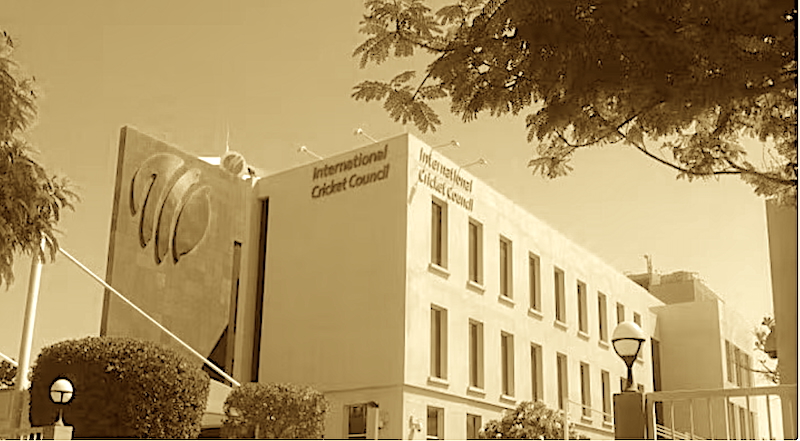
MUMBAI: The hand-wringing has begun. JioStar, India’s broadcasting colossus, is supposedly staring into the abyss: haemorrhaging money on cricket rights, throttled by advertising bans on online gaming and pan masala, contemplating a humiliating retreat from the sport that built its empire. The narrative writes itself: regulatory victim seeks exit from ruinous $3.2bn ICC deal.
Scratch that surface, and something else emerges. This isn’t panic. It’s poker.
According to an analysis by RevSportz, there is no white knight galloping to JioStar’s rescue—because none exists. Amazon and Netflix see cricket as tangential to streaming dominance. Sony and Zee lack both appetite and balance sheets for the sums Star originally committed. And talks of pubcaster Prasar Bharati examining the possibilities is just noise. Why should it pay for something it gets for free anyway?

The brutal market reality: India remains cricket’s monetisation engine, and JioStar is the only outfit with the reach, technology and pricing muscle to make these rights pay.
Which makes the “exit” chatter less admission of defeat, more pressure tactic. Yes, the ICC can legally force JioStar to honour the contract. But the likelier outcome, RevSportz suggests, is a restructured deal stretching rights to 2029 instead of 2027—with negligible incremental payment for those bonus years. Total value stays intact (giving the ICC its stability narrative), whilst JioStar’s annual burden drops sharply. Optics improved, boardrooms appeased.
The complication: associate member nations, whose survival depends on ICC distributions, would revolt over straightforward fee cuts. An extension, however, smooths the curve—money flows slower, but longer. Headlines celebrate continuity; accounts quietly self-correct.
Here’s the underlying truth: if JioStar blinks, global cricket blinks. Nowhere is that clearer than in the Indian Premier League, the sport’s Fort Knox. Any drop in IPL rights valuation would crater franchise balance sheets, spook private equity and rattle banks underwriting cricket’s future. The IPL must remain bulletproof. That means no sudden expansion beyond 74 matches, no media value dilution, no admission the cricket economy is cooling.
So who takes the hit? The Board of Control for Cricket in India’s bilateral rights.
Broadcasters are done paying premiums for low-yield test cricket against mid-tier opponents. The data is unequivocal: declining watch-time, lower cost-per-thousand impressions, anaemic sponsorship. The new reality will force the BCCI to rethink volume, formats and scheduling. Expect fewer tests, shorter series, more white-ball cricket—not by choice, but commercial necessity, says RevSportz.
JioStar isn’t walking away. It’s right-sizing costs and, in doing so, rewriting cricket’s power equation. The ICC gets stability without admitting weakness. The IPL’s valuation remains sacrosanct. The BCCI accepts bilateral corrections whilst leaning harder on one-day internationals and T20s. And fans? They may not notice immediately. But the cricket calendar they consume in five years will be shaped by this moment.
The broadcaster staring down the ICC isn’t backing down. It’s making sure everyone else does.
(The original article can be read here: https://revsportz.in/jiostars-exit-of-icc-rights-isnt-panic-its-a-repricing-of-power-in-global-cricket/ )






NEW DELHI: Hamdard Laboratories gathered a cross-section of India’s achievers in New Delhi on Friday, handing out the Hakeem Abdul Hameed Excellence Awards to figures who have left their mark across healthcare, education, sport, public service and the arts.
The ceremony, attended by minister of state for defence Sanjay Seth and senior officials from the ministry of Ayush, celebrated individuals whose work blends professional success with a sense of public purpose. It was as much a roll call of achievement as it was a reminder that influence is not measured only in profits or podiums, but in people reached and lives improved.
Among the headline awardees was Alakh Pandey, founder and chief executive of PhysicsWallah, recognised for turning affordable digital learning into a mass movement. On the sporting front, Arjuna Awardee and kabaddi player Sakshi Puniya was honoured for her contribution to the game and for pushing women’s participation onto bigger stages.
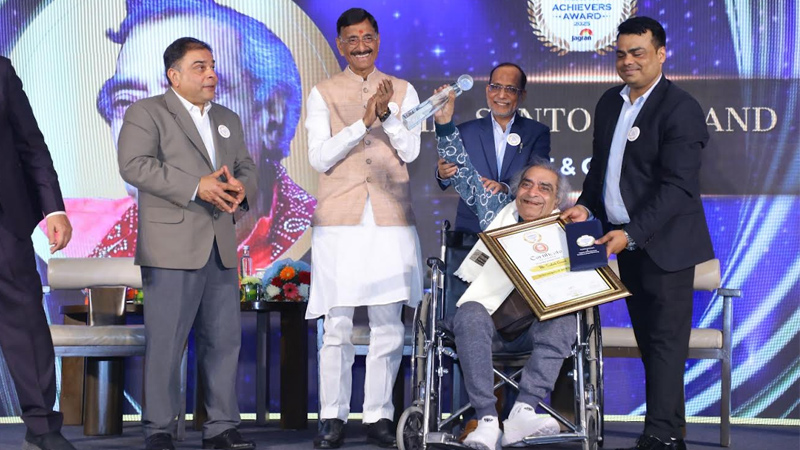
The cultural spotlight fell on veteran lyricist and poet Santosh Anand, whose songs have echoed across generations of Hindi cinema. At 97, Anand accepted the honour with characteristic humility, reflecting on a life shaped by perseverance and hope.
Healthcare honours spanned both modern and traditional systems. Manoj N. Nesari was recognised for strengthening Ayurveda’s place in national and global health frameworks. Padma shri Mohammed Abdul Waheed was honoured for his research-backed work in Unani medicine, while padma shri Mohsin Wali received recognition for his long-standing contribution to patient-centred care.
Education and social development also featured prominently. Padma shri Zahir Ishaq Kazi was honoured for decades of work in education, while former Meghalaya superintendent of Police T. C. Chacko was recognised for public service. Goonj founder Anshu Gupta received an award for his dignity-centred rural development initiatives, and the Hunar Shakti Foundation was honoured for empowering women and young girls through skill development.
The Lifetime Achievement Award went to former IAS officer Shailaja Chandra for her long career in public healthcare and governance, particularly in the traditional systems under Ayush.
Speaking at the event, Hamdard chairman Abdul Majeed said the awards were a tribute to those who combine excellence with empathy. “These awardees reflect Hakeem Sahib’s belief that healthcare, education and public service must ultimately serve humanity,” he said.
Minister Seth struck a forward-looking note, saying India’s young population gives the country a unique opportunity to become a global destination for learning, health and wellness by 2047.
The ceremony also featured the trailer launch of Unani Ki Kahaani, an upcoming documentary starring actor Jim Sarbh, set to premiere on Discovery on 11 February.
Instituted in memory of Unani scholar and educationist Hakeem Abdul Hameed, the awards have grown into a national platform that celebrates those building a more inclusive and resilient India. For one evening at least, the spotlight was not just on success, but on service with substance.






