Content Hub
Inside ZEEL’s ambitious new bet on Zee Studios Originals

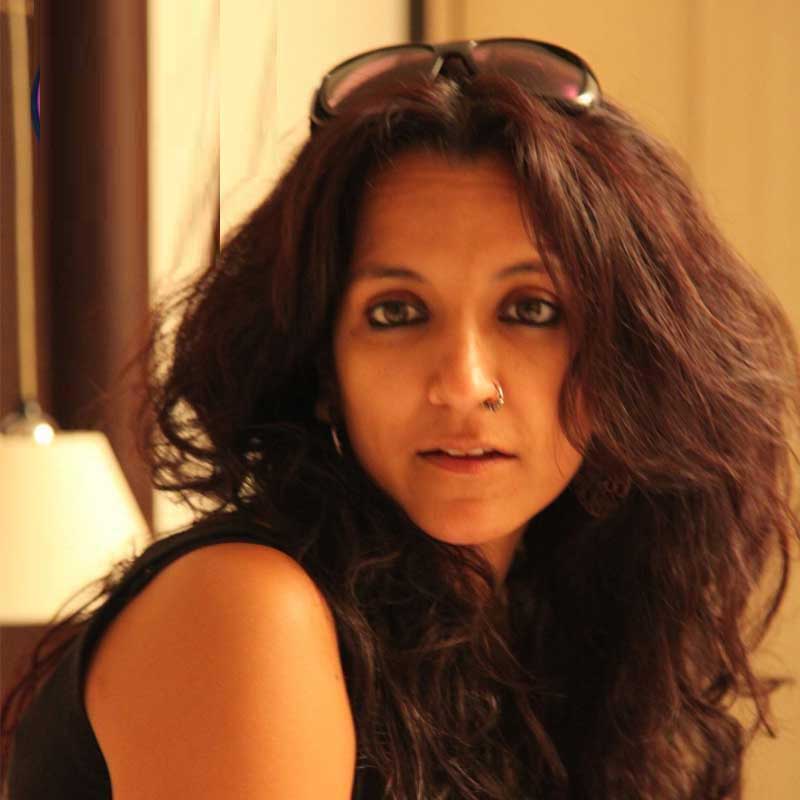
MUMBAI: 20 years of traversing across television networks and production houses, Ashima Avasthi now finds herself saddled in the hot seat at Zee Studios as head of its digital content arm. She's been quick off the blocks, equipping herself to be battle-ready within two months of her arrival at the company's office in Andheri, Mumbai's entertainment hub. In her last gig, Avasthi crafted award-winning content for BBC Studios as its senior creative director and head of branded content.
“This was actually the perfect time to move into digital. The year will mark the start of the transformation for OTT and digital content,” she says rationalising the reason behind the switch.
In 2018, two words 'digital' and 'content' reverberated more powerfully than ever before. In all likelihood, we'd probably be saying the same in 2028 as well. Avasthi likens the current content creation craze to running a marathon.

"There's an excitement when you see loads of other people running. Everybody wants to reach the finish line. So, everyone is driving and inspiring the other one. It's the same for this market," she points out.
With ZEEL now ready to produce content in a new avatar, Indiantelevision.com caught up with Avasthi in the first instalment of The Content Hub 2019 for an insight into how she intends to drive the media conglomerate’s ambitious plans.
As head of Zee Studio Originals, what’s your mandate?
We would work like a studio that produces content, which gets commissioned by various platforms and not just ZEE5. We’ll be working with everybody. We'll also be investing a lot in IPs and make the content we believe in. It’s going to be a two-pronged approach. IP is going to be a huge thing for us.
All the platforms, international or domestic, are seeing the real potential of this market and have committed so much of investment. They are all spending Rs 500-600 crore a year. That’s a huge, huge amount for originals. For content makers and content producers it’s the best time.
How is your content creation philosophy different from that of ZEE5 Originals?
ZEE5 will be basing everything, I’m assuming, on what their audience wants. We are not going to be creating anything for a particular audience. We are going to see the digital audience in a larger perspective. We are going to keep creating content by anticipating who the audience is going to be in the next few months.
OTTs are going to have a much higher subscription in tier 2 and 3 cities. It’s no more just a tier 1 town syndrome. If you see, the demographics of the audience is changing. So, we are going to cater to the world at a large as opposed to a particular audience. Each platform is probably going to have its own strategy on what they want to produce. So, we’ll be creating content that suffices the need of a consumer wherever he or she’s watching.
Shouldn’t OTTs adopt a content creation mindset similar to yours instead of focusing on a particular audience?
With digital, content makers are not within the shackles of audience and ratings. So, you go and make content that’s going to be a benchmark, break clutter, cut across various people, and travel outside India. Sacred Games is actually something that was viewed more outside of India. You make content that is going to be considered world class by any consumer sitting across the world. While OTTs too shouldn’t restrict their offerings to a particular audience, there is bound to filtering and a direction taking that will happen. Everyone’s experimenting.
At some point, every platform will figure out who they want to narrow it for. There are platforms that are already doing it, for instance, Viu is focussing on regional. Some are looking at sports content, some are only looking at tier 2. So, they will take their own direction and there will be some larger players who will say ‘we’ve got it all’.
In the next five years, this [OTT] is going to penetrate a lot into tier 2 and tier 3, and in villages. It’s going to get big in rural at some point. All of us are television converts to digital. The new kids on the block are not, as they’ve grown up in a digital world. In the next two or three years, that’s going to happen to rural. Some platforms could take a direction wherein they focus on rural. Eventually, there’s going to be three apps on every user’s phone. But for content producers, you cannot have that filter.
You used the world 'benchmark'. Do you think Netflix is the benchmark in terms of content creation?
I think what Netflix has done, particularly for India, is show that digital content doesn’t have to be mediocre and cheap in terms of production quality. The benchmarks they have set are more on the quality of production. And to be fair, everyone’s followed. We just needed someone to come in and say that 'it’s okay to spend that kind of money on digital'. Netflix has redefined ‘premiumness’.
In terms of vision, what are the pillars on which your content strategy will hinge on?
Two adjectives we want associating with our content are world class and unexpected. 'Good' doesn’t cut it for us. We want audiences across the world to think of us as great content producers.
What are the challenges for a digital content studio in today’s environment?
I think right now content studios are in a good place. All the problems they have are good problem to have. For us, I think the advantage is that we are not a pure producer. We are also IP creators. So we are investing in our IPs and content. So we are not in the race vying only vying for commissions. Our main game is going to own our content. When I say own, I mean purely Zee Studio Originals.
Netflix, ZEE5 among others have signed a self-censorship code. Amazon hasn't. Where do you stand on the censorship debate?
Censorship is not a hindrance for me. I think it’s the responsibility of content creators to use that freedom intelligently. I don’t think there should be censorship. Creativity should never have censorship. However, we have to be responsible creators.
Can you delve deeper into your plans for 2019?
We are definitely looking at getting a good number of series. We are looking at direct-to-digital films and I know that OTT platforms are very open to it. They are looking for digital films. We are also doing some regional work. Right now we are in the process of signing up some really good directors to kick-start our slate which we should be ready to announce soon. We should be ready with some of our content by the third or fourth quarter.
How do you intend to leverage the synergies of Zee Studios and ZEE5?
We are a part of ZEE Studios. ZEE5 is a platform like any other independent platform. There is always an advantage of a being part of a larger family because there’s going to be synergies there. But we walk our own paths and focus on our respective targets.
Have you identified any digital content consumption trends?
I don’t think there’s a trend. The trend changes before you can call it a trend. What’s happening is we are creating content left, right and centre. It’s a windfall for consumers. They themselves haven’t figured out what they want. We’ve got loads of people who are subscribing. We have OTTs that have committed really high spends to create content and now we are ready to make things for all audiences. So, now will be the time that you’ll start seeing audience trends.
As someone who has the final say, how do you greenlight projects?
Gut. It’s pure gut. In a very creative world, you have to go with your gut. You have to observe and not live in a box. You have to understand the market and consumer, but finally, you go with your gut.
How do you keep evolving as a creative professional?
To be very honest, I keep trying to learn. This [digital content] is such a new thing for everybody. Consuming global content is an obvious way to keep oneself updated. I also keep learning from different age groups. It’s such a great time to listen.
What’s a typical day at the office for you?
My entire day is spent listening – to scripts, ideas, and people – which is brilliant. Listening is the best way to trigger ideas.
What are you currently watching?
I’m actually enjoying Rangbaaz right now. I'm mostly very critical of content but I think it’s well made. Funnily, I’m enjoying Narcos Mexico a lot more than Narcos.
Any particular series or show that you watched recently and wished you'd made it?
There’s a lot. I have to say I’m waiting for the time when Indian platforms starting buying really high-end documentaries. I’d love to make aWild Wild Country. I’d like to make an absolutely world class, cutting edge documentary.
Interesting. Are Indian audiences lapping up documentaries as much as other content?
No, not really. Even globally, the skew is too wide. Even the greatest of docu makers like Errol Morris have a fixed audience set. But the fact that a Wild Wild Country made an impact in India is a good sign to suggest that the consumers are open to anything. This audience is discerning yet open-minded unlike the television audience, which is set in its ways.
Do you see Indian content traveling anytime soon?
I think it will. A lot will definitely depend on the OTT platform and the importance that it gives. Television series were made at some other level internationally versus what we were making here. However, in digital that’s all changed. We are making content at the same level. Is Mirzapur or Rangbaaz any lesser than Narcos Mexico? No it's not. So, I think it's a question of time and a bit of marketing for sure. It’s going to get there. This is going to be the defining year. Netflix wants all Indian Originals now commissioned out of India as opposed to Los Angeles. So, everyone’s seeing the merit in what we’re creating and the level that it’s being created at.



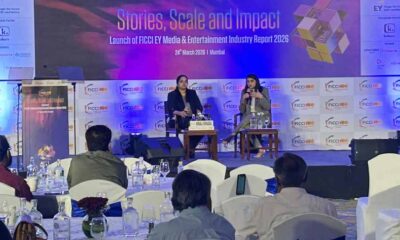

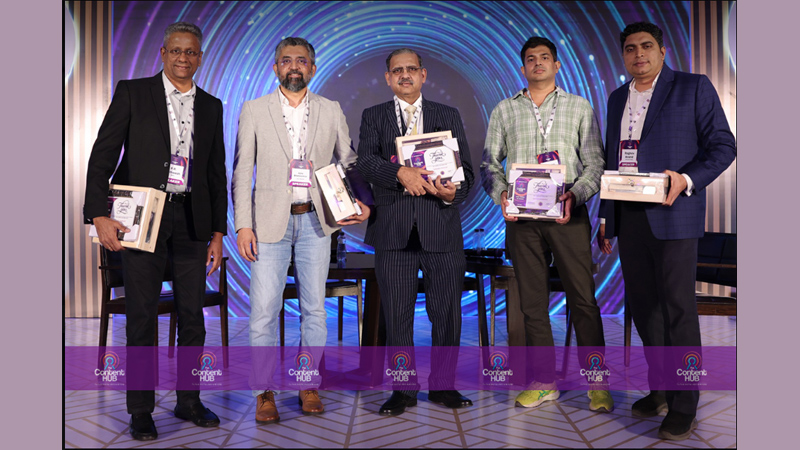
Mumbai: Exploring the shift from regional to national content, this synopsis delves into the trends and challenges. It navigates the transformation, analyzing industry dynamics, emerging trends, and the hurdles faced. From preserving regional variation to adapting to a broader audience, it examines the multifaceted journey of regional content evolving into a national narrative. In what ways do the emerging trends and challenges influence the dynamics of the entertainment industry during this transition? How can creators navigate these changes effectively? What strategic approaches can content creators adopt to strike a balance between maintaining regional identity and fostering a cohesive national narrative in their work? How can the transition from ‘regional’ to ‘national content’ impact cultural diversity within the entertainment industry, and what measures can be taken to ensure the preservation of regional variation?
In a rapidly evolving media landscape, seasoned industry professionals have offered valuable insights into the transformation of content consumption and production. The session was chaired by Ernst and Young partner Raghav Anand, MMTV chief executive officer P.R. Satheesh, Sony Marathi business head Ajay Bhalwankar, PTC Network chairman & MD Rabindra Narayan, Shemaroo Entertainment COO, Digital, Saurabh Srivastava esteemed voices in the field, have articulated their perspectives on the burgeoning shift towards globalised content.
Rabindra Narayan emphasised the dissolution of regional boundaries in content consumption, attributing it to the accessibility facilitated by global platforms and connectivity options. He predicts a future where language barriers will fade, citing the potential of technology to clone and adapt voices, thus enabling seamless localization across languages.
Saurabh highlighted the democratisation of content creation in the digital era, underscoring its empowerment and revenue potential, particularly in linguistically diverse markets like India. He emphasizes the value of culturally rooted storytelling in filling gaps in content supply, with technology enabling effective monetization, especially through OTT platforms.
Ajay Bhalwan sheds light on the evolving landscape of Hindi and regional language content, noting a significant shift where a substantial portion of content on Hindi film channels originates from regional languages. He accentuates the importance of language in enhancing authenticity and audience engagement, exemplified by the strong resonance of Marathi content in Maharashtra.
PR Satheesh underscored the paramount importance of content quality in driving viewership and transcending language barriers. Drawing parallels with the global popularity of Korean dramas, he advocates for leveraging technology, including AI and real-time translations, to enhance content creation and distribution.
These insightful perspectives collectively echoed the industry’s adaptation to a globalised content landscape, where technology catalyzes innovation and accessibility. As content continues to evolve, these experts offered valuable guidance on navigating the dynamic media landscape and maximizing the impact of storytelling in diverse markets worldwide.






