GECs
Indian TV advertising takes a beating as FMCG brands tighten purse strings

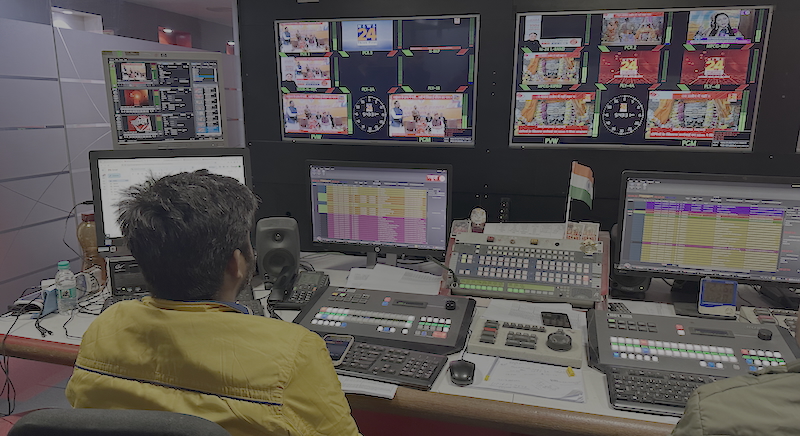
MUMBAI: India’s television advertising market has hit the skids. The Economic Times reported that ad volumes plummeted 10 per cent year-on-year in the first nine months of 2025, according to TAM AdEx data, as fast-moving consumer goods companies—the industry’s biggest spenders—slashed budgets in response to anaemic consumer demand. Of course, the ban on real money gaming platforms in end-August added to the shrinkage in ad spends too .
The carnage shows up in broadcaster balance sheets. Zee Entertainment’s advertising income tumbled 11 per cent to Rs 3,591 crore. Sony Pictures Networks India posted a nine per cent drop to Rs 2,606 crore. Sun TV Network’s advertising and broadcast slot sales fell four per cent to Rs 1,440 crore. Star India, now merged with the erstwhile Viacom18, kept mum on the split between advertising and subscription revenue.
The culprit is clear: viewers are ditching appointment viewing for on-demand convenience, leaving linear television scrambling for relevance.
Food and beverages dominated advertising between January and September, claiming 21 per cent of total ad volume. Personal care, services, household products and retail rounded out the top categories. The top ten sectors hoovered up 88 per cent of all TV advertising—proof that consumer brands still see television as the mass-reach medium par excellence.
TAM Media chief executive LV Krishnan explained that the “drop is largely led by softening of market conditions, whereby consumption had dipped, resulting in a cut in ad budgets. This is a pre-GST reduction period.
Among individual advertisers, Hindustan Unilever remained the heavyweight champion, followed by Reckitt Benckiser India and Godrej Consumer Products. The top ten advertisers accounted for 42 per cent of total ad volume.
General entertainment channels and news outlets continued to attract the lion’s share of advertising, together accounting for 57 per cent of total volume. News, movies and music saw a marginal drop compared with 2024, whilst general entertainment gained slightly—a sign that high-reach programming still packs a punch.
Krishnan reckons the final quarter of 2025 will see year-on-year growth, thanks to GST rate cuts that kicked in on 22 September. He estimates the reforms will spur consumption and inject Rs 5,400 crore into overall advertising during the festive season, on top of organic festive growth.
If the green shoots turn into a proper recovery, television may yet claw back some swagger. For now, though, it’s licking its wounds.






GECs
EPIC Company unifies all brands under single EPIC identity
IN10 Media rebrand aligns TV, digital and films into one ecosystem
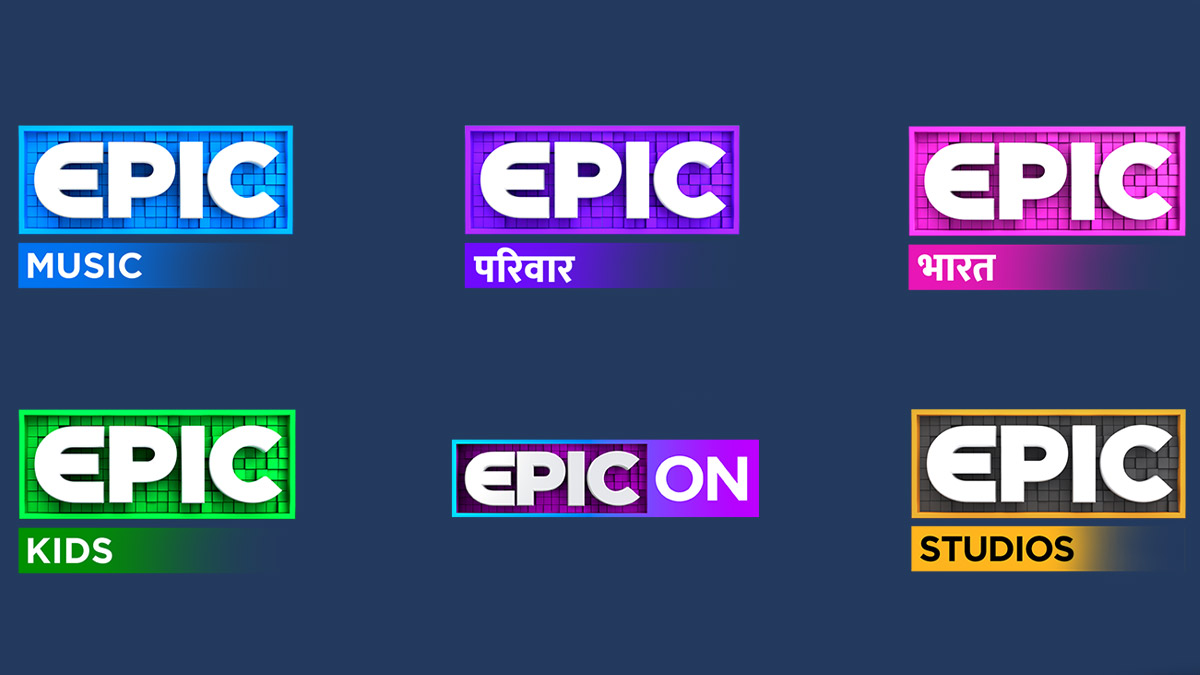
MUMBAI: The EPIC Company, formerly known as IN10 Media Network, has announced a sweeping brand consolidation, bringing its television channels, digital platforms and content IPs under a single identity, EPIC.
The move is aimed at simplifying the company’s structure while creating a more connected content ecosystem spanning television, digital and films. By aligning multiple verticals under one umbrella, the company is looking to present a sharper, more cohesive face to both audiences and partners.
As part of the transition, several channels have been rebranded to align with the EPIC identity. EPIC will now operate as EPIC TV, while Nazara becomes EPIC Bharat, Filamchi is now EPIC Bhojpuri, Gubbare transitions to EPIC Kids, and ShowBox is reintroduced as EPIC Music. Ishara will continue under the identity EPIC Parivaar, maintaining its core positioning.
The company has also refreshed EPICON, its streaming platform, to reflect a more unified and modern brand experience. The overhaul is designed to improve content discovery and create a seamless experience across platforms.
This consolidation follows the recent launch of EPIC Studio, a unified production arm that brings together Juggernaut Productions and MovieVerse Studio, as the company expands its footprint across films, OTT and television.
The EPIC Company managing director Aditya Pittie said, “As our scale has grown, it has become important to simplify how we operate and how we present ourselves to the ecosystem. This consolidation gives us a clearer, more future-ready structure to partner, invest, and build at scale, while ensuring that for viewers, the experience is more seamless and intuitive.”
With the rebrand, The EPIC Company is positioning itself as a platform-agnostic content network, focused on scale, simplicity and integrated storytelling. By bringing everything under one banner, it is aiming to make its content universe easier to navigate and harder to ignore.






