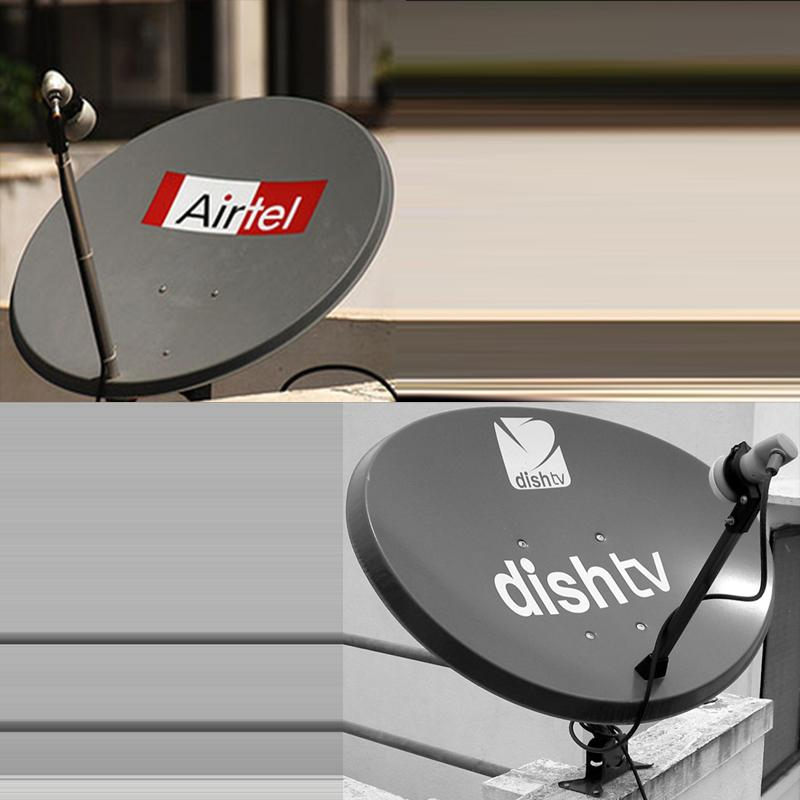
DTH
Indian OTT/VOD will not impact cable TV and DTH: Edelweiss Capital
MUMBAI: Financial services firm Edelweiss Capital’s research division’s latest report on the impact of OTT on television in India is surely going to delight the cockles of executives in broadcasting companies and probably raise the hackles of those in the video on demand space. The report says that, even as consumers are bound to increase their spends and time spent on video – either on handheld devices or on their smart TVs or their laptops, this will have a negligible impact on traditional linear TV’s fortunes.
Cord cutting or cord shaving which has been rampant in the US as cable TV and DTH viewers shift from their expensive services to cheaper VOD options or to cheaper TV packages is not something that is going to pop up in a hurry in India, says the Edelweiss report. The Indian cable TV and DTH segments are marked by low monthly rentals of Rs 300-450 as compared to the US where DTH and cable TV fees have soared.
“The Indian OTT market is at a nascent stage and is quite like the US was seven years ago,” it points out.
However, it is optimistic about the growth of the OTT sector. Currently, the challenge is broadband speed, the report points out, with the average home clocking 3.5 mbps, which is not enough to offer lag-free HD video streaming. It reveals that this will change with cheaper data and broadband options fueling VOD and OTT taking consumption of video content up from 3.5 hours to five hours daily.
Consumers are going to open their wallets and spend Rs 600-700 per month from the current Rs 300-450 per month to view video content across various platforms in the next five years, the report says. “In the case of India, it is largely a single-TV home market where not everyone in the family gets to watch what they want during prime time which will aid the OTT space,” the report adds.
But, VOD and OTT is only going to complement traditional television and not erode it is the report’s guidance.
The brokerage house is quite clear that TV advertising is also going to hold its ground because its viewership is going to continue to be steady. And, there is going to be no loss in revenues on account of VOD/OTT and the heady growths in digital video consumption and digital advertising.

DTH
Den Networks reports Rs 1,227 million FY26 profit growth
Revenue crosses Rs 10,009 million as margins improve and costs ease
MUMBAI: Not all signals are on screen some are buried in the balance sheet. Den Networks has reported a steady financial performance for FY26, with profit after tax rising to Rs 1,227.53 million, reflecting improved operational discipline despite a relatively flat top line. For the year ended March 31, 2026, the company posted revenue from operations of Rs 10,009.17 million, marginally higher than Rs 9,891.45 million in FY25. Total income stood almost unchanged at Rs 12,282.10 million compared to Rs 12,279.77 million a year earlier, signalling stability rather than aggressive expansion.
The real story, however, lies beneath the surface. Total expenses declined to Rs 10,648.32 million from Rs 10,691.30 million, driven by tighter cost controls across key heads. Employee benefit expenses dropped to Rs 548.64 million from Rs 651.52 million, while depreciation and amortisation expenses also eased to Rs 652.01 million from Rs 723.06 million, indicating a leaner operational structure.
As a result, profit before tax rose to Rs 1,633.78 million from Rs 1,588.47 million, while profit after tax improved to Rs 1,227.53 million, up from Rs 1,173.96 million in the previous year. Earnings per share stood at Rs 2.57, compared to Rs 2.46 in FY25, underlining incremental shareholder value creation.
On the balance sheet front, the company’s total assets expanded to Rs 43,416.76 million from Rs 42,496.64 million, supported by a sharp rise in bank balances to Rs 30,628.71 million. Equity also strengthened to Rs 38,532.74 million, reflecting accumulated profits and a growing financial cushion.
Cash flow dynamics, however, present a more nuanced picture. While investing activities generated a net inflow of Rs 632.80 million, operating activities saw an outflow of Rs 553.50 million, largely due to tax payments and working capital adjustments. The company ended the year with cash and cash equivalents of Rs 151.70 million, up from Rs 106.11 million.
Taken together, the numbers suggest a business that is prioritising efficiency over expansion holding revenue steady while tightening costs and strengthening its balance sheet. In an industry where growth often grabs headlines, Den Networks appears to be making a quieter statement: sometimes, resilience is the real signal.