News Broadcasting
India TV eyes 35 per cent revenue increase in this election year

MUMBAI: With the Election Commission having announced the election schedule, the unfolding political drama has certainly picked up momentum. News channels were already in the fray but will now devote even more air time to election programming in the coming weeks.
On its part, India TV – which recently underwent a makeover to be hailed as a more serious news channel – will start its election programming today, using this as an opportunity to showcase its change in focus. “The commitment was to set new benchmarks in the news presentation. We have already taken leaps in that direction and elections are a direct opportunity for us to showcase the differentiation,” says India TV MD and CEO Ritu Dhawan.

The channel will kick-off its full-fledged version of electioneering next week under the title, ‘Faisla Kursi Ka’. A special election series called Aap Ki Adalat mein Faisla Kursi Ka will feature as part of India TV’s most popular show Aap Ki Adalat with India TV chairman and Editor-in-Chief Rajat Sharma. The regular series will continue alongside.
The channel’s flagship show Aaj Ki Baat Rajat Sharma Ke Saath has already tilted towards elections while newer shows like Yeh Public Sab Janti Hai, Delhi-Darbar, Sitare Zameen Par and Vansh are in the pipeline. “With a firm belief that content which is unlike our competition, not only have we made substantial investment for the same but we have also ensured that our content does not suffer from predictability,” says Dhawan.
Actor Om Puri will host Vansh while the other shows will be anchored by celebrities including Dalip Tahil, Piyush Mishra and Meghna Malik.
According to Dhawan, the aam aadmi’s desire for a change in governance has resulted in a nearly 17 per cent increase in viewership in the news genre, with India TV experiencing an almost 20 per cent increase.
With Hero Motorcorp as presenting sponsor, Shakti Pumps as powered-by sponsor, and many more advertisers and sponsors the likes of Tata Motors, Birla Cement, Ranbaxy, Rupa Hosiery and Emami already on board the channel during election time, India TV is expecting 20 to 35 per cent of additional revenues in this election year, as compared to the earlier non-election one.
“In total, we expect 20 to 35 per cent of additional revenues on a fairly high year-on-year base of a non-election year. That also qualifies as we have made reasonable investments in the content part,” says Dhawan. Sources estimate that the channel is looking at making nearly Rs 180 crore this year.
Coming to the what and how, India TV’s news gathering team will pan across the country’s key constituencies on polling days, complemented by a team of experts in the studio.
“It would not be an exaggeration to say that we will most definitely be omnipresent through our wide network of reporters, stringers and other strategic partners. We have made large investments to further strengthen our news gathering,” signs off Dhawan.





News Broadcasting
Kamlesh Singh receives Haldi Ghati Award from MMCF
India Today Group editor honoured for three decades of journalism at Udaipur ceremony.
MUMBAI- Kamlesh Singh just turned a lifetime of sharp words into a shiny shield because when journalism wakes up a society, even the Maharana of Mewar wants to pin a medal on it.
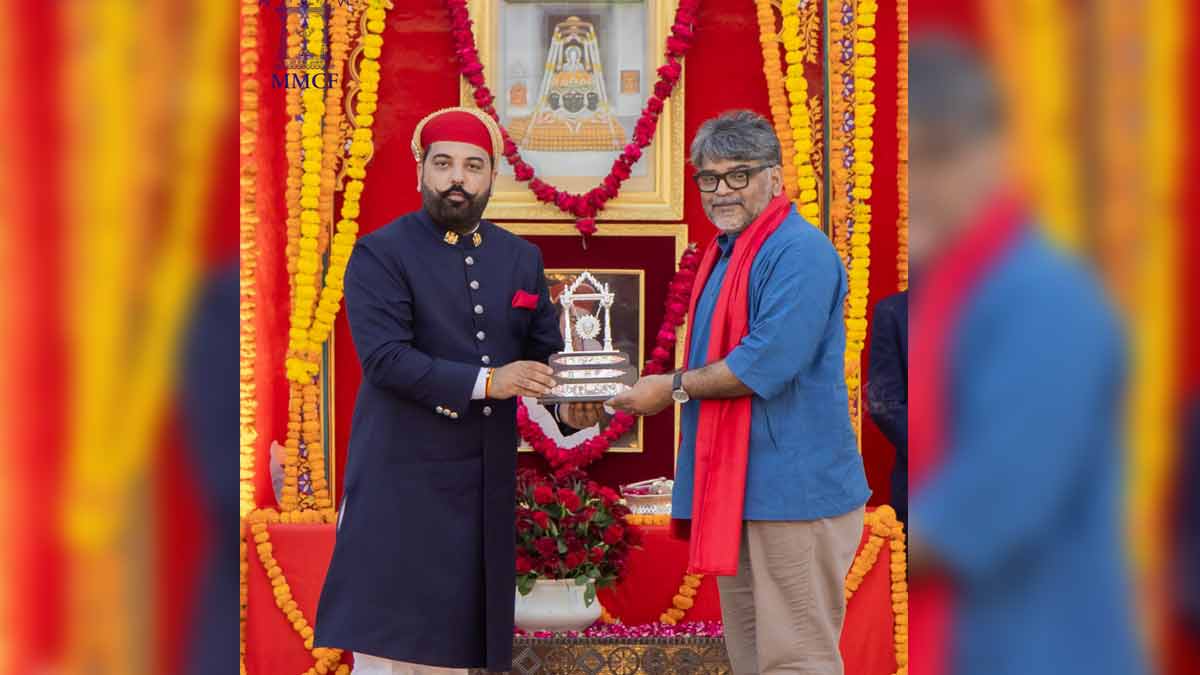
The Maharana of Mewar Charitable Foundation (MMCF) conferred its prestigious Haldi Ghati Award on Kamlesh Singh, a senior editor at the India Today Group, during a ceremony in Udaipur on 15 March 2026. The national award, instituted in 1981-82, recognises “work of permanent value that initiates an awakening in society through the medium of journalism.”
Singh, who leads several editorial initiatives including Aaj Tak Radio, the Teen Taal community and The Lallantop, was presented the honour by Lakshyaraj Singh Mewar, Managing Trustee of MMCF. The citation highlighted his three decades of contributions to Indian media, innovations in digital journalism, mentoring young reporters, and his popular podcast persona “Tau” on Teen Taal, which fosters thoughtful public discourse.
The Haldi Ghati Award, named after the historic Battle of Haldighati symbolising valour and resilience, is one of four national awards given annually by MMCF. Past recipients include Tavleen Singh, Piyush Pandey and Raj Chengappa.
Other honourees this year included Padma Vibhushan Pt Hari Prasad Chaurasia, Vedamurti Devvrat Rekhe, Treeman of India Marimuthu Yoganathan, Vir Chakra Capt Rizwan Malik, and US-based researcher Molly Emma Aitken, who received the Colonel James Tod Award for contributions to understanding Mewar’s spirit and values.
In an era where headlines often shout louder than substance, the MMCF quietly reminded everyone that real journalism isn’t about noise, it’s about the quiet, persistent work that stirs society awake, one thoughtful story at a time.