News Headline
India leads growth for regional pay-TV networks in Asia


MUMBAI: New research on the pay-TV channel ecosystem shows India powering revenue and profit growth for regional pay-TV broadcasters in Asia Pacific. Revenue for pay-TV channel groups owned by global media companies expanded by 4 per cent in 2017 to reach USD 5 billion across the region, while ebitda grew by 9 per cent year-on-year (yoy) to reach USD 1 billion according to leading industry analysts Media Partners Asia (MPA).
India continues to make a massive contribution to this pie, led by large local channel businesses owned and operated by 21st Century Fox, Sony and Viacom. MPA’s figures show India comprising 65 per cent of revenue for regional pay-TV channel groups in 2017, followed by Southeast Asia with 15 per cent, Japan with 7 per cent and Australia with 5 per cent.
Media Partners Asia executive director Vivek Couto said, “Success in a large-scale market such as India shows that regional broadcasters that invest in IP and local businesses can create a lot of long-term value.”

Excluding large local pay channel businesses in India, pay-TV channel revenue for regional broadcasters declined by 1 per cent across the region in 2017, inching down to USD 2.2 billion while ebitda contracted by 4 per cent yoy to USD560 million. The performance reflects a more challenging wholesale and retail market for pay-TV in Southeast Asia as well as in Australia and New Zealand, Japan and Hong Kong and Taiwan. Nonetheless, Southeast Asia still leads the top-line contribution for this revenue segment at 33 per cent, followed by India (20 per cent), Japan (16 per cent), Australasia (11per cent) and Hong Kong and Taiwan (11 per cent).
Ex-India, declines have been evenly spread across most genres. The notable exception is sports, wherein the growth of BeIN Media has helped boost the category. Together, factual, lifestyle, kids, news, music, movie and Asian entertainment channels experienced an aggregate contraction of close to US$150 million in affiliate and advertising sales ex-India in 2017.
Nonetheless, a number of global broadcasters with investments in Asia are still seeing sustained growth in the region on the back of licencing deals and partnerships with online video and telecom platforms, growth of consumer products and nascent online video advertising. Leading broadcasters will also accelerate development of their own branded online video services in the region, a trend already underway with the launch of key entertainment and sports OTT platforms over 2016-17. Partnerships with streaming and telecom services will also proliferate over 2018.
In India, macro hurdles as well as competitive and regulatory pressures will impact near-term performance for foreign-owned pay channels, MPA said.
Nonetheless, major players should still outperform the market with strong double-digit growth along with longer-term upside from the growth of branded online video networks.“Success in a large-scale market such as India shows that regional broadcasters that invest in IP and local businesses can create a lot of long-term value,” said Couto. “These bets are starting to percolate across Southeast Asia, Korea and Japan. At the same time, businesses are starting to tap more growth from streaming platforms, including partnerships with online video and telco services.”
Also Read:
Indian pay-TV expanding by 10.6 pc, 77 pc to be digitised, ARPUs to rise by ’22: MPA
Pay-TV in vital stage; service providers must innovate: Study







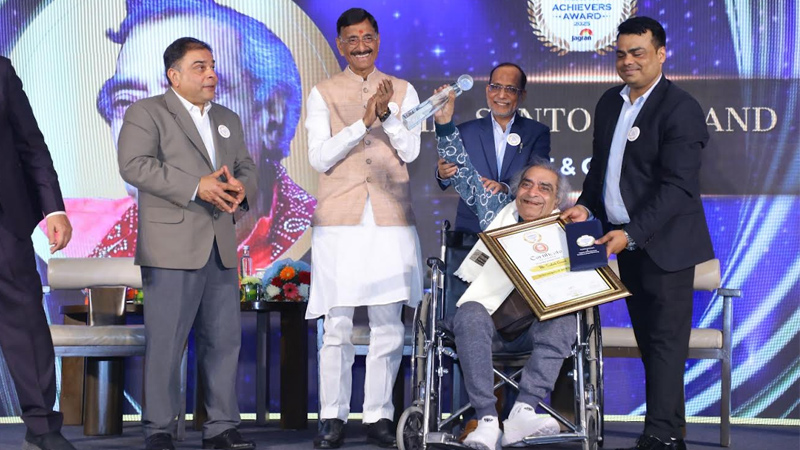
NEW DELHI: Hamdard Laboratories gathered a cross-section of India’s achievers in New Delhi on Friday, handing out the Hakeem Abdul Hameed Excellence Awards to figures who have left their mark across healthcare, education, sport, public service and the arts.
The ceremony, attended by minister of state for defence Sanjay Seth and senior officials from the ministry of Ayush, celebrated individuals whose work blends professional success with a sense of public purpose. It was as much a roll call of achievement as it was a reminder that influence is not measured only in profits or podiums, but in people reached and lives improved.
Among the headline awardees was Alakh Pandey, founder and chief executive of PhysicsWallah, recognised for turning affordable digital learning into a mass movement. On the sporting front, Arjuna Awardee and kabaddi player Sakshi Puniya was honoured for her contribution to the game and for pushing women’s participation onto bigger stages.
The cultural spotlight fell on veteran lyricist and poet Santosh Anand, whose songs have echoed across generations of Hindi cinema. At 97, Anand accepted the honour with characteristic humility, reflecting on a life shaped by perseverance and hope.
Healthcare honours spanned both modern and traditional systems. Manoj N. Nesari was recognised for strengthening Ayurveda’s place in national and global health frameworks. Padma shri Mohammed Abdul Waheed was honoured for his research-backed work in Unani medicine, while padma shri Mohsin Wali received recognition for his long-standing contribution to patient-centred care.
Education and social development also featured prominently. Padma shri Zahir Ishaq Kazi was honoured for decades of work in education, while former Meghalaya superintendent of Police T. C. Chacko was recognised for public service. Goonj founder Anshu Gupta received an award for his dignity-centred rural development initiatives, and the Hunar Shakti Foundation was honoured for empowering women and young girls through skill development.
The Lifetime Achievement Award went to former IAS officer Shailaja Chandra for her long career in public healthcare and governance, particularly in the traditional systems under Ayush.
Speaking at the event, Hamdard chairman Abdul Majeed said the awards were a tribute to those who combine excellence with empathy. “These awardees reflect Hakeem Sahib’s belief that healthcare, education and public service must ultimately serve humanity,” he said.
Minister Seth struck a forward-looking note, saying India’s young population gives the country a unique opportunity to become a global destination for learning, health and wellness by 2047.
The ceremony also featured the trailer launch of Unani Ki Kahaani, an upcoming documentary starring actor Jim Sarbh, set to premiere on Discovery on 11 February.
Instituted in memory of Unani scholar and educationist Hakeem Abdul Hameed, the awards have grown into a national platform that celebrates those building a more inclusive and resilient India. For one evening at least, the spotlight was not just on success, but on service with substance.







