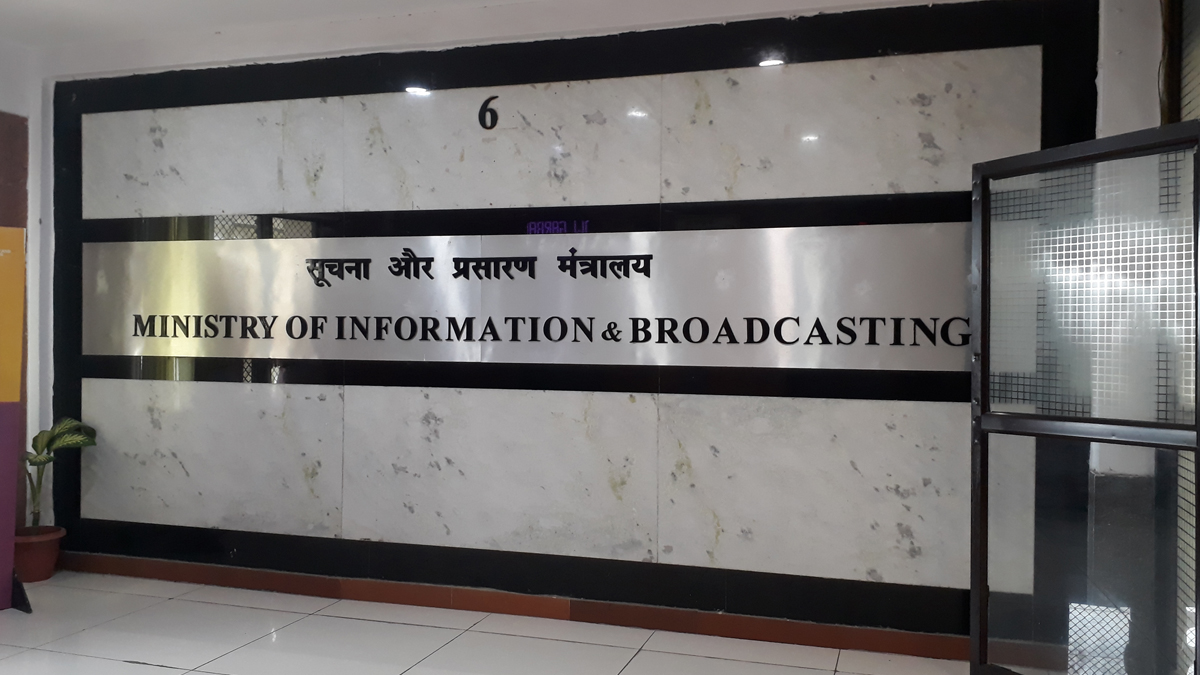
I&B Ministry
MIB blocks MoodXVIP, Koyal Playpro and three other OTT platforms over obscene, sexually explicit content
Platforms streamed material violating IT Act provisions
NATIONAL: India’s Information and Broadcasting Ministry blocked five over-the-top streaming platforms for allegedly hosting obscene and sexually explicit content, marking a fresh escalation in regulatory action against digital services operating outside the country’s content rules, as per media reports.
The platforms, MoodXVIP, Koyal Playpro, Digi Movieplex, Feel and Jugnu, were found to be streaming material that prima facie violates provisions of the Information Technology Act and rules governing online publishers.
Blocking orders were issued under statutory powers that allow the government to restrict access to online content in the interest of public order and decency. Internet service providers have been directed to disable access to the websites and mobile applications linked to the platforms.
The move forms part of a wider surveillance drive by the ministry targeting lesser-known and unregulated streaming services that allegedly evade self-regulatory obligations applicable to OTT platforms. Officials said the action followed repeated advisories urging compliance with Indian laws, including age-based classification, grievance redressal mechanisms and restrictions on explicit material.
Government sources described the content hosted by the blocked platforms as “highly explicit”, adding that it crossed legal thresholds permitted under Indian law. While large OTT players operate within a three-tier grievance redressal framework introduced in 2021, smaller apps have increasingly drawn scrutiny for distributing adult content without oversight.
The latest action also reflects heightened enforcement against platforms operating through mirror websites, offshore hosting arrangements or opaque ownership structures. Authorities have in recent years stepped up monitoring of online curated content amid concerns around obscenity, misleading promotions and unlawful distribution.
Officials declined to say whether further steps, including probes into operators, payment gateways or production entities, were being considered. However, sources indicated that additional platforms could face similar action if found in breach of the law.

I&B Ministry
Government sets up AI governance group to steer policy
AIGEG to align ministries, assess jobs impact, guide AI deployment.
MUMBAI: If artificial intelligence is the engine, the government is now building the dashboard and making sure everyone reads from the same screen. The Centre has constituted a new inter-ministerial body to coordinate India’s approach to AI, formalising a key recommendation from its governance framework and the Economic Survey. The AI Governance and Economic Group (AIGEG), set up by the Ministry of Electronics and Information Technology, will act as the central platform to align AI-related policy across ministries, regulators and departments, an attempt to bring coherence to what has so far been a fragmented and fast-evolving landscape.
The group will be chaired by union minister Ashwini Vaishnaw, with minister of state Jitin Prasada as vice chairperson. Its composition reflects both technological and economic priorities, bringing together the principal scientific adviser, the chief economic adviser, and the CEO of NITI Aayog, alongside key secretaries from telecommunications, economic affairs and science and technology. A representative from the National Security Council Secretariat is also part of the group, while the MeitY secretary will serve as member convenor.
At its core, AIGEG is designed to do two things: coordinate and anticipate. On the policy front, it will review existing regulatory mechanisms, issue guidance across sectors and ensure companies remain compliant with evolving legal frameworks. Beyond that, it will oversee national initiatives on AI governance, with a focus on enabling responsible innovation rather than merely regulating it.
The economic dimension is equally central. The group has been tasked with assessing how AI-driven automation could reshape jobs identifying which roles are most at risk, where those impacts may be geographically concentrated, and whether technology will augment or replace human labour. Based on these assessments, it will develop mitigation strategies and transition plans, signalling a more proactive stance on workforce disruption.
In parallel, AIGEG will work with industry stakeholders to chart a long-term roadmap for AI adoption, categorising use cases into “deploy”, “pilot” or “defer” buckets depending on readiness factors such as data availability, skill levels and regulatory clarity. The aim is to move from broad ambition to structured execution deciding not just what can be built, but what should be built now.
The group will function as the apex layer in India’s AI governance architecture, supported by a Technology and Policy Expert Committee that will track global developments, emerging risks and regulatory priorities. Together, the two bodies are expected to shape both the pace and direction of AI adoption in the country.
In a landscape where technology often outruns policy, the creation of AIGEG signals an attempt to close that gap ensuring that India’s AI journey is not just rapid, but also coordinated, accountable and economically grounded.