iWorld
Dhurandhar’s digital debut: nine minutes go missing on Netflix


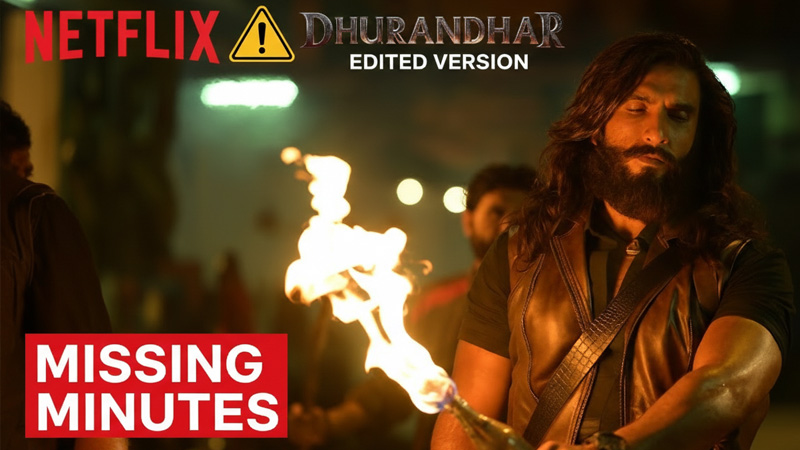
MUMBAI: A cinematic storm is brewing online following the Netflix premiere of Hindi cinema behemoth Dhurandhar. The Aditya Dhar directed epic, which recently smashed box office records with a staggering Rs 1,400 plus crore haul, has landed on the streaming giant with a curious case of the missing minutes, leaving fans scratching their heads and fuming over a perceived injustice.
When Dhurandhar first graced the silver screen, its grand narrative unfolded over a robust 3 hours and 34 minutes. However, those settling down for a repeat viewing on Netflix since its January 30, 2026, release have noticed a rather significant discrepancy. The digital iteration clocks in at a leaner 3 hours and 25 minutes exactly nine minutes shorter than its theatrical predecessor.
The digital snip has ignited a lively debate across social media platforms. While some might argue that a tighter edit could sharpen the film’s pace, many ardent fans feel shortchanged, questioning why a film that commanded an ‘A’ (adults only) rating in cinemas now appears to be a tad less audacious on streaming.
This reduction is not a simple case of a single chop but a layered surgical procedure. Contrary to the common hope for an “Extended Director’s Cut,” the Netflix version is actually based on a revised theatrical master. In early January 2026, roughly three weeks into its cinema run, the makers voluntarily approached the CBFC to trim 5 to 6 minutes. This was done to polish the film’s pacing and soften certain sensitive references, creating a 208-minute “standard” version that Netflix ultimately inherited.
A further three minutes of the missing time are due to mundane logistics. The mandatory cinema hall requirements, such as anti-tobacco warnings and “no smoking” advertisements that bookend Indian theatrical screenings, have been removed for the global digital release. It can also be noted that a small portion of the runtime “loss” is due to the difference in playback speed (25 fps on streaming versus 24 fps in cinemas).
Furthermore, international compliance has played a major role. With Netflix beaming the film into over 190 countries, reports from The Indian Express suggest that the editing desk was busy ensuring the content passed muster in regions where the film was initially banned, such as Pakistan and various Gulf nations. This global reach necessitated trimming specific scenes to satisfy international streaming norms and regional sensitivities.
But it’s not just the clock watching that has stirred the pot. Viewers are reporting that certain expletives that peppered the original dialogue have been mysteriously muted, and specific references to the Baloch community along with lines delivered by Sanjay Dutt’s character, SP Chaudhary Aslam, have either been hushed or altered. It seems that even an ‘A’ rating doesn’t guarantee an entirely unvarnished experience in the global streaming arena.
The controversy poses an interesting question: in an age where streaming often promises director’s cuts and extended editions, why are audiences receiving a version that feels somewhat diluted? For a film celebrated for its bold storytelling and unflinching portrayal, its digital debut has certainly provided an unexpected plot twist, proving that even a blockbuster can’t escape the editing room’s scalpel, much to the dismay of its dedicated following.
Here’s a quick peek at the numbers: Theatrical runtime: 214 minutes Netflix runtime: 205 minutes Missing In Action: 9 minutes