News Broadcasting
Carriage fees likely to spiral upwards in 2005


NEW DELHI: Carriage fee (paid by TV channels to cable ops) is like the casting couch in the entertainment industry. It exists, but is not discussed openly. But live with it, most broadcasters must. And it is only going to get worse what with all these new channels lining up to make their entry into the Indian cable space.
Not only are comparatively new entrants like India TV and old warhorses like Zee News feeling the heat, but those in an expansion mode, like Sahara, are lamenting the increased pressure on the companies bottomlines because of this out flow.
“Distribution is a problem that we had not envisaged. Especially when more than (investments in) content dictate the rules of the game,” India TV head honcho Rajat Sharma told indiantelevision in an interview recently.

If industry figures are to be believed, then the likes of NDTV has spent over Rs 90 million on network development and distribution activities (euphemism for carriage fees). Sahara group, struggling to beef up its distribution to increase tunable penetration into cable homes, is said to have a budget of Rs 93 million for the year 2004-05 ending 31 March. Similarly, other news channels too are said to have spent sizable amounts as carriage fee, ranging from Rs 30 million to Rs 1 billion.
According to Sharma, market leaders in the news segment space – names withheld, for obvious reasons – have been paying carriage fees to an extent that the cable ops don’t shy away from asking the same from all of us too. He did admit that after initial resistance, India TV too has had to ‘pay carriage fee, which are in the form of annual contracts.’
“Subsequent to this gameplan, our visibility has definitely increased, which is indicative from the type and number of responses that we are getting for our programmes,” Sharma says.
Rivals they may be, but Zee News, headquartered less than half a kilometer from India TV on the outskirts of Delhi, agrees with Sharma.
A senior executive of Zee News told indiantelevision late last week that Zee News was effectively fighting two battles with competition — on the content and distribution sides.
It is an open secret that Zoom TV from the Times stable paid up huge amounts of money to MSOs and cable ops for the channel to be put on tunable bandwidth. Headlines Today did not start appearing on prime band one fine morning for no reason.
It is also not that the popular channels don’t indulge in such ‘friendly activities, which go down in the profit and loss accounts as marketing and network development initiatives and expenses. Two cable operators, amongst a dozen, have confirmed that the Sony-Discovery joint venture distribution company, One Alliance, took cable operators in batches for a fully paid holiday to South Africa during the last cricket World Cup.
It is interesting to note that distribution and network development expenses run up two kinds of bills: cash and gifts. The latter can range from snazzy haversacks to watches to costly leather jackets (for those living in North India where the winters are really cold). The last one is a favourite of One Alliance this year, one learns and is a much sought after commodity amongst cable ops and MSO execs.
Not that the Telecom Regulatory Authority of India (Trai) is unaware of the ground realities, but it feels that the issue of carriage fee is something that the stakeholders have to sort out amongst themselves as it cannot be regulated. However, it is of the view that with the process of registration of interconnect agreements — especially between broadcasters and MSOs and broadcasters and cable ops — beginning, this problem can be arrested to a certain extent.
But there is just no getting away from the fact that with new channels lining up to make their debuts, the menace of carriage fee is unlikely to recede suddenly. It’s a classic case of demand being more than supply. With severe constraints on bandwidth and other related infrastructural problems, getting on to tunable bandwidth would be a race that every channel would like to win.
And, if one doesn’t believe in carriage fee, one has only to take a look at the Disney channels, which are still missing in most parts of North India, dominated by Siti Cable and Hathway.







News Broadcasting
CNN-News18 to host Fury in the Gulf conclave on West Asia crisis
Three-hour summit to unpack geopolitical fallout and impact on India
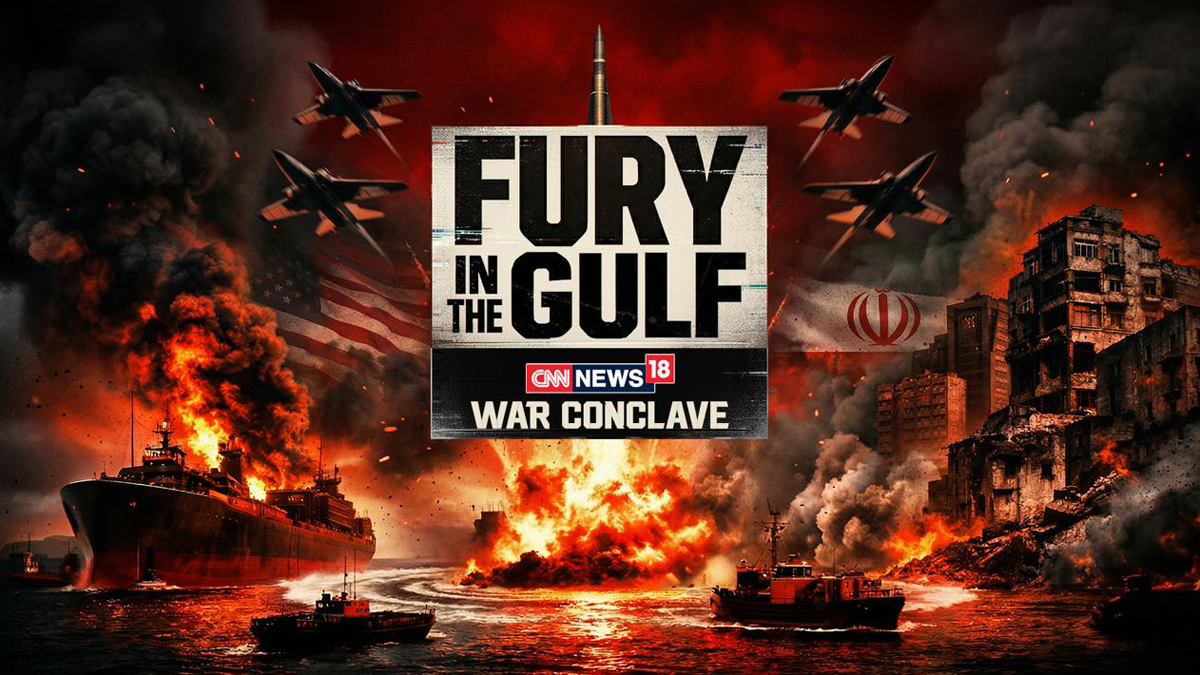
MUMBAI: CNN-News18 is set to host a special three-hour broadcast, Fury in the Gulf – War Conclave, on April 7, aiming to decode the escalating West Asia crisis and its far-reaching implications for India.
Scheduled from 4:00 PM to 7:00 PM, the conclave comes at a time when tensions between Iran and the United States are reshaping global geopolitics and triggering economic uncertainty. With India’s deep energy ties, trade links and large diaspora in the Gulf, the developments carry significant domestic relevance.
Built around the theme ‘Conflict, Consequences, and The Future,’ the programme will feature six curated sessions combining one-on-one interviews and panel discussions. The focus is to cut through the clutter and offer viewers a clearer understanding of the fast-evolving situation.
Key sessions include ‘Diplomacy in Times of War’ featuring Shashi Tharoor, and ‘World After the Iran Conflict’ with voices such as Ram Madhav, Reuven Azar, representatives from the European Union and the Iranian Deputy Envoy. Another session titled ‘Another Dunkirk?’ will bring together K. J. S. Dhillon and Jitin Prasada among others.
CNN-News18 editorial affairs director Rahul Shivshankar said, “In times of war, clarity becomes the most powerful tool. Fury in the Gulf – War Conclave brings together credible voices to address the questions and confusion that arise amid an overwhelming influx of information.”
He added that the initiative is aimed at delivering “facts, perspective, and insight” at a time when misinformation can easily cloud public understanding.
Echoing the sentiment, CNN-News18 CEO– English and business news Smriti Mehra said the conflict marks a defining global moment, with consequences that extend well beyond the region. She noted that the conclave seeks to present the crisis with “depth, nuance and responsibility” so audiences can better grasp its real-world impact.
As geopolitical tensions continue to dominate headlines, the conclave positions itself as an attempt to bring order to the noise, offering viewers a structured, insight-led look at a complex and rapidly shifting global situation.






