Hollywood
‘Avengers: Age Of Ultron’ nets Rs 46 crore in five days
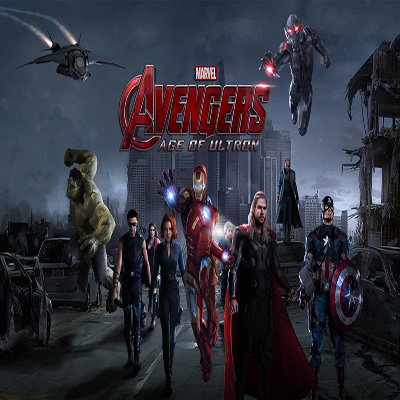
MUMBAI: Marvel’s Avengers: Age Of Ultron has already created box office records across the globe with stupendous collections.
In India, the movie has seen collections of Rs 46 cores in its first five days’ run at the box office.
Trade sources claim that the film amassed approximately a Friday opening of Rs 10.98 crore coming after unprecedented advance openings and theater bookings. Saturday’s figures were pegged at Rs 11.85 crore net, whereas Sunday’s collections stood at Rs 13.17 crore taking the total three-day collection to Rs 35.74 crore.
The movie’s weekday collections have also been rock steady with a trade figure of Rs 5.4 crore on Monday and Rs 4.6 crore on Tuesday.
Avengers: Age Of Ultron saw a limited release of 1500 screens across India, lesser than Fast and Furious 7, which had 2500 screens.

Hollywood
Utopai Studios partners Huace to deploy PAI for long form content
Deal includes revenue sharing as Huace adopts AI engine across global ops
MUMBAI: Lights, camera… algorithm, the script just got a silicon co-writer. In a move that signals how storytelling itself is being re-engineered, U.S.-based Utopai Studios has partnered China’s Huace Film & TV Co. Ltd. to bring artificial general intelligence into the heart of long-form content creation.
At the centre of the deal is PAI, Utopai’s cinematic storytelling system, which Huace will deploy as a core engine across its production pipeline from development and creative iteration to global localisation. The partnership includes a large-scale annual usage commitment from Huace, alongside a usage-based revenue-sharing model, underscoring both ambition and commercial confidence on both sides.
For Huace, one of China’s largest film and television companies, the bet is not on automation alone but on scale with control. With distribution spanning over 200 countries and a presence across more than 20 international platforms, including Netflix and YouTube, the company brings a vast content ecosystem where even marginal efficiency gains can translate into significant output shifts. Its extensive TV IP library further positions it as fertile ground for AI-assisted storytelling workflows.
The choice of PAI follows what Huace described as a rigorous evaluation of existing AI tools, many of which remain limited to fragmented use cases such as video generation or editing. What tipped the scales, according to the company, was PAI’s ability to handle long-form narrative complexity maintaining continuity, structure, and creative coherence across entire story arcs rather than isolated clips.
Utopai, for its part, is using the partnership to anchor its international expansion strategy, pitching PAI as an enterprise-ready system built for customisation, privacy, and regulatory adaptability across markets. That positioning becomes particularly relevant as global media companies increasingly scrutinise how AI integrates into proprietary workflows.
The timing is notable. Earlier this month, Utopai upgraded PAI to support three-minute 4K video generation and advanced multi-shot sequencing features designed to tackle one of AI storytelling’s biggest hurdles: consistency across scenes.
What emerges is not just another tech collaboration, but a glimpse into how the grammar of filmmaking could evolve. Because if stories were once crafted frame by frame, the next chapter might just be coded scene by scene.