News Broadcasting
Anurag Thakur, Sachin Pilot, Sidharth Malhotra and other youth icons at NDTV’s Yuva Conclave


Mumbai: NDTV’s Yuva conclave brought together India’s youth icons on one stage, for special conversations about leveraging youth to foster change. Union minister Anurag Thakur led the power-packed line-up that included Congress leader Sachin Pilot and actor Sidharth Malhotra.
A special interaction and question and answer session with Anurag Thakur kicked off the daylong conclave.
What is it to work with prime minister Narendra Modi, the union minister was asked. “My boss, prime minister Narendra Modi, is the best. He is the strictest at work but kindest when it comes to citizens,” Thakur said, drawing loud applause.

“If you have a boss who hasn’t taken a single holiday in 23 years, even when his mother passed away, that is the type of commitment the PM has”.
India’s youth, the minister said, stands for “positive energy, inspiration, passion, and motivation”.
Thakur also spoke about 18kaVote, NDTV’s mission to make the youth – especially those who have just turned 18 and eligible to vote in their first election – aware of the need to vote.
Fielding a wide range of questions, the union information and broadcasting minister also spoke about what the opposition alleges is persecution by probe agencies, restrictions on media and the International Labour Organisation (ILO) report on the bleak job situation in India.
“The questions show you can ask anything to the minister on National TV. You may not be able to do so in Pakistan or Saudi Arabia. We still have a slavery mentality because we always depended on foreign ratings. We need to come out of it and trust organisations in our country,” he said.
Wrapping the session, the minister took a selfie with his young audience.
Later, Congress general secretary Sachin Pilot, who debuted as an MP at the age of 26, spoke about encouraging youth in politics.
Political parties prefer winnability over youth, and people were also inclined towards voting veterans and known players, Sachin Pilot noted, adding that a change in this thinking would take time.
Pilot also responded to a question on Congress spokesperson Supriya Shrinate and the row over objectionable comments on BJP candidate Kangana Ranaut posted on her handle.
“No one has the right to make personal attacks or character assassination, it is important to focus on issues,” said the former Rajasthan deputy chief minister.
Actor Sidharth Malhotra, our Yuva Yodha, said he believed mental health is a formidable challenge for the youth. Giving tips on handling stress, he said yoga helps. “Stress is something which is unavoidable. We are giving exams every Friday (movies releases). It never ends. It’s how you deal with it. You have to be in your lane and focus on yourself. Focusing on oneself is most important for success. Following my own path has worked. There is no point in having wild case scenarios,” he said.
“Focus is key. Yoga has helped me. It helps you centre.”
Alaya F, our actor disruptor, the daughter of actor Pooja Bedi and the granddaughter of another actor, Kabir Bedi, shared what she called her “privileged struggles” in making it in films. “Nepotism also has its limitations. It will get me into rooms. But then no one will give me movies just because of that. I was being tested for a year and half before I landed my first role,” she said.
NDTV Network’s revenue head Mandeep Singh commented “NDTV has been always known for its purposeful initiatives that disrupt the way news impacts lives of people and communities. Yuva is one such incredible initiative that makes its grand comeback.
YUVA embodies the idea of young people actively engaging in efforts to bring about positive transformations in their communities and beyond. It highlights the role of youth as catalysts for social, political, and environmental progress, using their voices, creativity, and energy to address pressing issues and advocate for meaningful change.
We wanted to celebrate this along with like-minded partner brands who saw huge potential in this endeavour.
We had Panasonic, Motorola, Rungta Steel, KP Foods, Sakarni, Canara Bank, HDRC Life, Rama University, and Solo Files backing us in this season of NDTV Yuva.
We will make this franchise far larger in times to come.”
Other highlights of the event included Gaurav Kapoor’s stand-up, and performances by musicians Akshay and IP Singh and Jasleen Royal.
A session on mental health saw an expert panel comprising Dr Amit Sen, Amrita Tripathi, Divija Bhasin, and Kairavi Bharat Ram discussing the challenges faced by the youth.





News Broadcasting
News18 India launches Command Centre war explainer with Arya
New show shifts from debates to decoding global conflicts and impacts
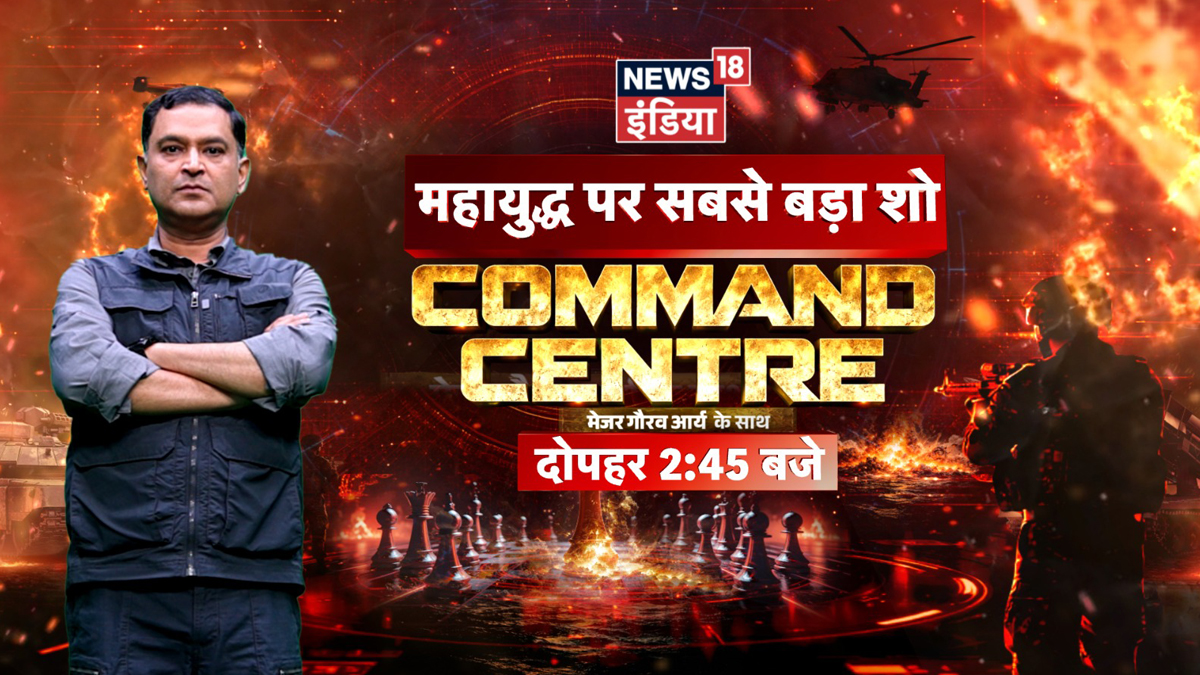
MUMBAI: News18 India has rolled out a new war-focused programme, Command Centre, featuring Gaurav Arya, as it looks to offer viewers a sharper, more grounded take on global conflicts amid rising tensions in West Asia.
Positioned as an “insider war room”, the show moves away from conventional panel debates and instead focuses on explaining military developments, decoding strategy and connecting global events to their everyday impact, from fuel prices to economic shifts.
The format leans heavily on visuals and data. The studio has been designed like a command hub, complete with large LED war maps, real-time graphics and an alert system to track developments as they unfold.
At the centre of it all is Arya, who brings his military background to simplify complex war strategies for viewers. His signature line, “Seedhi baat samjhiye”, anchors the show’s promise of clarity over noise.
News18 India managing editor Jyoti Kamal said, “Command Centre, featuring Major Gaurav Arya is designed to deliver accurate insights and a clear perspective on how evolving conflicts impact everyday life, from household budgets to national security. With expert voices analysing every development in real time, the show goes beyond headlines to decode what’s happening now, what it means, and what could come next.”
Echoing the intent, Gaurav Arya added, “In times of war, confusion is the biggest threat. With News18 India’s Command Centre, we are bringing viewers inside the war room, decoding strategies, tracking every escalation, and explaining, in the simplest terms, what it means for India and for every household. Seedhi baat samjhiye, this is where you understand not just what is happening, but what happens next.”
The weekday show will air in the afternoon slot and will also feature Gaurav Shukla, adding to its editorial depth.
With its mix of analysis, visuals and a clear focus on impact, the show reflects a broader shift in news consumption. Viewers are no longer just watching events unfold, they are looking to understand what those events mean for them.







