News Broadcasting
ABP tops the charts with regional flair and a digital news power play


MUMBAI: Who says news is all doom and gloom? For ABP Network, it’s a story worth celebrating in five languages, no less. According to Comscore MMX-Multi-Platform data for February 2025, ABP Network has emerged as India’s third-largest digital publisher, pulling in a whopping 147.9 million unique visitors and outpacing media giants like HT Media, Zee Digital, India Today Group, Times Network, and NDTV.
But this isn’t just a numbers game, it’s a masterclass in multilingual domination. ABP’s regional powerhouses are sweeping through Hindi, Marathi, Bengali, Gujarati, and Punjabi markets like seasoned newsroom ninjas.
In the Hindi segment, ABP News surged ahead with 75.7 million unique visitors, outshining its nearest rival by over 18 million, a staggering lead that cements its top slot in India’s most competitive news space.

ABP Ananda waltzed through the Bengali market with 18.9 million UVs, dancing 11.8 million steps ahead of the competition. Meanwhile, ABP Majha proved its mettle in Marathi with 19.2 million visitors, comfortably ahead of Sakal Media and Lokmat.
Over in Gujarat, ABP Asmita swept up 5.3 million unique visitors, leaving behind TV9 Gujarati, Divyabhaskar, and News18 Gujarati. ABP Sanjha flexed its Punjabi muscle with 1.2 million UVs, clinching the top spot ahead of News18 Punjab and Punjab Kesari Jagbani.
And in the Tamil market, newcomer ABP Nadu made a statement, grabbing second place with 9 million visitors, becoming the youngest publisher to break into the leadership ranks.
From legacy strongholds to new frontiers, ABP Network is clearly not just chasing eyeballs, it’s curating digital loyalty across India’s media map. With its blend of regional relevance, digital-first strategy, and journalistic agility, ABP isn’t just reporting the news, it’s rewriting the playbook.







News Broadcasting
News18 India launches Command Centre war explainer with Arya
New show shifts from debates to decoding global conflicts and impacts
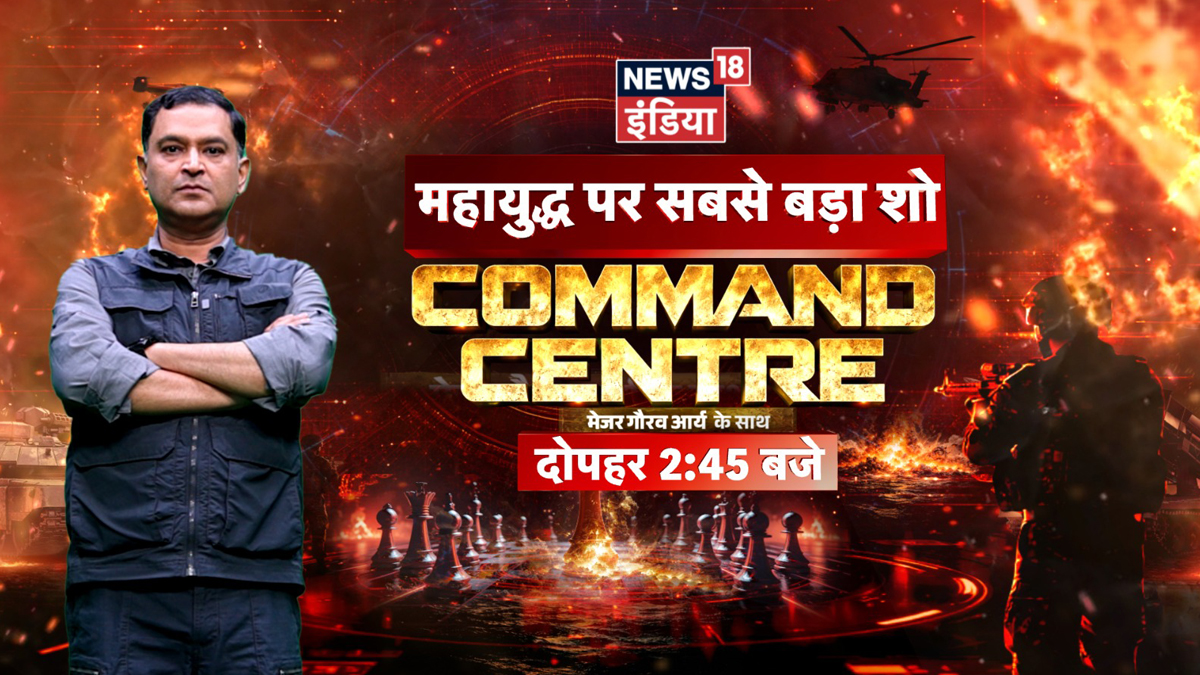
MUMBAI: News18 India has rolled out a new war-focused programme, Command Centre, featuring Gaurav Arya, as it looks to offer viewers a sharper, more grounded take on global conflicts amid rising tensions in West Asia.
Positioned as an “insider war room”, the show moves away from conventional panel debates and instead focuses on explaining military developments, decoding strategy and connecting global events to their everyday impact, from fuel prices to economic shifts.
The format leans heavily on visuals and data. The studio has been designed like a command hub, complete with large LED war maps, real-time graphics and an alert system to track developments as they unfold.
At the centre of it all is Arya, who brings his military background to simplify complex war strategies for viewers. His signature line, “Seedhi baat samjhiye”, anchors the show’s promise of clarity over noise.
News18 India managing editor Jyoti Kamal said, “Command Centre, featuring Major Gaurav Arya is designed to deliver accurate insights and a clear perspective on how evolving conflicts impact everyday life, from household budgets to national security. With expert voices analysing every development in real time, the show goes beyond headlines to decode what’s happening now, what it means, and what could come next.”
Echoing the intent, Gaurav Arya added, “In times of war, confusion is the biggest threat. With News18 India’s Command Centre, we are bringing viewers inside the war room, decoding strategies, tracking every escalation, and explaining, in the simplest terms, what it means for India and for every household. Seedhi baat samjhiye, this is where you understand not just what is happening, but what happens next.”
The weekday show will air in the afternoon slot and will also feature Gaurav Shukla, adding to its editorial depth.
With its mix of analysis, visuals and a clear focus on impact, the show reflects a broader shift in news consumption. Viewers are no longer just watching events unfold, they are looking to understand what those events mean for them.







