Movies
From locations to VFX and gaming, Madhya Pradesh expands its creative ambitions
State looks beyond shooting locations to build an end-to-end media and entertainment ecosystem


MUMBAI: Lights, camera, Madhya Pradesh! The state is looking to move beyond being a popular shooting destination and build a wider creative ecosystem spanning filmmaking, post-production, animation, VFX, gaming and extended reality.
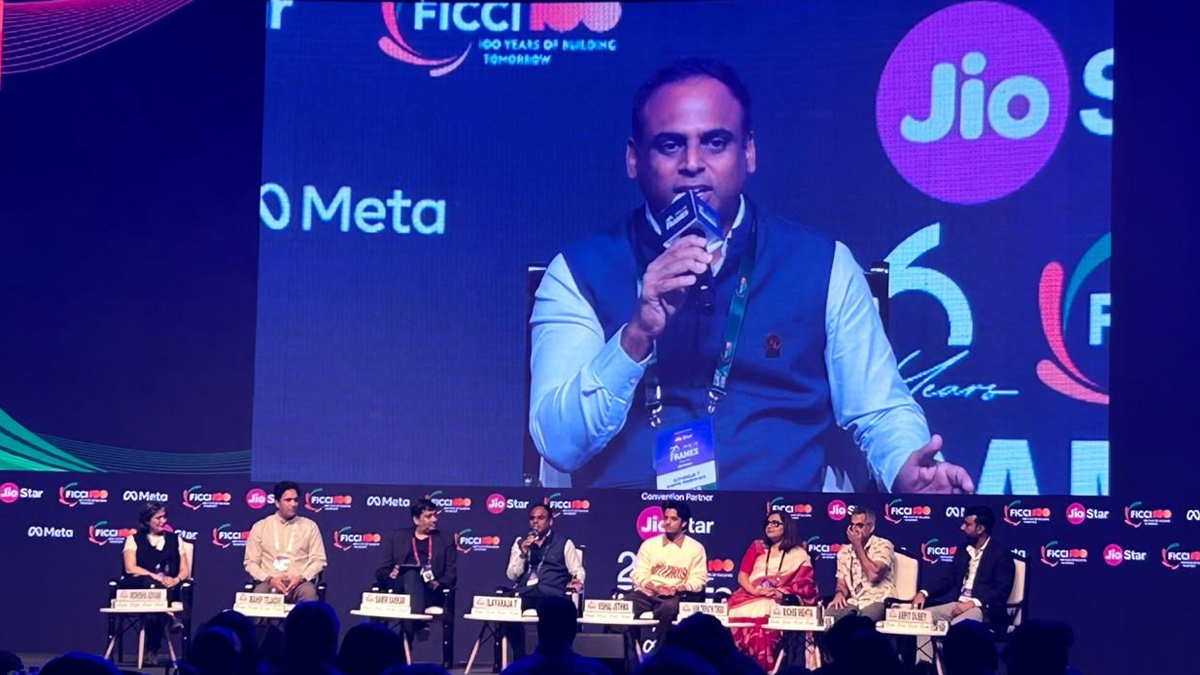
The opportunity was at the centre of the panel discussion Madhya Pradesh’s Next Creative Frontier: From Production to Pixels at FICCI Frames 2026, where policymakers, filmmakers, actors and producers discussed how the state can connect its location advantages with technology, talent and infrastructure.
The session brought together Dr Ilayaraja T., secretary to the chief minister and tourism, Government of Madhya Pradesh, and managing director of the Madhya Pradesh Tourism Board; M. Selvendran, principal secretary, Science & Technology Department, Government of Madhya Pradesh, and chairman of the Madhya Pradesh State Electronics Development Corporation; actor and producer Vani Tripathi Tikoo; filmmaker Richie Mehta; actors Vishal Jethwa and Sunita Rajwar; Arpit Dubey, co-chairman of the MP AVGC-XR Association and co-founder and CEO of Kayra Animation; and producer Monisha Advani of Emmay Entertainment. The discussion was moderated by Samir Sarkar, CEO of Magic Hour Films and National Awardee.
Madhya Pradesh has already established itself as a filming destination, with more than 350 productions having been shot across the state, according to figures discussed during the session.
Its appeal comes from the sheer variety of locations, ranging from forests, ravines and rivers to forts, monuments, heritage sites and tribal regions. Films and series including Stree, Stree 2, Laapataa Ladies and Panchayat, as well as international productions such as Lion and A Suitable Boy, have used the state as a backdrop.
The next ambition is broader: to ensure that a production coming into Madhya Pradesh can potentially find not just locations, but local talent, equipment, post-production capabilities and emerging creative technologies within the same ecosystem.
That ambition is supported by the state’s Film Tourism Policy 2025 and its AVGC-XR Policy 2025. The Madhya Pradesh government lists both policies among its current investment policies, while its Film Facilitation Cell operates a single-window system for shooting permissions.
The Film Facilitation Cell has been designed to bring different permissions into a single online process, with the state targeting film-shooting approvals within 15 calendar days. The system covers feature films, television productions, web series, documentaries, short films, music videos and other formats.
The state’s 2025 film policy also provides financial support across formats. Feature films can receive subsidies of up to Rs 2 crore, while web series can receive up to Rs 1.5 crore and television serials or shows up to Rs 1 crore, subject to the policy’s eligibility conditions. International productions approved by the Ministry of Information and Broadcasting can receive support of up to Rs 10 crore, with specific shooting requirements in the state.
The policy also includes additional incentives for areas such as films centred on children, women and Madhya Pradesh’s historical, cultural and religious figures, along with incentives for selected regional-language productions.
The policy push is intended to make the economics of shooting in the state more attractive while also encouraging productions to spend more time and resources locally.
The larger transformation, however, is expected to come from animation, visual effects, gaming, comics and extended reality.
The state’s AVGC-XR policy is designed to complement the film tourism framework and create what was described during the session as a 360-degree, end-to-end ecosystem.
The proposed infrastructure includes a 20-acre Media Park and a Centre of Excellence aimed at developing local talent. The policy framework also includes incentives for investors and employment support, with the broader objective of bringing production, technology and intellectual property development closer together.
The sector is not starting from scratch. The discussion highlighted around 50 startups and more than 3,000 professionals already working in the state’s AVGC-XR ecosystem.
The larger goal is to create a pipeline in which talent developed in Madhya Pradesh can work on projects from outside the state, while companies and investors can build studios, technology operations and creative businesses locally.
Infrastructure and incentives may bring productions into the state, but the panel placed considerable emphasis on the people needed to sustain the ecosystem.
The Madhya Pradesh School of Drama in Bhopal was cited as one example of the state’s effort to develop performance talent. Established as a state-run drama school, it has now transitioned into a university, creating a wider institutional platform for actors and theatre practitioners.
The discussion also highlighted the depth of talent available outside the industry’s traditional centres.
For filmmakers working in regions such as Chambal, Bhopal and other parts of Madhya Pradesh, local actors can bring familiarity with the environment, language and social setting. That can be particularly valuable for productions seeking authenticity rather than simply using the state as a visual backdrop.
Richie Mehta’s Phoolan, which was discussed during the session, is one example of this approach. The production drew extensively on actors from Madhya Pradesh, including talent from the region around Chambal, while the film’s setting demanded performers comfortable with challenging outdoor locations and demanding action sequences.
Another recurring theme was the role of local crews and service providers.
For producers, the appeal of Madhya Pradesh extends beyond landscapes and subsidies to the practical efficiency of executing a shoot.
Local line producers, equipment suppliers and support teams were highlighted as important parts of the production infrastructure. Their familiarity with locations and ability to respond quickly to production requirements can reduce logistical friction and make repeat shoots easier to plan.
The experiences shared during the discussion suggested that the state’s production advantage is increasingly a combination of policy, infrastructure and local hospitality.
That can become particularly valuable for large productions, where delays and logistical complications can quickly add to costs.
Emmay Entertainment’s experience with projects including Kathal and The Revolutionaries was also part of the conversation around repeat production in the state.
For producers, the attraction is increasingly about how many elements of a production can be efficiently executed in Madhya Pradesh rather than simply whether the state offers an attractive location.
This creates the possibility of a virtuous cycle: more productions can lead to greater demand for local technicians and creative professionals, which can encourage training and investment, while a stronger talent base can in turn attract more productions.
The same ecosystem can potentially serve emerging formats such as animation, gaming, VFX and immersive entertainment.
The discussion ultimately positioned Madhya Pradesh’s creative ambitions as larger than a race between states to offer the biggest production incentive.
A successful media and entertainment ecosystem needs locations, but it also needs writers, actors, technicians, animators, VFX artists, game developers, producers, studios, training institutions and technology infrastructure.
The state’s opportunity lies in connecting these pieces.
If film production can provide the first entry point, AVGC-XR can extend the value chain into the digital world, allowing projects to move from physical locations to pixels, virtual environments and interactive experiences.
For Madhya Pradesh, the next chapter of its media story may therefore be less about being the place where a camera arrives and more about becoming the place where an entire creative project can take shape.