Connect with us

AD Agencies

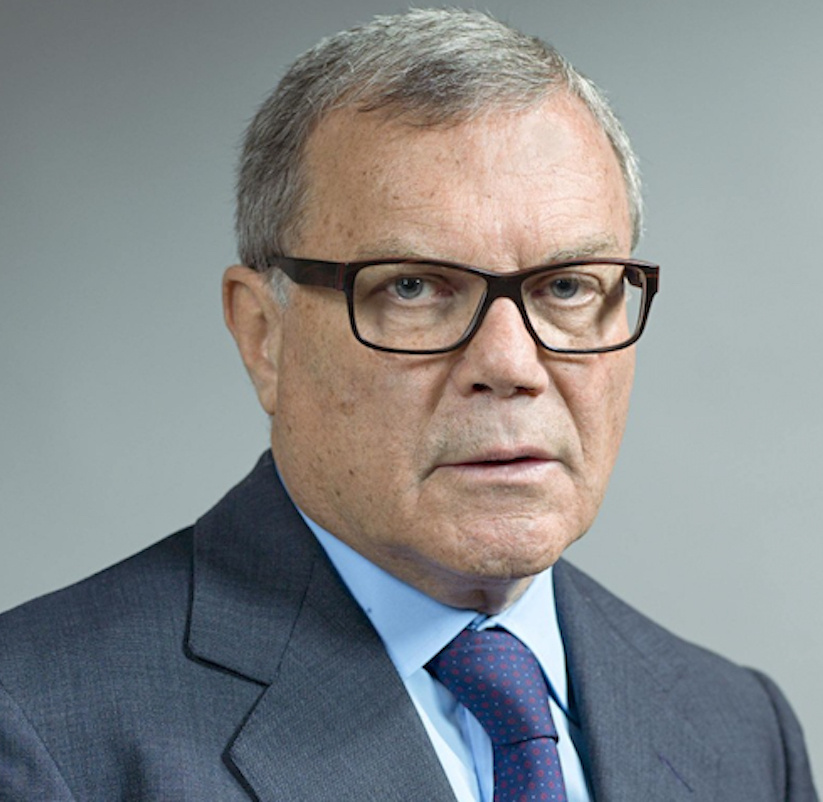
WPP board begins investigation of its CEO Sir Martin Sorrel, says WSJ

Published

on

MUMBAI: Once the toast of the advertising industry, investors, and shareholders, Sir Martin Sorrell now faces the ignominy of being probed by a law firm, which has been appointed by the WPP board for a potential misuse of assets and personal misconduct, if a report in the Wall Street Journal is to be believed.

The agency group has been under pressure from clients and hungry for business rivals for a while. Its share price has fallen some 35 per cent as companies such as Alphabet (Google) and Facebook have been doing direct deals with brands, cutting agencies such as WPP out of the picture. Additionally, big spenders such as Unilever, Procter & Gamble have also been cutting back on marketing spends in a rapidly disintermediating digital content marketplace.

This has led to WPP reportedly putting up a lackluster performance which in turn has affected its share price. Sorrell was also forced to take a cut in his pay, the amount he was forced to back down from 2017’s 48 million pounds sterling, will become clearer in the next few days as it announces its financial performance.

Advertisement

A Saatchi & Saatchi finance executive in the seventies and eighties, Sorrell went about building what would become a global tour de force under the umbrella of a company called Wire & Plastic Products. He acquired 18 different below the line agencies over three years, before making an audacious $566 million dollar bid for J Walter Thompson and then $825 million for Ogilvy & Mather. He acquired both of them. He snared two other agencies Young & Rubicam and then Grey Worldwide on the follow through. Among the other agencies and communication services providers under WPP today include: Wunderman, Kantar Group, Hill & Knowlton, Burson-Marsteller, GroupM, Cohn & Wolfe, Brand Union, Buchanan UK among others.

WPP as a group employs close to 200,000 employees worldwide and reported a revenue of 15.265 billion pounds sterling, with an operating income of 1.908 billion pounds sterling with net income standing at 1.912 billion pounds sterling in 2017.

Investors have been baying for Sorrell’s blood for some time now with the agency not coming with a solid plan to revive growth. Speaking to indiantelevision.com in Amsterdam a couple of years ago Sorrell had said: “I only own two per cent of the company; but I am identified with the company. I will carry on as long they will let me. WPP is not a matter of life or death for me, it is more than that. They will carry me out to the glue factory.”


Advertisement
Click to comment

Leave a Reply

Your email address will not be published. Required fields are marked *

AD Agencies

Fevicol releases its last ad campaign by the late Piyush Pandey

The adhesive brand’s last campaign by the late advertising legend Piyush Pandey turns an everyday Indian obsession into a quietly powerful metaphor

Published

on

MUMBAI: Fevicol has never needed much of a plot. A sticky bond, a wry observation, a truth that every Indian instantly recognises — that has always been enough. “Kursi Pe Nazar,” the brand’s latest television commercial, is no different. And yet it carries a weight that no previous Fevicol film has had to bear: it is the last one its creator, the advertising legend Piyush Pandey, will ever make.

The film, released on Tuesday by Pidilite Industries, fixes its gaze on the kursi — the chair — and what it means in Indian life. Not just as a piece of furniture, but as a currency of ambition, a vessel of authority, and a source of quiet social drama that plays out in every home, office and institution across the country. Who sits in the chair, who waits for it, and who eyes it hungrily from across the room: the film transforms this sharply observed cultural truth into a narrative that is, in the best Fevicol tradition, funny, warm and instantly familiar.

The campaign was Pandey’s idea. He discussed it in detail with the team before his death, but did not live to see it shot. Prasoon Pandey, director at Corcoise Films who helmed the commercial, said the team needed five months to find its footing before they felt ready to shoot. “This was the toughest film ever for all of us,” he said. “It was Piyush’s idea, magical as always.”

Advertisement

The emotional weight of that responsibility was not lost on the team at Ogilvy India, which created the campaign. Kainaz Karmakar and Harshad Rajadhyaksha, group chief creative officers at Ogilvy India, described the process as “a pilgrimage of sorts, on the path that Piyush created not just for Ogilvy, but for our entire profession.”

Sudhanshu Vats, managing director of Pidilite Industries, said the film was rooted in a distinctly Indian insight. “The ‘kursi’ symbolises aspiration, transition, and ambition,” he said. “Piyush Pandey had an extraordinary ability to elevate such everyday observations into iconic storytelling for Fevicol. This film carries that legacy forward.”

That legacy is considerable. Over several decades, Pandey’s partnership with Fevicol produced some of the most beloved advertising in Indian history, building the brand into something rare: a household name that people actively enjoy watching sell to them.

Advertisement

“Kursi Pe Nazar” does not try to be a tribute. It simply tries to be a great Fevicol film. By most measures, it succeeds — which is, in the end, the most fitting send-off of all.

Continue Reading

Advertisement News18
Advertisement
Advertisement
Advertisement
Advertisement Whtasapp
Advertisement Year Enders

Indian Television Dot Com Pvt Ltd

Signup for news and special offers!

Copyright © 2026 Indian Television Dot Com PVT LTD