Brands
We are shifting focus to outwear category: Saket Todi, Lux Industries


MUMBAI: Would you have ever given a second thought to ads that promote the hidden qualities of innerwear had it not been for celebrities like Akshay Kumar and Salman Khan pompously wearing them? With innumerable local players vying for a slice of the piece, innerwear is a tough nut to crack. But the demand for such an essential piece of clothing is what keeps sales going.
Kolkata-based Lux Industries has acquired an open global license for manufacturing and supplying innerwear to UK-based brand Byford, and South Africa-based brand Polo. The manufacturing commenced a month ago. Lux is scouting for newer brands to tie up.
Scoring runs on home turf may be easy but liaising with international brands requires additional and stringent quality control (QC) checks at all levels. Lux has a dedicated QC at all points of production starting from knitting the yarn to fabric, processing of the fabric, cutting, stitching and packaging of the final product. Technology and automation like computer-aided design and auto cutters reduce the rejection rate and improve quality.
Sold as premium wear products they are accordingly priced between the range of Rs 250-300 in the UK and South Africa. Although the global license is only for men’s innerwear at this point of time, Lux wants to expand its portfolio internationally by introducing women’s wear where it sees an ocean of opportunities.
Lux has recently commissioned an integrated facility at Dankuni to ramp up its capacity in West Bengal and will be leveraging this plant for exports. With existing operational manufacturing facilities in Ludhiana, Tirupur, Delhi, Belgachia, Dhulagarh, Agarpara and Kashipur, the newest addition in Dankuni, spanning over 0.6 million square feet, has the potential to increase the production capacity to 2 million pieces a day in the next three years from 1.4 million pieces now. While over 90 per cent of the inner wear industry is based in and around Kolkata with some manufacturing done in Tirupur and Tamil Nadu, Lux now has 11 units across India at West Bengal, Uttarakhand and Tamil Nadu.
German knitting, Italian cutting and advanced computer-aided machines are all under one roof thus, substantially cutting down the number of outsourced functions and encouraging more research and development within the company.
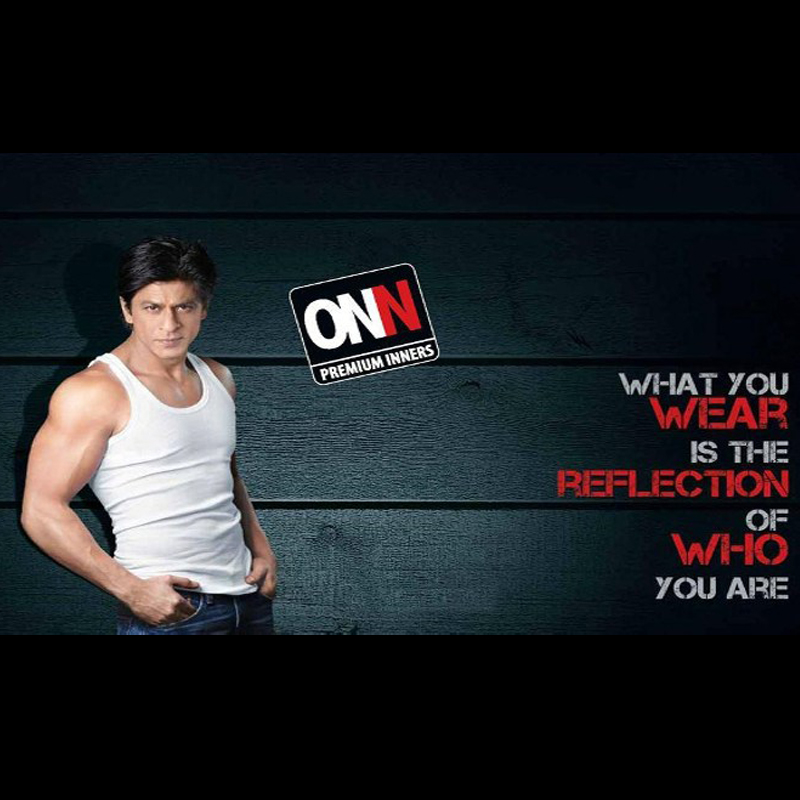
There are two sub-brands under its umbrella – Lux Venus for the masses and ONN that is slightly in the premium range. While the former accommodates rural consumers, a substantial demand comes from metros and mini metros for ONN.
With a market share of over 22 per cent in the men’s innerwear category in India, its net profit rose 64.98 per cent to Rs 15.69 crore on 43.51 per cent increase in net sales to Rs 255.96 crore in Q1 June 2017 over Q1 June 2016.
Latching on to Amitabh Bachchan’s popularity in tier II and III cities, the company signed him as the brand ambassador for its price-sensitive brand Venus recently. ONN, endorsed by Shahrukh Khan, is experimenting by launching t-shirts, track pants and loungewear for men.
Despite the implementation of goods and services tax (GST) in July hampering Q1 sales this year, Lux Industries senior VP Saket Todi points out that it achieved a top line of over 45 per cent in the first month of GST. “We are optimistic that the third and fourth quarter will be very good for the underwear segment,” he adds.
With winter season shrinking year after year and more manufacturers coming into play, it is a challenge for brands to sustain in the market. Todi adds, “It is a difficult segment to be in now with climatic changes hampering our business. That is the reason we want to focus more into our outerwear category.” The company will roll out its fresh campaign in December this year with brand ambassadors Varun Dhawan and Amitabh Bachchan.
Seven per cent of the turnover is dedicated to advertising budget. 60 per cent of it is for TV through campaigns, in-theatre advertisements and IPL sponsorships, 20 per cent for print, 10 per cent each for outdoor and others like digital, brand promotion and conferences. “We will continue to heavily invest on television like before,” he adds.
Todi also points out that the yearly exports turnover stood at about Rs 110 crore and is growing. Lux brands constitute about 65 per cent of export revenue while the rest is from licensed brands. Exports account to 10 per cent of its turnover, which is roughly Rs 105 crore.
A brand that has stayed digital-shy till this year, can it catch the mood of the ever-transforming audience there?







