Brands
TV bills on the rise: JioStar, Sony, and Zee crank up prices by 10 per cent
Broadcasters tune into higher tariffs as JioStar, Sony, and Zee reveal new prices

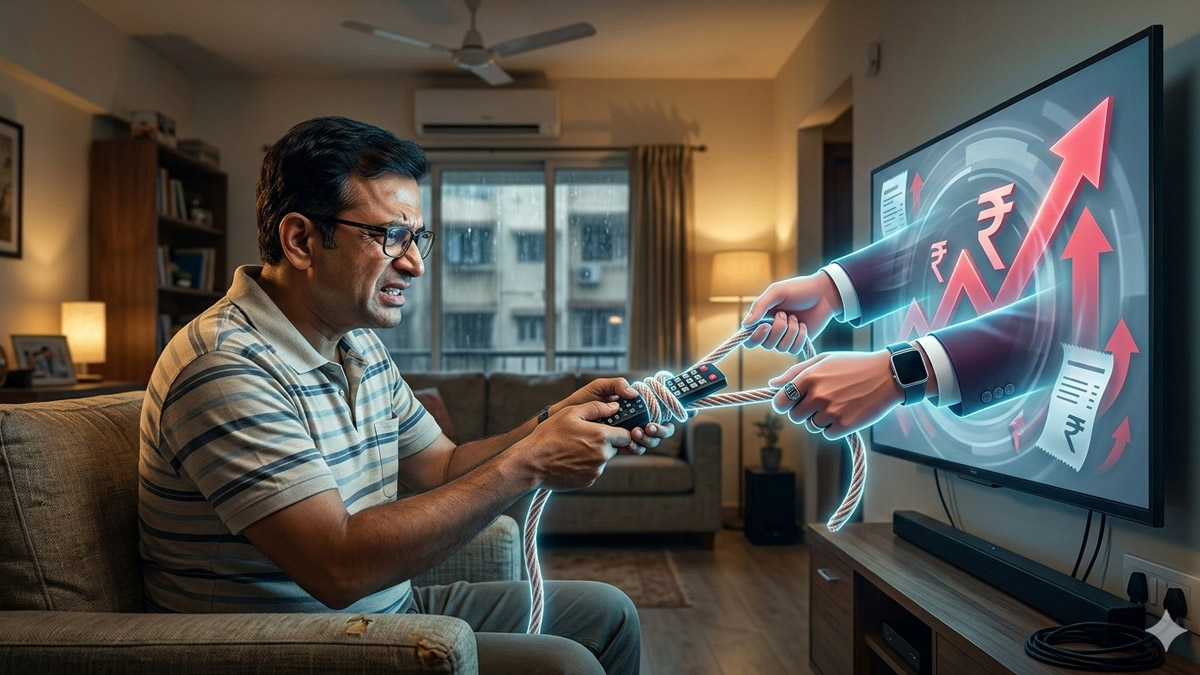
MUMBAI: If you were hoping for a cheaper night in front of the telly next year, you might want to look away from the remote. India’s broadcasting giants are flipping the script on pricing, with JioStar, Sony, and Zee all tuning into a new frequency of higher tariffs. Ahead of the 2026 financial year, the Big Three have released their updated Reference Interconnect Offers (RIOs), signalling a collective push that will see most monthly bills rise by roughly 10 per cent.
The synchronised move suggests that broadcasters are testing the price elasticity of their audience. In simpler terms, they are betting that your love for daily soaps and live sports is stronger than your annoyance at a slightly lighter wallet.
Sony is making a particularly bold play in the High Definition space. If you enjoy the crispness of Sony Entertainment Television HD or Sony SAB HD, your monthly bill for those channels will jump from 25 rupees to 30 rupees. The same 30-rupee price tag now applies to their sports heavyweights, including Sony Sports Ten 1, Sony Sports Ten 2, Sony Sports Ten 3 Hindi, and Sony Sports Ten 5.

However, Sony is also expanding its horizons. Fans of regional content have new arrivals to look forward to, provided they are patient. Sony Sports Ten 4 Kannada is slated for an April 2026 debut, while Sony Vizha and Sony Vizha HD are expected by June. By August, Sony Telugu and Sony Telugu HD should be live. To keep customers sweet until then, Sony is offering “proportionate discounts.” For instance, the Happy India 2026 Smart Tamil bouquet, normally 42 rupees, will cost just 29.91 rupees until the new Vizha channel officially joins the party.
On the standard definition front, Sony is keeping its “strategic mass price” at 19 rupees for big hitters like Sony Max, Sony Marathi, and Sony Aath. Smaller channels see minor tweaks: Sony Max 2 is nudging up from 2 rupees to 3 rupees, while Sony Yay! sits at 6 rupees and Sony Max 1 remains at 5 rupees.
Zee Entertainment is also getting in on the act with a comprehensive 10 percent hike. Their flagship Standard Definition channels, such as Zee TV, Zee Cinema, Zee Marathi, Zee Bangla, Zee Sarthak, Zee Kannada, and Zee Tamil, are all locked in at 19 rupees. Interestingly, they have matched this 19-rupee price point for many of their HD versions too, including &TV and &Pictures.
For those who prefer the all-you-can-eat bouquet approach, Zee’s All-in-One Hindi SD pack has risen to 58 rupees. Their Marathi and Bangla packs are now 64 rupees, while the Southern trio of Tamil, Kannada, and Telugu SD packs will set you back 85 rupees. If you want those same Southern packs in glorious HD, the price climbs to a steeper 131 rupees. Zee is also shuffling its deck by exiting English entertainment but entering the sports arena, with Zee Cafe and &flix seeing price adjustments to 7 and 8 rupees respectively.
JioStar is perhaps the most aggressive of the bunch when it comes to regional favourites. While they have kept core Hindi staples like Star Plus, Colors, and Star Gold at 19 rupees, they have pushed premium regional channels like Asianet, Colors Kannada, Vijay TV, and Maa TV up to 30 rupees. This move is significant because any channel priced over 19 rupees cannot be included in a discounted bouquet, meaning fans of these channels will have to buy them separately, potentially driving up the total cost of a monthly subscription.
Even the youngsters aren’t spared, with kids’ favourites like Nick SD and Nick HD+ now priced at 19 rupees. As we head towards April 2026, the ball is now in the court of the cable and dish operators. They must decide how much of these increases they can swallow and how much they will pass on to the person holding the remote. For the average viewer, the message is clear: premium content is getting a premium price tag.







Brands
Dunkin’ Donuts to exit India as Jubilant FoodWorks ends 15-year franchise deal
The quick service restaurant giant is ending a 15-year franchise partnership with the American doughnut chain, even as it renews its Domino’s agreement for another 15 years

NOIDA: Dunkin’ is done in India. Jubilant FoodWorks Ltd, the country’s leading quick service restaurant operator, has decided not to renew its franchise agreement with the American coffee and doughnut chain, and will wind down its Indian stores in a phased manner before December 31, 2026, bringing a 15-year partnership to a quiet, loss-laden close.
The decision, approved by JFL’s board on March 30, 2026, ends a relationship that began with a Multiple Unit Development Franchise Agreement signed on February 24, 2011. JFL will now evaluate and undertake what it described in a regulatory filing as the “rationalisation and/or cessation of certain operations and/or sale, transfer or disposal of assets and/or assignment or transfer of franchise rights,” all in consultation with Dunkin’s brand owners and strictly within the terms of the original agreement.
The numbers tell the story bluntly. In the financial year 2024-25, Dunkin’ India posted a revenue of Rs 37 crore against a loss of Rs 19 crore — a haemorrhage that was always going to test the patience of a parent company recording revenues of Rs 6,104 crore and a profit of Rs 194 crore in the same period. Doughnuts, it turns out, were never going to move the needle.
The contrast with JFL’s handling of its other marquee franchise could hardly be sharper. Even as it walks away from Dunkin’, the company has just doubled down on Domino’s, signing a fresh Master Franchise Agreement on March 31, 2026, granting it exclusive rights to develop and operate Domino’s Pizza stores in India for 15 years, with an option to renew for a further 10.
JFL, incorporated in 1995 and promoted by the Bharatia family, operates a network of more than 3,500 stores across six markets — India, Turkey, Bangladesh, Sri Lanka, Azerbaijan and Georgia. Its portfolio includes Domino’s and Popeyes on the global side, and two home-grown brands: Hong’s Kitchen and COFFY, a café brand in Turkey.
For Dunkin’, India was always a stretch. The brand never quite cracked the cultural code in a market where filter coffee and chai command fierce loyalty and where the doughnut remains, at best, an occasional indulgence rather than a daily habit. Fifteen years, mounting losses and a parent with better things to spend its capital on was always going to be a difficult equation to solve.
The doughnut has had its last day. The pizza, however, is staying.






