Ad Campaigns
The not so fair face of advertising!

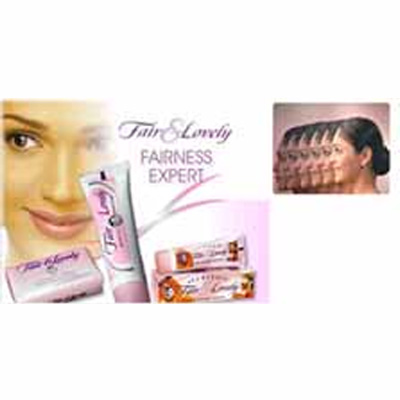
Channels and ad agencies feel the heat as NGOs and the government wake up to discriminatory fairness product ads
Fairness products may have just lost shade or two of that promised glow.
Star India claims that 10 days ago it pulled out the offensive HLL ad that had some leftist women’s organizations in the country seeing red, prompting the I&B ministry to issue a directive to channels to pull the blinds on the commercial.
Fulcrum head Vikram Sakhuja however, maintains the campaign had already run its course and was anyway not being shown on any channel by the time the I&B order came through. Sony ad sales Rohit Gupta however, says no fairness product ad has been pulled out from the Sony channels in the last few days. The network has replied to some directives received from the ministry, he says, but prefers not to comment on the issue as Sony has not received any directives on the issue and ‘there are many issues involved.’
Star, which has a sizeable chunk of HLL product inventory, is now reviewing the issue to check whether Lever plans to replace the offending ad with any other. Sakhuja, who says the particular campaign was a success as it struck a chord with viewers, adds that while the I&B order thought the ad derided women, it is still a matter of interpretation. While the Advertising Standards Council of India’s (ASCI) regulations are quite clear, says Sakhuja, “the jury is still out on this one,” he believes.
All’s fair in ads and war!
The product that has raised the hackles of a section of the population
Sakhuja for one believes the ad, created by Lowe Lintas, sent out a positive message in that it advocates that the girl is induced to get out of the confines of her life and build her own identity, helped along by a fairness product.
Advertising Agencies’ Association of India president Sam Balsara opines that while the AAAI has not taken a stance on this issue, the ads merely reflect current societal mores. “While I am not going into the specific emotional route taken, fairness creams as a product are an important category which meet the genuine requirements of young people,” he says. It would not be correct to say that marketers exploit all opportunities available to them, says Balsara, as every product has a physical and an emotional attribute that will be highlighted.
The ASCI on the other hand says it has never upheld any complaint received by it against fairness creams on the basis of social discrimination. ASCI secretariat officials spoken to by indiantelevision.com admitted that though the council has received several complaints about such products till date, most were concerned about the claims made by the products. None of the complaints thus far have been upheld as the manufacturers and advertisers were able to prove that the products pass the technical tests. The level of fairness achievable by the use of these products however becomes a matter of personal judgment and since there is no way of measuring it, none of the complaints have been able to nail either the advertiser or the manufacturer of these products.
ASCI officials however, say that by adding a storyline and putting a roundabout form of presentation, some of the ads have availed of the ‘license’ that can be exploited by the advertising fraternity.”Although it can be disagreeable, if it is a convincing story, we don’t come into the picture,” the ASCI says.
The issue of `objectionable’ ads on the telly has however once again pitchforked into the limelight the need to have a separate body to monitor content on television channels on the lines of the content bureau as envisaged in the still-pending Communication Convergence Bill.
“We cannot always get involved in such things and the need for an outside body monitoring content has again been made,” a senior official of India’s information and broadcasting ministry told indiantelevision.com earlier today, emphasising that the notice from the ministry to TV channels and also the Indian Broadcasting Foundation (IBF) on ads of fairness cream and soaps is a stop-gap measure.
Not quite fair, says government
According to the government official, the need for a monitoring body is amplified from the fact that the government has received several complaints regarding programmes and advertisements on television channels and the government cannot always be active in the activity of policing.
“The relevant files (on bringing in a legislative act to form a monitoring body) have been put up before the minister and it is for him to take a studied decision,” the official said.
Fair Weather Friends
Three prominent companies – HLL, Emami and Cavin Kare are currently aggressively pushing their fairness creams on television, even as Godrej markets its fairness soap with equal gusto. The All-India Democratic Women’s Association (AIDWA) was the one which woke up the sleeping critics with its protest to the government that the ad be pulled off air.
However, I&B minister Ravi Shankar Prasad, during his recent interactions with journalists, has not been too bullish on having a monitoring body on the lines of the content bureau, something that was dear to his predecessor’s heart. Sushma Swaraj had said it was to be part of her agenda for the first quarter of 2003 to have the broadcasting council legislation okayed by Parliament.
Three days ago, several TV channels got notices from the I&B ministry to take off the air ads relating to products which claimed to lighten the colour of the skin after usage. The move came after the All India Democratic Women’s Association had petitioned the government, a Left party dominated organisation, that such ads were biased against the dark-skinned girl child.
Is this fair?
One such `objectionable’ ad features two girl friends bantering amongst themselves how the usage of two bars of soap of a particular brand for a period of eight weeks would make one of them (dark skinned compared to her friend who is very fair) fair and lovely. The dark-skinned girl takes up the offer, turns into a fair-skinned Cinderella and loses the bet of Rs 20 (cost of soaps). The friend now, of course, does not want her boyfriend to see her `lovely’ friend closely.
There’s more. In another ad, a girl is unable to land a handsome groom due to her dark complexion, but her use of a fairness cream helps her hook a good looking guy. Another has a girl who lands a job as an airhostess after using a fairness product and is able to make up for her father’s regret of not having a son to look after him
Fair enough?
“It is ads like these which can upset anybody. Are the companies trying to say that it is a sin to be dark-skinned in a country like India (where a majority of the population are various shades of brown)? Especially when even educated people pray for fair daughters and daughters-in-law,” the government official said, pointing out that in recent times cases of girl infanticide too has increased alarmingly.
The government official also said that the TV channels have been given 14 days time to take the necessary steps on the notice, including petitioning the government on it too. “We understand that channels have business policies and taking off the air ads cannot be done overnight. The IBF too has been asked to look into the matter and take steps to expedite the matter,” the official added.
Fair enough?