
Brands
Quick commerce gets bigger as Blinkit, Instamart raise dark-store capex to Rs 2.5 crore: UBS report
Bigger stores can hold wider assortments as platforms invest more in fulfilment infrastructure


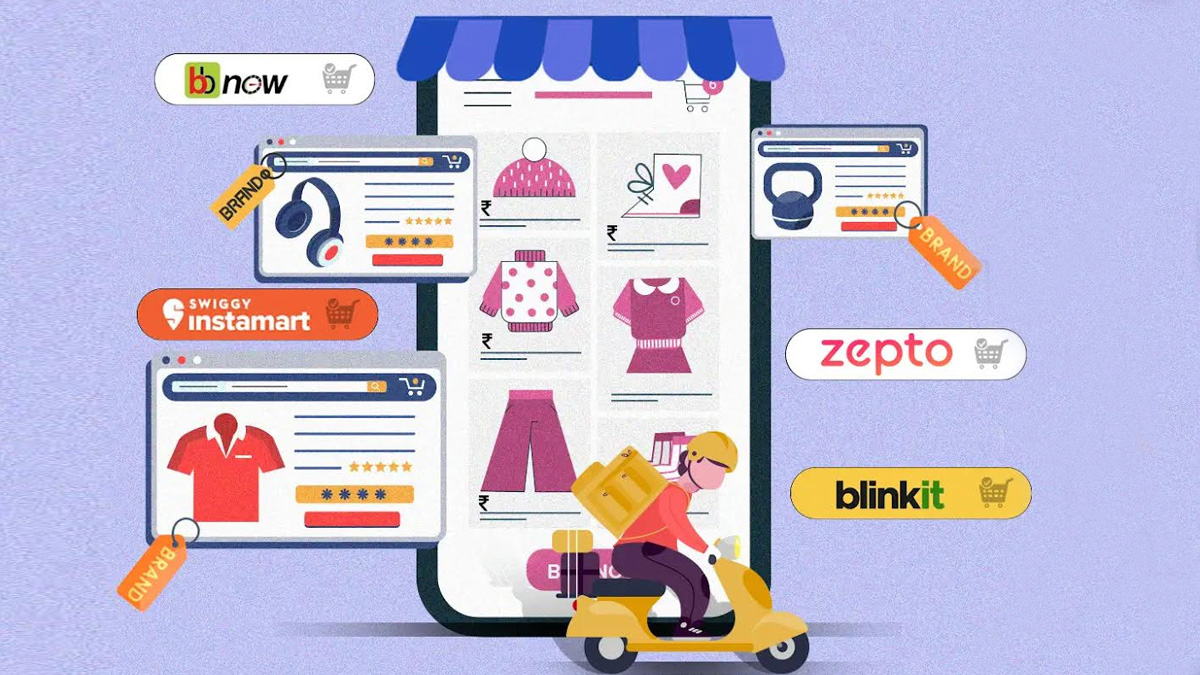
MUMBAI: Quick commerce is getting bigger, quite literally. Blinkit and Swiggy’s Instamart are increasing the amount they invest in dark stores as the sector moves away from small neighbourhood warehouses towards larger fulfilment hubs.
According to a report by UBS, both companies have raised their capex guidance per dark store to around Rs 2.5 crore, from an earlier estimate of about Rs 1 crore made nearly two years ago.
The jump reflects a broader change in how quick-commerce networks are being built. Dark stores that were once typically spread across 2,000-3,000 sq ft are increasingly exceeding 5,000 sq ft, with UBS estimating that store sizes have grown by 60-100 per cent over the past one to two years.
The cost rises with the footprint. A 2,500-3,000 sq ft dark store currently costs around Rs 1.4-1.6 crore, while a 5,000 sq ft facility costs approximately Rs 2.4-2.5 crore. A 7,000 sq ft facility can cost around Rs 3 crore, including the apportioned cost of warehouse infrastructure.
The bigger footprint is not simply about giving riders more room to manoeuvre. Larger facilities allow platforms to stock more reserve inventory and long-tail stock-keeping units locally, potentially reducing the frequency with which products need to be replenished.
UBS estimates that the warehouse area multiple could fall from 1.0x for a 2,500-3,000 sq ft store to 0.8x for a 5,000 sq ft store and 0.6x for a 7,000 sq ft facility.
The role of the dark store is changing, too. Instead of functioning mainly as small neighbourhood inventory points, newer facilities are increasingly being designed as mini fulfilment centres, with dedicated space for picking, packing, rider handovers and staging.
As order volumes rise, these additional areas become increasingly important to prevent congestion and maintain delivery service levels. In effect, the dark store is becoming less about simply storing products and more about keeping the entire order engine moving smoothly.
The change comes as quick-commerce platforms broaden their assortments beyond everyday grocery items. Electronics, beauty products and other long-tail categories are becoming increasingly important, making storage capacity and inventory depth more critical.
UBS believes assortment expansion, rather than delivery speed alone, is driving the move towards larger stores.
The larger-hub trend is also playing out at Flipkart Minutes. UBS, citing an industry expert, estimates that Minutes could add another 1,000 dark stores by mid-2027 or ahead of the 2027 Big Billion Days sale, potentially taking its network to around 2,000 stores.
The rollout, however, is expected to depend on individual market performance and the availability of supporting hubs and backend infrastructure.
Minutes currently operates more than 1,000 dark stores across around 120-130 cities, with average daily orders estimated at 800-1,000 per store. Mature stores, defined as those operating for five to six months, process around 1,200-1,500 orders a day.
The platform is also narrowing the gap with Blinkit in terms of order value. UBS estimates Minutes’ net order value, excluding mobile phones, at Rs 500-530, compared with Rs 518 for Blinkit in Q1 FY27. Including mobile phones, Minutes’ order value is higher, helped by Flipkart’s established position in mobiles and electronics.
Around 60-65 per cent of Minutes’ demand comes from metro cities. It is also gaining traction in Kolkata and Tier II and III markets in eastern India, while South India is scaling quickly.
Interestingly, customers outside metros appear more willing to accept delivery windows of 25-30 minutes, giving Minutes scope to serve larger delivery areas in these markets.
Minutes is also becoming a wider gateway into Flipkart’s ecosystem. UBS estimates that 40-45 per cent of customers visiting Flipkart in locations where Minutes is available also use the quick-commerce platform. Transactions per customer per quarter are also rising as shoppers consolidate more purchases within the wider Flipkart ecosystem.
The race for dark-store density extends well beyond Blinkit, Instamart and Minutes. Amazon Now currently has around 500-600 dark stores and processes an estimated 4-5 lakh orders a day, according to UBS. The platform could reach around 1,000 stores by the end of 2026.
Meanwhile, Zepto had proposed using Rs 1,629 crore from its IPO proceeds to establish 1,904 dark stores by FY30. Swiggy has also indicated that Instamart’s existing network has the capacity to support more than twice its current gross order value.
The expanding networks reflect a broader shift in India’s quick-commerce playbook. Platforms are adding categories ranging from electronics and beauty to fashion, medicines and home products, all of which require more storage and increasingly sophisticated fulfilment operations.
That is making quick commerce a more capital-intensive business. Bigger dark stores require more upfront investment, but they can also support larger inventories, higher order volumes and broader baskets. The next phase of the sector, therefore, may be defined not just by how quickly a delivery arrives, but by how much a single store can handle before it does.






