MAM
Pai charts a Prime course with content strategy role at Amazon


MUMBAI: From broadcast boardrooms to the streaming screen, Saurabh Pai is now scripting his next chapter at Amazon. The media and strategy specialist has taken on a new role in content strategy at Prime Video & Amazon MGM Studios, marking a pivotal move in his two-decade-long career in content, analytics, and business planning.
Known for bringing a data-driven approach to programming decisions, Pai’s new position comes after a nearly three-year stint at Zee Entertainment Enterprises Ltd., where he served as director of network strategy. There, he played a key role in streamlining content planning across the network’s bouquet of channels, using tools like Looker and deep market insights to sharpen audience segmentation and performance forecasting.
Before Zee, Pai spent close to seven years at Times Television Network, where he wore multiple hats across content and product management. From crafting viewer-first propositions to budgeting and performance tracking, he emerged as a critical thinker with a flair for aligning content with consumer intent.

His career also includes a previous stint at Zee as Research Head for niche channels and product lead for Zee Studio, where his early work shaped how the network approached English-language content in India.
At Prime Video, Pai will help steer content decisions in one of the world’s most dynamic and competitive streaming markets. With streaming giants increasingly leaning on insight-led content curation, his hybrid background in content, data and distribution is expected to play a key role in shaping Amazon’s next wave of originals and acquisitions in India.
One thing’s clear: with this move, Pai isn’t just tuning in, he’s ready to help write the next big streaming script.







MAM
Tanishq launches ‘Lekhinis’ campaign celebrating modern Telugu woman
Olympic medallist P.V. Sindhu features in new film honouring women who author their own stories.
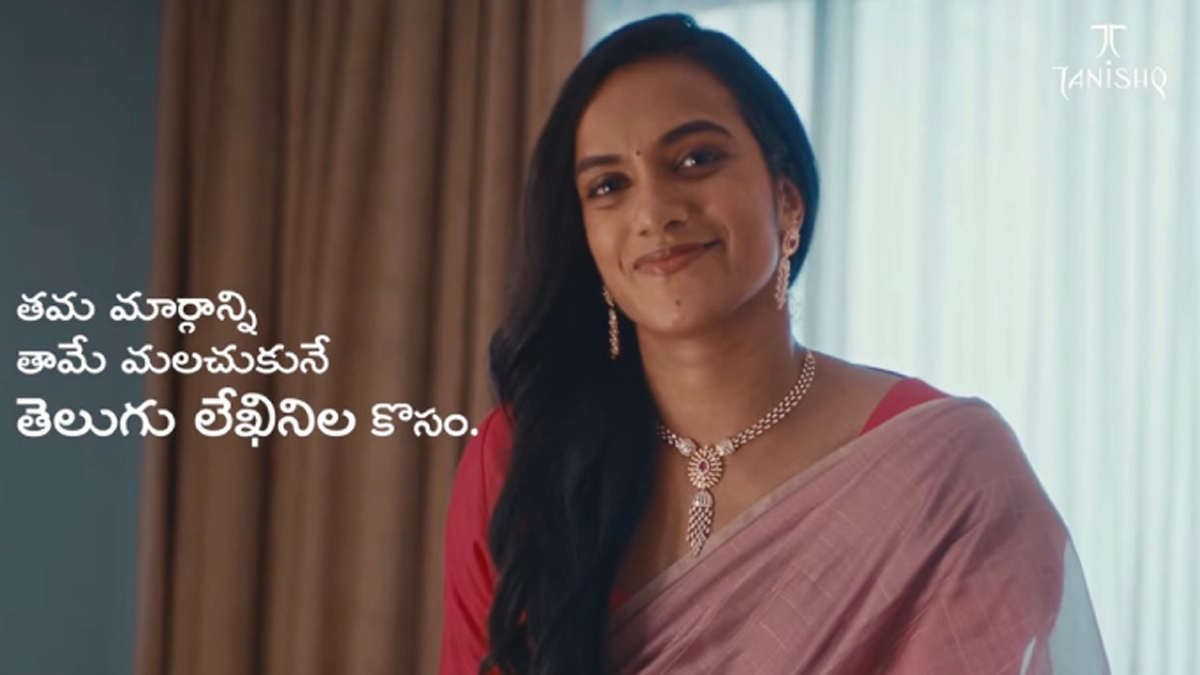
MUMBAI: Tanishq has found the perfect way to sparkle this season by letting the modern Telugu woman write her own glittering chapter. The Titan Company jewellery brand has unveiled its latest campaign, centred on the idea of ‘Lekhinis’ women who are the authors of their own stories. Featuring Olympic medallist P.V. Sindhu as the narrator, the campaign celebrates the evolving identity of women in Telangana and Andhra Pradesh, where modern aspirations blend seamlessly with deep-rooted traditions.
The film captures everyday moments that reflect quiet strength and confident individuality. It portrays women who embrace change while staying grounded in their heritage, reimagining traditions with sensitivity rather than rebellion. Conceptualised by Lowe Lintas, the campaign aims to strengthen Tanishq’s emotional connection with regional audiences by honouring women who shape their identities with authenticity.
Titan Company Limited chief marketing officer of Tanishq Pelki Tshering said the campaign is a tribute to women who remain rooted yet redefine their journeys every day. “She has always been at the heart of everything we do our muse, our inspiration,” she noted. “Through our designs and storytelling, we strive to be a lifelong companion in her journey.”
P.V. Sindhu shared that the campaign resonated with her own life. “What drew me to this campaign with Tanishq is its honest celebration of the modern Telugu woman. The story reminded me of my own journey working hard at what I love, with the support of my family and coaches, and growing stronger every step of the way.”
Akshay Sundher, Director at Lowe Lintas, described the making of the film as a beautiful experience, highlighting the emotional hospital scene, Sindhu’s warmth, and strong teamwork behind the project. The music by Madley Blues forms the soul of the film.
Through this initiative, Tanishq continues its tradition of crafting jewellery that mirrors a woman’s identity, celebrates her milestones, and reflects her cultural pride.
In a world of fast-changing roles and traditions, Tanishq has delivered a campaign that shines not through loud statements, but through quiet, confident storytelling much like the women it celebrates.






