MAM
Own less, live more: Bytepe redefines phone ownership
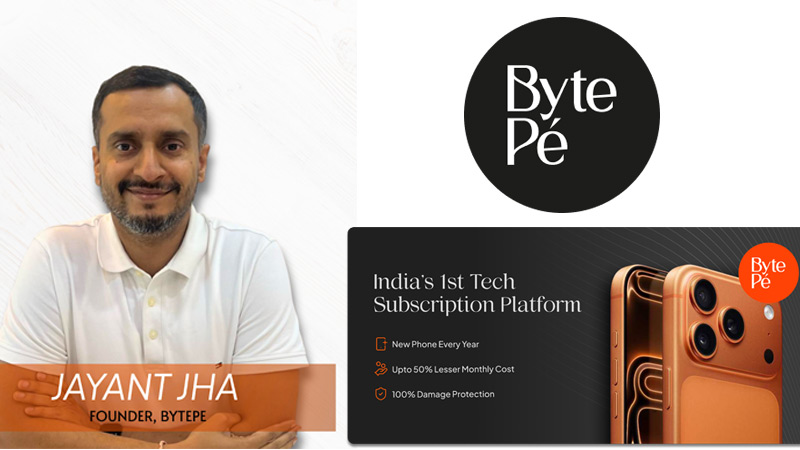
MUMBAI: Time to swipe right on freedom! Bytepe, India’s first tech subscription platform, is turning the smartphone game on its head, offering a flexible, affordable, and stress-free way to own the latest devices.
Founded by serial entrepreneur and ex-Flipkart leader Jayant Jha, Bytepe lets consumers access the newest Iphone 17 series with a simple monthly fee, lower than traditional EMIs, complete with yearly upgrades and 100 per cent one-time damage protection. Users pay only for what they use, with options to upgrade, return, or continue ownership at the end of 12 months, and even enjoy up to 50 per cent assured buyback if they choose upfront payment.
“After years in India’s consumer electronics industry, I’ve seen how long EMIs and outdated devices frustrate customers,” said Bytepe founder & CEO Jayant Jha. “With Bytepe, we’re not just making premium tech affordable, we’re putting choice and control back in the hands of consumers.”
The subscription model is refreshingly simple: pick a phone, pay a flexible monthly fee, and upgrade annually. Bytepe EMI options cater to both credit card and non-credit card users, ensuring wide accessibility. With no hidden fees, zero lock-ins, and the latest devices at your fingertips, Bytepe is redefining what it means to “own” in a fast-moving world.
As India’s tech-savvy consumers seek smarter ways to stay current, Bytepe is leading the charge, making luxury technology lighter on wallets, better for the environment, and always up to date.

Brands
Google nears Nvidia in race for world’s most valuable company
Market cap gap narrows as Google hits $4.65 trillion, Nvidia at $4.86 trillion.
MUMBAI: In the AI gold rush, even the giants are sprinting and Google is suddenly gaining ground. Google is rapidly closing in on Nvidia in the race to become the world’s most valuable publicly listed company, with the gap between the two narrowing sharply amid diverging stock momentum. The tech giant’s market capitalisation has surged to around $4.65 trillion, following a more than 140 per cent rise in its share price over the past year.
That rally has added over $2.6 trillion in value in just 12 months, including nearly $900 billion since January alone. Its stock recently hovered at $381.80, slipping marginally by 0.04 per cent, but still reflecting strong upward momentum.
Nvidia, meanwhile, continues to hold the top spot with a valuation of approximately $4.86 trillion. The chipmaker crossed the $5 trillion milestone in October last year and peaked at $5.27 trillion on 27 April. However, its shares have largely plateaued over the past six months, rising just 0.2 per cent recently to $199.99.
The contrast in trajectories is striking. While Nvidia has seen relatively flat movement, Google has gained over 36 per cent in the same six-month period. Barron’s estimates suggest that if current trends hold, the valuation gap could shrink to as little as $190 million by the time Nvidia reports its first-quarter earnings on 20 May.
Daily momentum paints a similar picture. Nvidia recorded average daily gains of about 0.66 per cent last month, compared to Google’s stronger 1.42 per cent, an edge that could prove decisive in the short term.
Driving Google’s resurgence is its aggressive push into artificial intelligence across its ecosystem, from search and YouTube to cloud computing. The company has already invested $144 billion in capital expenditure over the past two years and plans to deploy a further $490 billion over the next two.
Its cloud division is also gathering pace. Google Cloud reported an order backlog of nearly $220 billion in the latest quarter, with total backlog touching a record $462 billion, around half of which is expected to be realised within two years. The company’s entry into chip sales is also beginning to factor into its growth narrative.
The last time Google briefly topped the S&P 500 by market value was in February 2016, when it edged past Apple for just two days. This time, the stakes and the numbers are far higher.
At the heart of the contest lies a single force: artificial intelligence. As both companies pour billions into infrastructure, chips and platforms, the leaderboard is no longer just about size, it is about who can scale the future faster.