AD Agencies
Omnicom to divest $2.5 billion businesses in 12 months: CEO John Wren
Group doubles synergy target to $1.5bn as jobs, brands and markets go
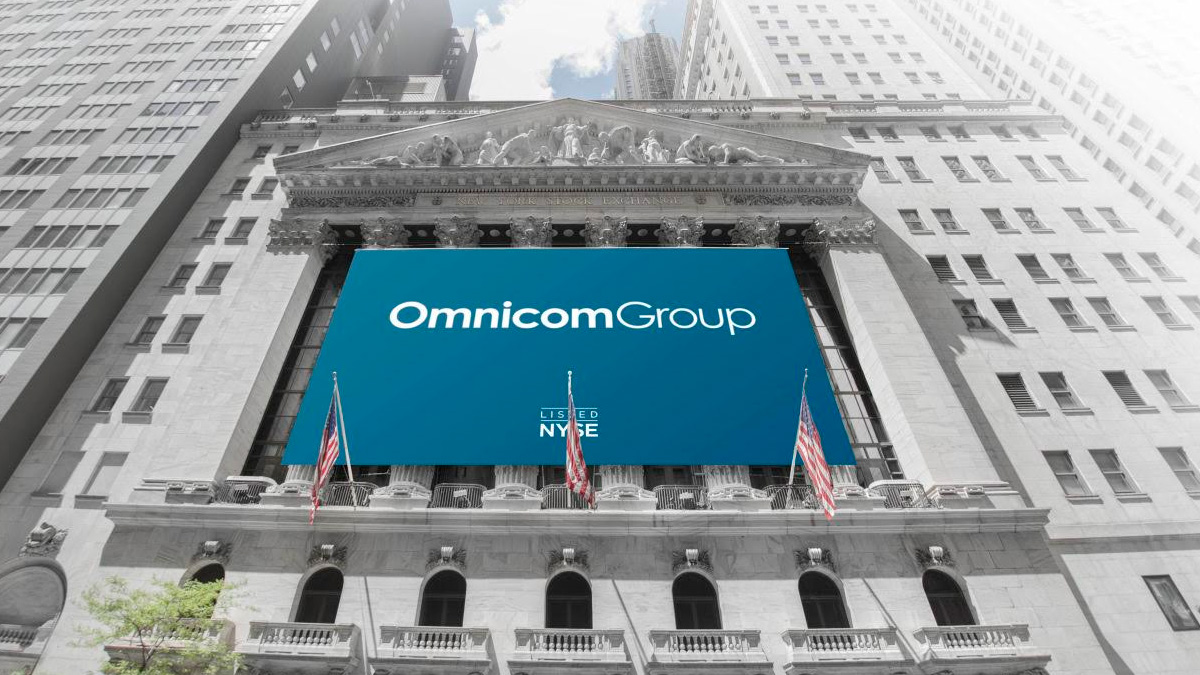
NEW YORK: Omnicom Group is preparing to divest or exit businesses generating about $2.5 billion in annual revenue, stepping up a sweeping portfolio overhaul after its $13.25 billion acquisition of Interpublic Group.
Speaking on the group’s fourth-quarter earnings call, chairman and chief executive officer John Wren said Omnicom had already sold or exited units worth more than $800 million in annual revenue and expects to complete the remaining disposals within 12 months.
The company is also scaling back in smaller markets, shifting from majority to minority ownership in businesses accounting for roughly $700 million in revenue. These markets, Wren said, are no longer central to Omnicom’s long-term strategy.
Following the IPG merger, Omnicom has doubled its targeted annual run-rate synergies to $1.5 billion over the next 30 months, from an earlier estimate of $750 million. Management expects to capture $900 million of those savings in 2026 alone, with around $1 billion coming from labour cost reductions as overlapping corporate, network and operational roles are eliminated.
Further efficiencies will flow from simplified regional and brand structures, consolidated resources, and faster outsourcing and offshoring under a unified operating model. In December 2025, the group said it would cut more than 4,000 jobs and fold several agency brands into larger networks.
Wren also underlined stepped-up investment in automation and artificial intelligence to lift margins and sharpen client servicing amid intensifying competition.
The board has authorised a $5 billion share buyback, including a $2.5 billion accelerated repurchase programme, while committing continued investment in media, commerce, consulting and data capabilities.
Omnicom reported a 27.9 per cent rise in fourth-quarter fiscal 2026 revenue to $5.53 billion, reflecting organic growth and one month’s contribution from IPG, compared with $4.32 billion a year earlier. Wren said the IPG combination strengthened the client roster, citing new or expanded mandates from American Express, Bayer, BBVA, BNY, Mercedes-Benz and NatWest Group.

AD Agencies
Fevicol releases its last ad campaign by the late Piyush Pandey
The adhesive brand’s last campaign by the late advertising legend Piyush Pandey turns an everyday Indian obsession into a quietly powerful metaphor
MUMBAI: Fevicol has never needed much of a plot. A sticky bond, a wry observation, a truth that every Indian instantly recognises — that has always been enough. “Kursi Pe Nazar,” the brand’s latest television commercial, is no different. And yet it carries a weight that no previous Fevicol film has had to bear: it is the last one its creator, the advertising legend Piyush Pandey, will ever make.
The film, released on Tuesday by Pidilite Industries, fixes its gaze on the kursi — the chair — and what it means in Indian life. Not just as a piece of furniture, but as a currency of ambition, a vessel of authority, and a source of quiet social drama that plays out in every home, office and institution across the country. Who sits in the chair, who waits for it, and who eyes it hungrily from across the room: the film transforms this sharply observed cultural truth into a narrative that is, in the best Fevicol tradition, funny, warm and instantly familiar.
The campaign was Pandey’s idea. He discussed it in detail with the team before his death, but did not live to see it shot. Prasoon Pandey, director at Corcoise Films who helmed the commercial, said the team needed five months to find its footing before they felt ready to shoot. “This was the toughest film ever for all of us,” he said. “It was Piyush’s idea, magical as always.”
The emotional weight of that responsibility was not lost on the team at Ogilvy India, which created the campaign. Kainaz Karmakar and Harshad Rajadhyaksha, group chief creative officers at Ogilvy India, described the process as “a pilgrimage of sorts, on the path that Piyush created not just for Ogilvy, but for our entire profession.”
Sudhanshu Vats, managing director of Pidilite Industries, said the film was rooted in a distinctly Indian insight. “The ‘kursi’ symbolises aspiration, transition, and ambition,” he said. “Piyush Pandey had an extraordinary ability to elevate such everyday observations into iconic storytelling for Fevicol. This film carries that legacy forward.”
That legacy is considerable. Over several decades, Pandey’s partnership with Fevicol produced some of the most beloved advertising in Indian history, building the brand into something rare: a household name that people actively enjoy watching sell to them.
“Kursi Pe Nazar” does not try to be a tribute. It simply tries to be a great Fevicol film. By most measures, it succeeds — which is, in the end, the most fitting send-off of all.