MAM
Nourish brings Shetty sisters for its new TVC ‘#SehatKiSunoNourishHiChuno’

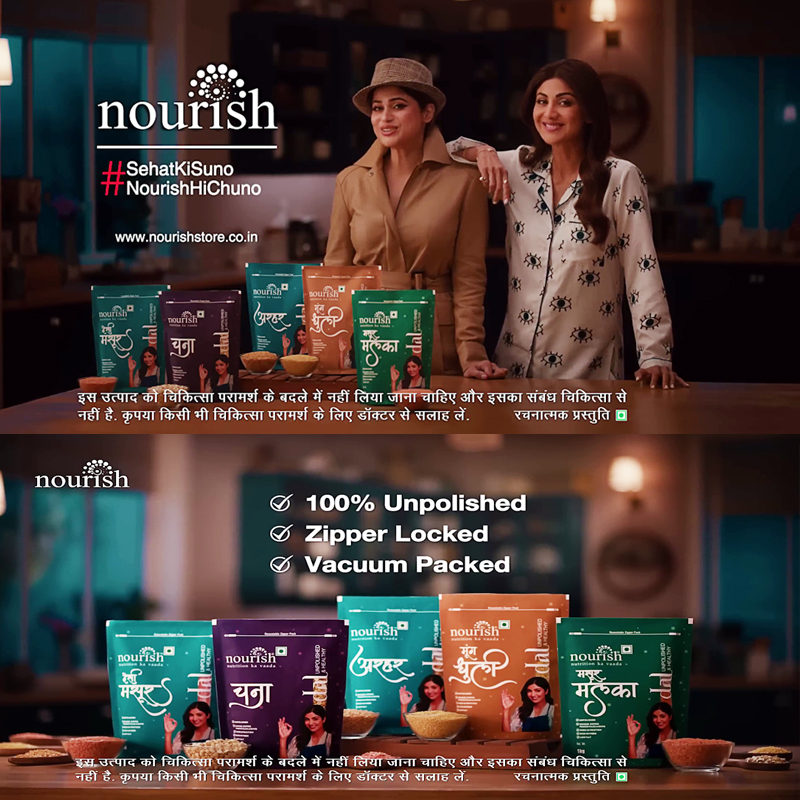
Mumbai: In a recently launched television commercial, “#SehatKiSunoNourishHiChuno” from Nourish, fitness icon and Bollywood actor Shilpa Shetty (aka Munki) is seen advising her on-screen and off-screen sister, Shamita Shetty (aka Tunki), on the benefits of consuming only unpolished pulses.
Conceptualised by Leads Brand Connect, the commercial reinforces the importance of choosing the healthiest and most nutritious range of unpolished pulses. The ad intends to showcase the reasons and importance of eating unpolished pulses in comparison to polished pulses.
In the opening scene of the ad, Shamita, dressed as a detective, is trying to look for the polished pulses from the dal box kept in the kitchen, to which Shilpa comments that she will not find any polished seed in the box as they consume Nourish pulses, which are 100 per cent unpolished, hygienic, and healthy. In the second scene, Shilpa advocates that Nourish pulses are nutritious and have high levels of protein. Being vacuum-packed and zip-locked, the freshness and hygiene of the pulses are maintained. Closing in on the lines

#SehatKiSunoNourishHiChuno, Munki puts an end to Tunki’s struggle to find polished dal in Nourish’s unpolished dal and tells her to be smart and make the right choice for her health.
“My staple lunch is always dal, chawal, and roti. I prefer food that is unpolished, high in fiber, and protein-enriched. What I like about Nourish is that its pulses are unpolished; it’s not about how it looks but what it does,” says Nourish’s brand ambassador Shilpa Shetty.
Speaking on the latest ad, BL Agro managing director Ashish Khandelwal commented, “We have always believed in offering nutrition and healthy foods to our customers. Through this ad, we intend to further highlight our uniqueness in packaging the unpolished pulses to keep their freshness intact.”
Leads Brand Connect managing director Richa Khandelwal added, “The ad takes a more quirky approach by showcasing Shilpa Shetty as the nutrition champion while Tunki (Shamita) is slightly jealous of the fact that Munki (Shilpa) is always right. We wanted to create an ad that can keep the viewers engaged to know what exactly Shamita is up to and then highlight the benefits of Nourish.”
With the release of this ad, BL Agro is running a contest called #NourishTunkiMunki on all its social media handles. The company intends to engage existing and prospective customers through this contest, where winners are chosen on a daily basis. The questions of the contest revolve around nutrition and food.
“The best part of the contest is that there will be not one but 100 winners every day. This will keep the excitement and engagement levels high as the chances of winning the Nourish hampers as gifts are higher,” adds Richa.
The hashtags of the contest are “#SehatKiSunoNourishHiChuno” and “#NourishTunkiMunki,” and the tag is @worldofnourish.






Brands
Funskool India crosses US$40 million turnover in FY 2025-26
Toy manufacturer posts steady growth despite global headwinds.
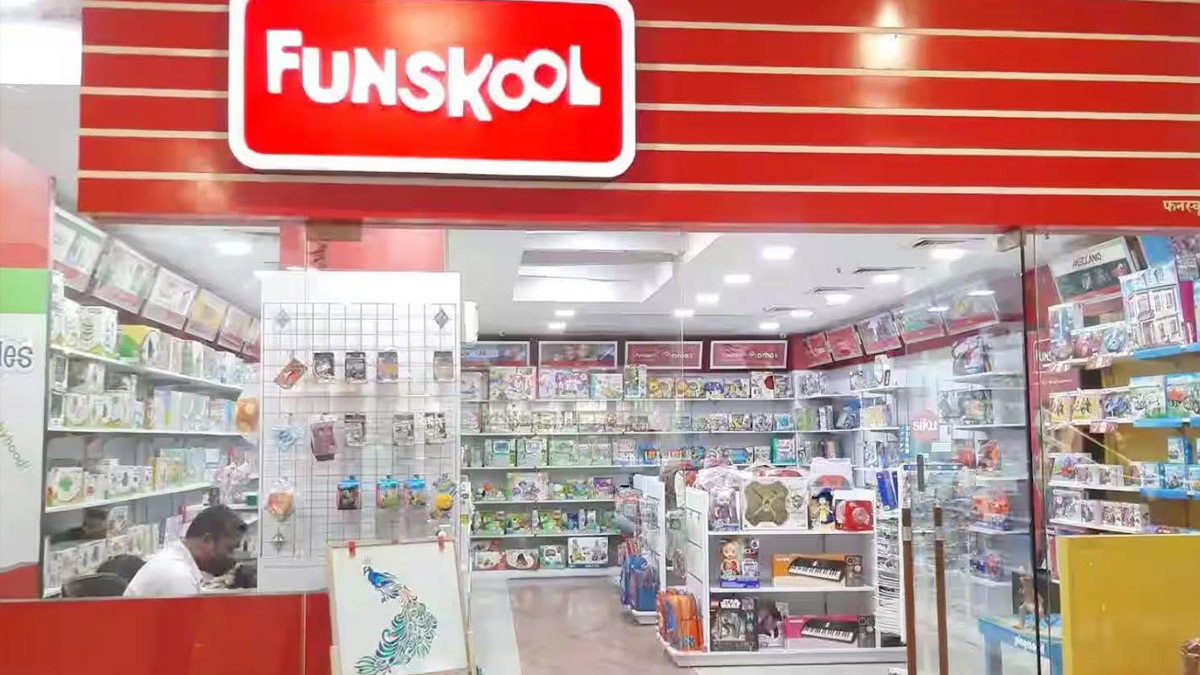
MUMBAI: Funskool India has played its cards well turning challenges into steady growth while keeping the fun alive in the toy business. The country’s leading toy manufacturer has reported a turnover of $40 million in FY 2025-26, demonstrating resilience in a difficult global environment. The company recorded an average growth of 14 per cent over the past two years, with exports growing at a healthy 19% year-on-year.
While domestic business grew at a modest single-digit pace, Funskool saw encouraging traction in key categories such as Fundough (dough) and Handycrafts (arts & crafts).
Funskool India Ltd. CEO K.A. Shabir said, “We successfully navigated the challenges posed by US tariffs last year and continued to grow both our export and domestic businesses. Given the ongoing geopolitical situation in West Asia, we are currently working with a moderate growth outlook of 12–15 per cent, with plans to revisit our targets after Q1 once the situation stabilises.”
He highlighted strengthened partnerships with global companies including Spin Master (Canada), Moose Toys (Australia), Melissa & Doug (USA), Asmodee (France), Learning Resources (USA), and Buffalo Games (USA). The expansion of the company’s Goa plant is progressing and is expected to be completed by the end of the current financial year.
Looking ahead, Funskool expects a significant shift in domestic growth momentum for FY 2026-27, driven by new categories such as friction vehicles under the brand “BlazeTrix”, remote-control cars under “VoltRush”, and the addition of popular licences like Paw Patrol.
In an industry where playtime never stops, Funskool has shown that even in turbulent times, a smart strategy and strong partnerships can keep the business ticking along nicely. As it gears up for the next financial year, the company appears well-positioned to build on its solid foundation and bring even more joy to children worldwide.







