MAM
Nielsen’s seven-step Media Compass
MUMBAI: Imagine spending all your time and effort on a project, which doesn’t even give a chance for a second glance? Well, this is what is happening in case of advertising, as per Nielsen’s insights.
The research goes on to say that in the highly volatile market today, marketers face tough competition to make a customer choose a certain brand out of many available to them. In India, marketers spend over $5 billion each year out of which up to 30 per cent i.e. $1.5 billion is wasted as it misses its mark.
One might look at various media landscapes to reach out to its TG but the report says that the fragmented media landscape isn’t helping anyone. According to it, companies are finding it progressively difficult to capture mind share in the segments they serve.
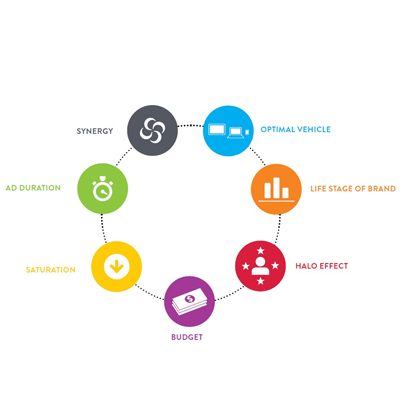
To make things easier and to guide marketers on their budget allocations to increase their returns on investment, Nielsen has developed a seven-step framework to help them battle today’s challenges.
The framework, christened as media compass, shares uncommon ways in which one can optimise seven steps that helps determine a marketer’s choice of media, timing of exposure and the size of investment. While every brand has its own unique dynamics, the research agency designed the framework to provide clear guidance for any brand. The framework is based on nearly 1,100 studies across 98 categories carried out globally in the area of marketing mix.
Choosing the optimal media mix
Marketing spend varies across industries and regions depending on where messaging resonates most with consumers, so evaluate current ROI for your brands across media platforms.
Supporting new brands beyond early launch
Adequate support for a new launch is required even in the second year of the launch in order to generate incremental trials and ensure repeat purchase behaviour. Ideally a new product should be thought of as ‘New’ for two years.
Maximising the halo effect
Advertising drives volume for the brand being directly promoted. However, such advertising may also drive volume for a sister brand if there is a connection between the two brands in the consumer’s mind. Such indirect effects are called Halo Advertising Effects, contrary to what one might expect, the halo effect from parents to the portfolio is much lower than the halo effect from extensions to the parent. Shifting a larger portion of the media support to extensions would result in higher total impact for the portfolio.
Brand budgets – incorporate sponsorship for building equity
Bigger budget brands can afford higher levels of advertising spend. If the budget allows, they should consider sponsorships as part of their media plans. Gross Rating Points (GRPs) spent on sponsored programmes, or impact GRPs, generate very high sales volume, and are generally three times as effective as regular GRPs. However, there’s a high cost involved in sponsorships. Brands with smaller budgets should maximise efficacy of their spends by executing within optimal GRP ranges, considering shorter length copy and ensuring good copy quality.
The flighting opportunity
The economic principle of diminishing returns exists in media planning too. The volume response due to TV advertising is not linear, and shows a pattern of diminishing returns beyond a certain point, leaving considerable scope for GRP optimisation.
Timing it right
Longer-duration ads are needed to convey a new or complex message, while shorter ones can suffice as reminder messages. The most critical question for the marketer therefore is – which parts of the copy can be cut out, and which parts are essential to the message?
Synergy
Synergy is the improved effectiveness of various drivers when executed together. A study conducted to test synergies between ATL & BTL activities among 25 categories revealed that a vast majority of companies do not integrate their ATL and BTL efforts. The 20 per cent companies who do integrate ATL and BTL efforts witnessed about 5-8 per cent extra sales growth. Integrate your marketing and sales efforts to benefit from synergies.

MAM
Lessons from global media markets on building enduring content franchises
Rose Audio Visuals COO and CFO Mitesh Patel.
MUMBAI: The global media landscape has undergone a fundamental shift. Success today is no longer defined by a single hit show. It is defined by the ability to build intellectual property (IP) that travels, evolves, and compounds over time.
At Rose Audio Visuals, this shift is central to how we think about content pitching and creation. We are no longer in the business of just making shows. We are in the business of building IP ecosystems.
From Hits to Franchises
Globally, the most successful content is designed to extend beyond its first outing. It travels across: Seasons, Platforms (TV → OTT → Digital), Formats (series → spin-offs) Shows like Stranger Things and Money Heist are not just successful series they are multi-layered franchises with global recall, fan engagement, and long-term monetisation. The key learning is simple: If content cannot scale beyond one season or one platform, it remains a project not a franchise.
Local Stories, Global Impact
One of the most powerful global trends is the rise of culturally rooted storytelling. Platforms today reward local authenticity combined with universal emotion. Stories that are deeply regional are no longer limited by geography they are amplified by it. Consider the global impact of Squid Game or India’s own Sacred Games. The takeaway is clear: The more authentic the story, the greater its potential to travel if the emotion resonates universally.
Monetisation Begins After the First Window
A critical global learning is that the true value of content is not realised at launch, it is realised over time.
Strong franchises unlock multiple revenue streams: Licensing, International remakes, Brand integrations, Digital extensions , Events and immersive experiences
Global players like The Walt Disney Company have mastered this approach, turning content into long-term ecosystems that extend far beyond the screen.
The first window is just the beginning. The real value lies in what follows.
At Rose Audio Visuals, we increasingly evaluate projects not just on commissioning value, but on their long-term franchise potential.
The Rise of Creator-Led Franchises
An important global shift is the emergence of creator-led IP ecosystems.
Creators today are not just content producers they are building full-scale franchises across platforms, formats, and businesses.
A powerful example is MrBeast. What started as YouTube videos has evolved into: Multiple content formats, Global audience scale , Brand extensions and businesses, High-impact experiential content This is a fundamentally different model digital-first, audience-owned, and infinitely scalable.
This model is still in its early stages in Indian but it represents a massive opportunity.
The next wave of Indian content franchises may not come from traditional studios alone but from creators who think like media companies.
Balancing Data with Creative Instinct
Streaming platforms today are deeply data-driven. Data helps Identify emerging genres, Predict audience behaviour , Inform commissioning decisions However, global experience shows that data alone does not create hits. Data informs scale, but storytelling creates impact.
Talent is the Foundation of Franchises
Enduring franchises are rarely accidental they are built through long-term creative partnerships. Globally, there is a clear focus on nurturing Actors, Writter, Show runner and director. Franchises are not built on scripts alone they are built on creators. This is an area where we continue to invest deeply building long-term relationships with talent rather than project-based collaborations.
Multi-Platform Thinking from Day One
Content consumption today is inherently multi-platform. A successful show must be designed not just for its primary platform, but for: Short-form extensions, Social media amplification, Digital-first engagement. Every show today needs a second life beyond its original format.
India: A Market at an Inflection Point
India today stands at a unique moment in its content journey.
We are seeing significant opportunity in Regional markets (Telugu, Tamil, Marathi and others) Emerging formats such as micro-dramas, Scalable, franchise-driven fiction IP
India does not lack stories. What we have historically lacked is structured franchise thinking something that is now beginning to evolve.
The Way Forward
The biggest lesson from global markets is this: The future belongs to companies that do not chase hits, but systematically build franchises. Because while hits may deliver immediate success, franchises create long-term value, recall, and compounding growth.
At Rose Audio Visuals, this belief shapes how we develop, greenlight, and scale content across platforms.
For content companies today, the question is no longer “Will this show work?” It is: “Can this become a franchise?”
A Personal Note
Having worked across content, business, and strategy, one thing has become increasingly clear to me, the most valuable companies in our industry will not be those that create the most content, but those that create content that endures.
Building a franchise requires patience, conviction, and a long-term lens something that the industry is only now beginning to fully embrace.As we continue this journey at Rose Audio Visuals, our focus remains simple: to move from volume-driven creation to value-driven storytelling. Because in the end, stories may start conversations but franchises build legacies.