Brands
Miele takes cooking outdoors, wires up pots and shrinks steam into a drawer


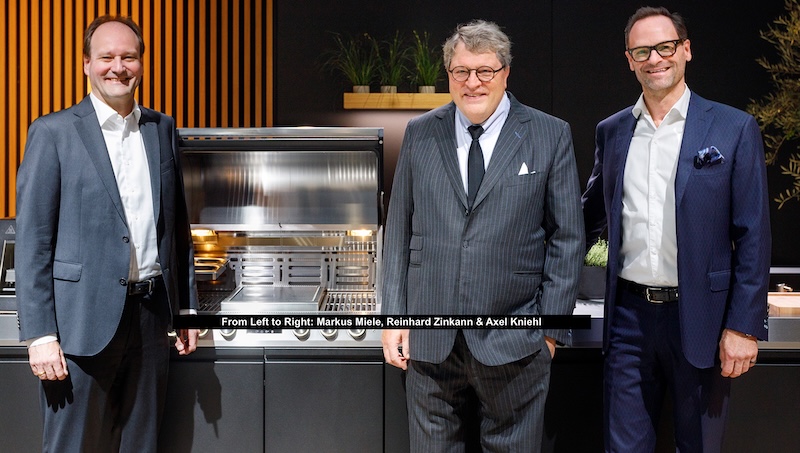
BERLIN: Miele, the century-old German maker of high-end appliances, is trying to reimagine the future of cooking. At IFA 2025 in Berlin, it unveiled what it called “a new era of cooking”: three headline-grabbing launches that stretch its brand from city flats to backyard terraces.
The first is Dreams, Miele’s debut in the outdoor kitchen segment. A modular system that mixes minimalist design with over 60 accessories, it offers everything from gas barbecues and hobs to sinks, refrigerators and wine drawers. The centrepiece is the Fire Pro IQ, a smart gas grill fitted with multiple sensors that monitor and regulate temperatures more precisely than any backyard cook could manage. With an app connection and an AutoClean mode, the barbecue promises “perfect results without babysitting the flames” and a quick clean-up afterwards. “More and more people are embracing the outdoor living lifestyle,” said executive director for marketing and sales Axel Kniehl. “Dreams takes the Miele experience outside for the first time.”
Indoors, the firm is touting M Sense, cookware that talks back. Pots and pans are embedded with touch controls and up to three temperature sensors, which communicate directly with Miele’s KM 8000 induction hobs. The system detects when food is about to burn or bubble over and automatically adjusts power. It is a small but telling example of how Miele is inserting artificial intelligence into everyday routines: pots send data, hobs listen, and dinner behaves. “Nothing burns. Nothing boils over. Just more time for what really matters,” said executive director and co-proprietor Markus Miele.
The third novelty is a world first: a 14cm-high steam drawer that slips under an oven or microwave in compact kitchens. It combines baking, steaming and reheating in one, offering over 100 automated programmes powered by Miele’s DualSteam technology. The drawer is pitched at urban customers short on space but unwilling to compromise on cooking. With touch-open controls and full app integration, it can prepare meals for four people – from sous-vide vegetables to reheated leftovers – while freeing up oven space for bigger dishes.
Beyond the headline launches, Miele used the IFA stage to trumpet a broader strategy. Digitalisation is seeping into every corner of its range. Its MasterCool fridges now come with cameras that snap photos when the door shuts, making it easier to check supplies while shopping and to reduce waste. Ovens are equipped with Smart Food ID, which recognises up to 50 dishes and adjusts settings accordingly. A step-by-step CookAssist function in the app will soon integrate with both M Sense cookware and the Fire Pro IQ grill, nudging even novice cooks towards professional results.
The company also leaned heavily on its green credentials. It is branding its latest laundry and dishwashing models as Energy Heroes: a washing machine that undercuts the top EU energy-efficiency class by 40 per cent and a dishwasher by 10 per cent. At the fair, Miele underscored its commitment to circularity by building a trade-stand out of reusable, lightweight materials, cutting transport and storage costs by half. It has also pledged a 25-year guarantee on laundry appliance motors, a sign of confidence in longevity at a time when fast-obsolescence remains the industry norm.
Founded in 1899 and still owned by the Miele and Zinkann families, the firm generated €5.04bn in turnover last year with around 23,500 staff across 19 production plants worldwide. Its strategy is clear: to extend its luxury image into new market niches and tie customers more tightly into its digital ecosystem. From outdoor living to AI-regulated cookware, the company is betting that the kitchen is still fertile ground for reinvention.
“In a complex world, people want appliances that make life easier, not harder,” said executive director and co-proprietor Reinhard Zinkann. “Our task is to deliver that reliability – indoors and outdoors – with quality, innovation and sustainability.”