Brands
Max Marketing marks 10 years of redefining film promotions in India
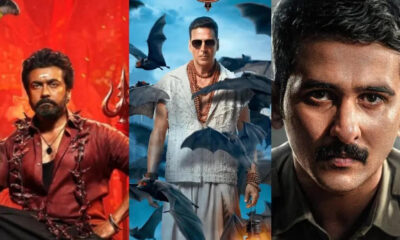
MUMBAI: India loves a blockbuster but in the last decade, it wasn’t just films making waves, it was the campaigns behind them. This August, Max Marketing & Innovations, the brainchild of Varun Gupta, marked 10 years of rewriting the rules of film promotion in India, turning over 150 releases into cultural moments. From concerts that made characters come alive to billboards that became landmarks, Max’s decade-long playbook is a masterclass in spectacle. For Kabir Singh, they staged a live concert; for Satya Prem Ki Katha, they turned a white heart emoji into a trending symbol of love and acceptance. In Ayodhya, they even unfurled a 50-ft poster at Ram Ki Paidi, creating a historic fusion of cinema and sacred space.
Actors and filmmakers have been unanimous in their applause. Ranveer Singh calls Max’s campaigns “spectacle-making,” Tabu says they’re “always fresh, always impactful,” while Vishal Bhardwaj insists that “promotion today is as much storytelling as the film itself and Max weaves that magic.” From Anil Kapoor to Sooraj Barjatya, Kabir Khan to JP Dutta, the chorus is the same: Max doesn’t just market films, it creates memories.
Their portfolio reads like a greatest hits playlist: RRR, Animal, Article 370, Major, Padman, Bhool Bhulaiyaa 2, Hanuman, all stamped with the agency’s flair for scale and innovation. Beyond splashy stunts, Max has championed inclusivity too, with campaigns like the “Common Man’s Campaign” that put films on autos, buses, and metro hoardings, ensuring cinema met audiences in their daily grind.
Reflecting on the milestone, Gupta says: “From day one, our aim was to craft experiences, not campaigns. The next ten years are about pushing boundaries further, creating stories that outlast opening weekends.”
As Max steps into its second decade, the stage is set for an even bigger act where cinema, technology, and culture collide. If the last 10 years proved anything, it’s this: when Max is in the picture, the marketing itself is part of the show.

Brands
Godrej clarifies ‘GI’ identifier after logo similarity debate
Says GI is not a logo, will not replace Godrej signature across products.
MUMBAI: In a branding storm where shapes did the talking, Godrej is now spelling things out. Godrej Industries Group (GIG) has issued a clarification on its newly introduced ‘GI’ identifier, addressing questions around its purpose and design following a wave of online criticism. At the centre of the debate were two concerns: whether the new mark replaces the long-standing Godrej logo, and whether its geometric design mirrors other corporate identities.
The company has drawn a clear line. The Godrej signature logo, it said, remains unchanged and continues to be the sole logo across all consumer-facing products and services. The ‘GI’ mark, by contrast, is not a logo but a corporate group identifier intended for use alongside the Godrej signature or company name, and aimed at stakeholders such as investors, media and talent rather than consumers.
The need for such a distinction stems from the 2024 restructuring of the broader Godrej Group into two separate business entities. With both continuing to operate under the same Godrej name and signature, the identifier is positioned as a way to differentiate the Godrej Industries Group at a corporate level.
The rollout, however, triggered a broader conversation on design originality. Critics pointed to similarities between the GI mark’s geometric composition and logos used by companies globally, raising questions about distinctiveness.
Responding to this, GIG said its intellectual property and legal review found that such overlaps are common in minimalist, geometry-led design systems. Basic forms such as circles and rectangles appear across dozens of brand identities worldwide, the company noted.
It added that the identifier emerged from an extensive design process and was chosen for its simplicity, allowing it to sit alongside the Godrej signature without competing visually. While acknowledging that elemental shapes may appear less distinctive in isolation, the group emphasised that the mark is part of a broader identity system that includes a custom typeface, sonic branding and other proprietary elements.
Following legal and ethical assessments, the company said it found no impediment to using the identifier, reiterating that the GI mark is a corporate tool not a consumer-facing symbol.
In short, the logo isn’t changing but the conversation around it certainly has.